
We’re in this same, annoyingly familiar position, Wallabies fans. Left lamenting all the ways Australia let yet another Bledisloe Cup campaign get away, and with it, arguably the best opportunity to regain the massive cup in many a year.
It stings because of the result, but mostly, because of how the result came about.
So much – too much, in fact – of the Australian reaction focused on refereeing decisions, and most of it was wide of the mark.
Why? Well, the officials didn’t concede 14 turnovers and didn’t miss 39 tackles. They played a role in the 15 penalties the Wallabies conceded, sure, but maybe the real question here is why Australia is suddenly conceding twice as many penalties per game than they did through the Lions Series and in South Africa?

No, this runs much deeper than looking for someone else to blame.
Here’s five simple skill errors that had far-reaching consequences in the final result falling the way it did.
17th min: James O’Connor’s first missed touch-finder
With the score already 13-3 and Australia looking for ways to get themselves into the contest, hooker Billy Pollard won a well-earned ruck pilfer in centre-field, on or around the Wallabies 10-metre line.
Desperately trying to peel off as much ground as possible, O’Connor aimed for touch somewhere around 15 metres out from the New Zealand line – a whopping 45 metre gain from the mark. The All Blacks even invited the ambition to a degree, with two players back that deep for the kick.
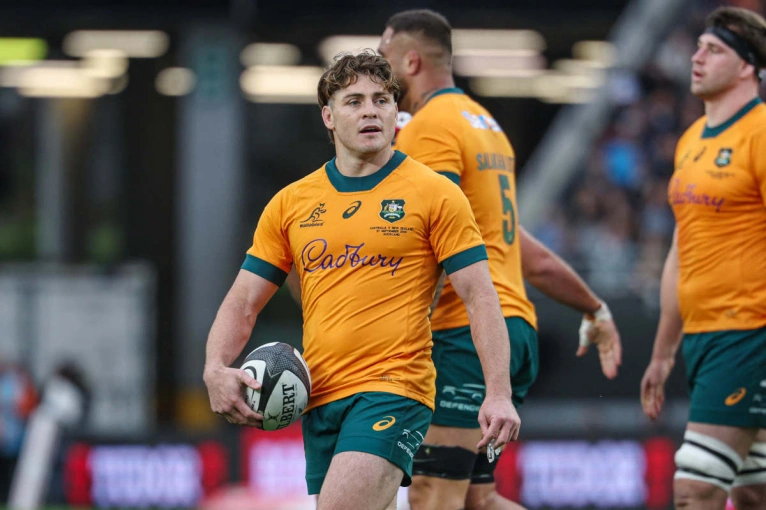
O’Connor’s kick didn’t get anywhere near it, with the player outside touch having to come well in-field and forward to field the kick.
Humbled by the harsh reminder that the legs ain’t got what they used to, O’Connor’s next kick from an almost identical spot two minutes later found touch comfortably, but some 30 metres from the All Blacks’ try line.
22nd min: Harry Wilson’s no-arms chop tackle
Following Ryan Lonergan’s unfortunate knock-on at the back of a ruck with one of his first touches in Test rugby, the All Blacks fed a scrum around 30 metres out from the Australian line.
The Wallabies put a big push on to place the home side’s pack under pressure, who just survived the screwing scrum and played to the open side. But some passes missed marks, and the Kiwis looked kind of panicked in attack with no real shape to speak of.
They built phases and only just made it into the Wallabies’ 22 when Tyrel Lomax carried, he was then dropped by Harry Wilson aiming low in the tackle.
Wondering why the close calls aren’t falling your way? Why would a referee reward a captain that only wants to talk and doesn’t listen for 80 minutes?
Billy Proctor took the next phase, veered in-field slightly but away from his cleaners. Taniela Tupou pounced, and was immediately rewarded with a ruck penalty, and with it, an easy exit for the Australians. Codie Taylor is seen motioning to the assistant referee on the near side about a shoulder-first tackle.
Referee Andrea Piardi then got instruction from the TMO and called the respective captains in to advise the penalty was going to be against Tupou Vaa’i for side entry into the Proctor ruck, but then explained there was a no-arms tackle earlier in the passage.
Strangely, he stopped and let Wilson talk about something completely different, but then shut him down by confirming the number, saying the infringement is “by No.8, by you”.
He then called Wilson back to warn of repeated infringements, which perhaps should have been a sign for the captain to pull his head in, rather than keeping up a second straight game of being argumentative with the man in the middle.
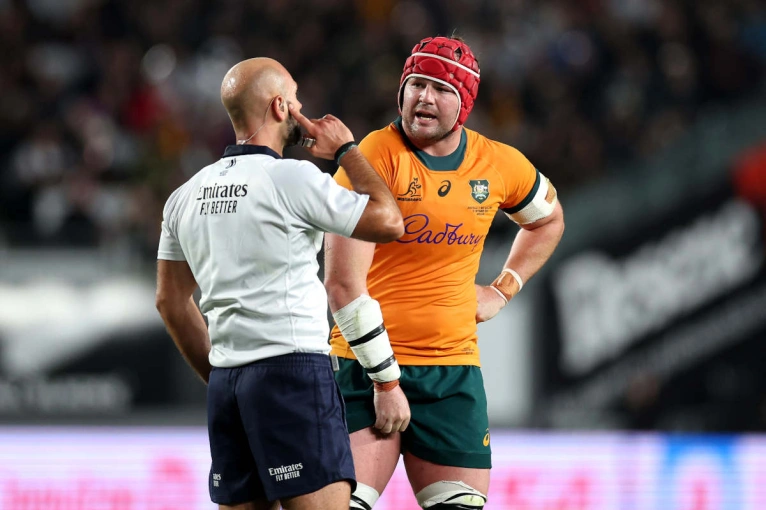
This should be a point of reflection for both Wilson as captain, and the Wallabies as a side. Wondering why the close calls aren’t falling your way? Why would a referee reward a captain that only wants to talk and doesn’t listen for 80 minutes? After being the cause of a reversed penalty that would have put the Wallabies in the New Zealand half, Wilson instead chose to double down on the argumentative path.
From the resulting All Blacks maul, Harry Potter caught Jordie Barrett high to give another penalty advantage, and Cam Roigard scored next to the posts nine phases later.
43rd min: Billy Pollard’s lineout throw not straight
A Roigard box-kick came down on halfway, with O’Connor winning the contest but with the ball spilling backwards. Lonergan cleaned up the loose ball and Australian cleaners drove him forward, with the All Blacks pinged for not releasing the tackled player.
The Wallabies found touch just outside the All Blacks’ 22, a gain of only 20 metres or so, but still a good position to mount an attack.
But Pollard’s lineout throw missed Nick Frost at the apex of his jump, and was taken at the back of the lineout clearly on the outside shoulder.
Sadly, this was not a new issue for Pollard this year, who had more than a few off nights for the Brumbies in Super Rugby Pacific.
52nd minute: O’Connor misses touch again
After O’Connor popped a nice ball away to Wilson for another three metres just inside the New Zealand half, Ardie Savea was pinged for going off his feet in attempting the jackal.
O’Connor, desperately trying to gain a five-metre lineout, then left the kick too narrow in the search for distance, which allowed Will Jordan to field the ball inside the All Blacks’ 22 while jumping into the air and back into field of play, running in-field to then exit to the Australian 22.
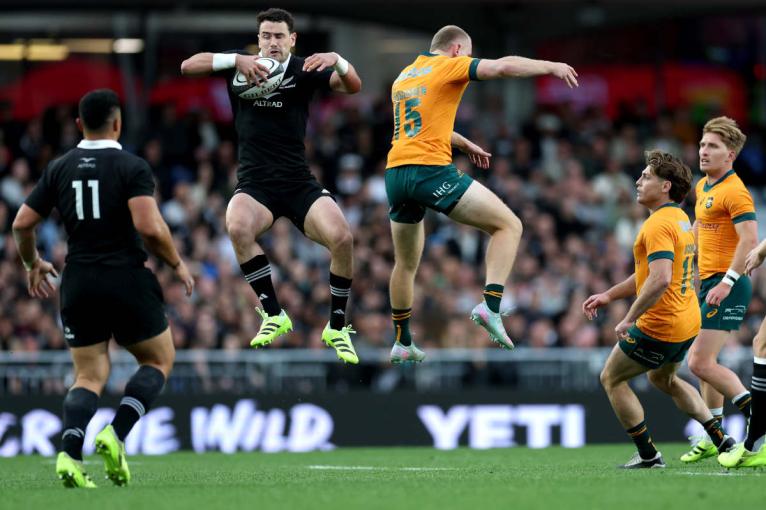
For what it’s worth, I’m not a fan of this in rugby. It makes no sense to me at all that a player from outside the field of play can field the ball while in the air and be allowed to play on as long as they land in the field of play. It’s ridiculous. To field the ball, you should need to be ON the field! In this instance, I’m not even convinced the ball hadn’t crossed the plane of touch when Jordan caught it. But I digress…
Jorgensen fielded Jordan’s kick and kicked down the middle of field himself, where Damien McKenzie fielded it and played wide to the left. Jordie Barrett then broke down the left and well into the Australian half. Quinn Tupaea carried well, but Fraser McReight was pinged for not supporting his body weight in the resulting ruck.
McKenzie kicked his third penalty goal to open the margin back out to nine points.
It was a crucial turnaround from the missed touch-finder, and came only a few minutes after O’Connor had put the restart out on the full after McKenzie’s second penalty goal.
Conversely, in the 78th minute from a New Zealand scrum five metres inside their own half, and only a few minutes after Roigard’s match-sealing second try, McKenzie drilled a touch-finder to just nine metres from the Wallabies’ line.
72nd min – Wilson drives early in lineout
Straight after Carlo Tizzano’s converted maul try, New Zealand restarted with a long kick from which O’Connor exited cleanly, finding touch eight metres back in the All Blacks’ half.
The Wallabies got a good drive on and prevented the All Blacks from mauling, forcing them to pull out and play to the short side. They played forward 15 metres onward with advantage, but couldn’t do much after making the initial ground.
Referee Piardi correctly ruled that Australia’s effective maul counter-drive actually started with Wilson driving into an New Zealander lifter early.
From the resulting lineout, the All Blacks played deep into the Australian 22 for nine phases before Potter was pinged for a ruck infringement. Piardi had had enough. He put the Wallabies on yellow card warning back in the 59th minute for repeated infringements in the attacking zone, and with the All Blacks building a decent attacking platform, Australia infringed again. They would finish the game with 14 players.
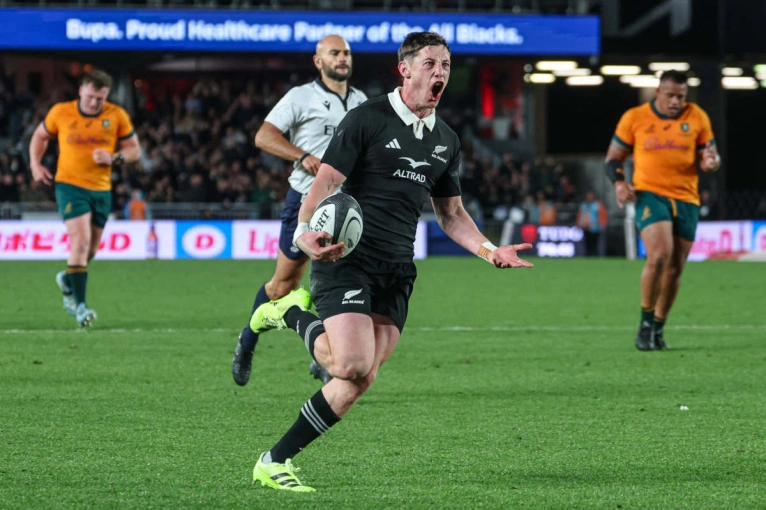
Samisoni Taukei’aho was held up following the lineout drive, Roigard scored his second try from the first phase after the line drop-out, and that was the final nail in Australia’s Bledisloe chances for 2025.
‘Still plenty to achieve’
The skill errors can – and will – be worked on, but the Wallabies have to address this serious deterioration in discipline over The Rugby Championship.
From the two Tests in South Africa where they conceded four and six penalties, the two against Argentina saw a rise to 10 and 14, and now 15 penalties conceded against New Zealand.
Three TRC wins would have been very gladly received if offered at the end of the Lions Series, and a win over New Zealand any time is never to be sneezed at.
If 49 penalties in five games looks fine on paper, 29 of them in the last 160 minutes of rugby is not great at all. Harry Wilson certainly needs to think about his referee interactions, and whether getting the man in the middle offside from the first infringement is a sustainable approach. (Spoiler, it’s not).
But mostly, the Wallabies need to spend some time in Perth this week looking in the mirror, recognising and acknowledging that as much as they might be looking for someone else to blame for two straight losses, the real problem might actually be staring back at them.
And there’s still plenty to achieve in this tournament.
Three TRC wins would have been very gladly received if offered at the end of the Lions Series, and a win over New Zealand any time is never to be sneezed at.


Comments
Join free and tell us what you really think!
Sign up for free