
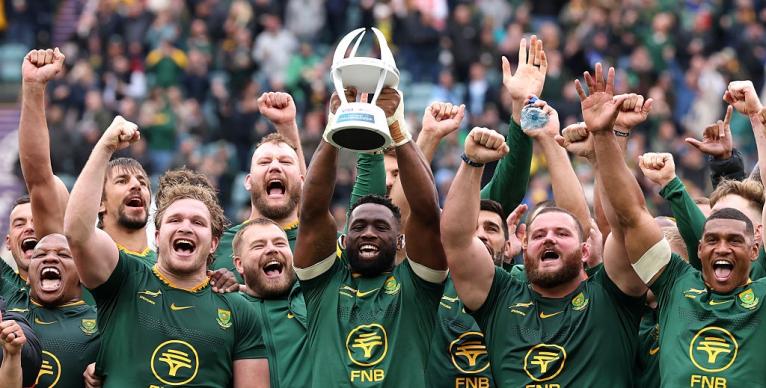
South African fans have every right to celebrate yet another trophy, and the Springboks’ first successful Rugby Championship title defence in history. But taking a broader view, it’s clear how coach Rassie Erasmus developed his squad with the short- and long-term in mind, and crucially, received valuable answers about the balance of selection and game plan during a monumental campaign.
The future is now
Midway through the tournament, Erasmus and the brains trust made a clear shift in team selection and strategy.
The bold decision to back several youngsters – Sacha Feinberg-Mngomezulu, Canan Moodie, Ethan Hooker and Jan-Hendrik Wessels are all 24 or younger – for the all-important clash against the All Blacks in Wellington proved inspired. We saw the very best of the Boks that day and against Argentina in Durban, as they played with speed and width while harnessing their traditional scrummaging and kicking strengths.
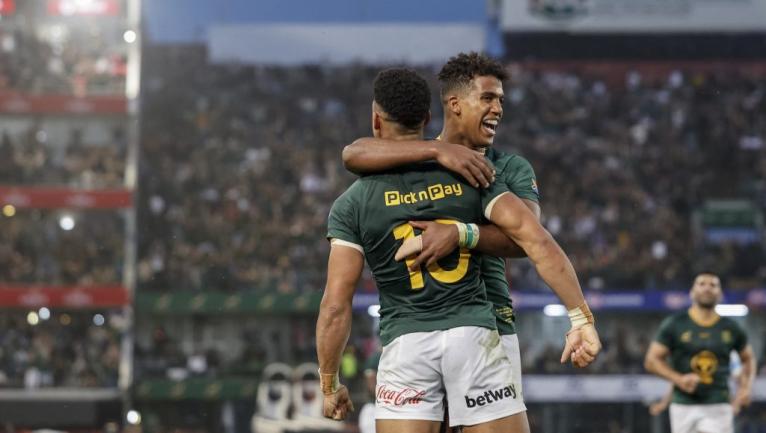
The Bok coach has used 46 players this season, and as many as 35 received game time in the Rugby Championship. Only five players featured in all six games, as Erasmus persisted with his plan to manage game minutes while keeping the delicate balance of the team in mind.
While some critics have hailed the arrival of Feinberg-Mngomezulu as the first-choice 10, Erasmus will be satisfied the youngster, Manie Libbok and veteran Handré Pollard proved their worth during the competition.
Erasmus will need more than one option in each position when the Boks travel to Europe next month November to play five Tests in as many weeks, and at a new-look World Cup in 2027, where they could play four consecutive knockout games.
Erasmus will be satisfied so many youngsters took their chances in the Rugby Championship. In the injury-enforced absence of winger Kurt-Lee Arendse, Hooker excelled in the wider channels and under the high ball, while Moodie provided the side with further attacking and aerial threats.
The front-row crisis which sidelined Frans Malherbe, Trevor Nyakane and Gerhard Steenekamp has resulted in more game time for the versatile Wessels, and it wouldn’t come as a surprise to see the front-ranker retained after Steenekamp – who made his comeback for the Bulls recently – returns in November.
Some warriors continue to rage against the light
While the young guns produced a series of eye-catching performances, it’s worth noting how many veterans featured in the successes in Wellington, Durban and London. Indeed, the move towards a high-tempo approach has suited the likes of Pieter-Steph du Toit and Siya Kolisi, who have racked up the carries and offloads. Eben Etzebeth has taken on more responsibility as a kick-chaser, while Damian de Allende and Cobus Reinach continue to match some of their younger team-mates for work-rate and speed on the ball.
What’s more, the Boks have a sizeable contingent of players who are in the prime of their careers.
Malcolm Marx capped an outstanding Rugby Championship with two tries at Allianz Stadium, while Damian Willemse – still just 27 and in his comeback season for the Boks – looks to have found another gear.
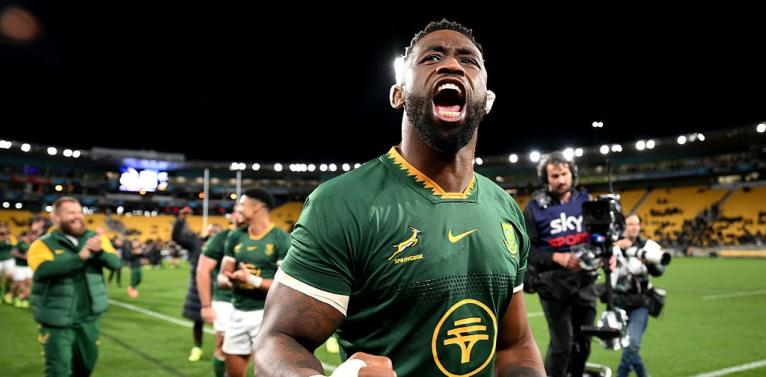
This group will continue to grow, as talented players such as Arendse, Elrigh Louw and Aphelele Fassi return from injuries.
Bongi Mbonambi made a surprise return to the matchday 23 in London after not featuring since the opener against Australia. There are doubts the hooker and a few other ageing stars such as Willie le Roux, Franco Mostert and Vincent Koch will make the next World Cup, but they may yet feature on the forthcoming European voyage.
The balance between youth and experience will be paramount, and while we’re unlikely to see Erasmus picking all of his veterans in one match this November, the availability of Mbonambi and company will ensure the older players share the load throughout the tour.
Tonyball = Totalball
The Boks made a statement when they won the 2024 Rugby Championship by using a new attacking shape introduced by former All Blacks fly-half Tony Brown.
A year later, the Boks surpassed a number of their own attacking benchmarks, and topped the overall tournament stats for points, tries, line breaks, metres gained and offloads. While these stats highlight their superiority across the respective departments, they also show how much the attack has grown in the space of a year.
The Boks made 22 more offloads in 2025 than in 2024. Overall, they scored 208 points and 27 tries, breaking the records they set in last year’s tournament (188 and 24).
That attacking success has been underpinned by a dominant scrum and accurate kicking game.
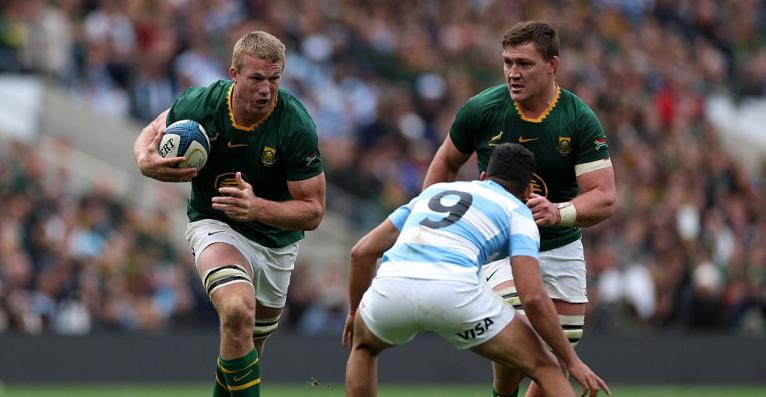
Ox Nché, Wilco Louw, Thomas du Toit and others made massive set-piece contributions. Nobody will forget how the Bok scrum destroyed the All Blacks pack in the latter stages of the Test at Eden Park, or the gargantuan performance against the Pumas in London, which earned South Africa a whopping five penalties.
Despite the move towards a high-tempo approach, the Boks are kicking more frequently than ever. South Africa put boot to ball 180 times – beating the tournament high of 177 in the 2021 edition.
Those who would label the approach boring should remember the Boks kicked 32 times in Wellington yet scored 43 points and six tries against the All Blacks. South Africa kicked from hand a remarkable 40 times in Durban, and managed to put 67 points and nine tries past the Pumas.
Erasmus’ side capitalised on the law change around the kick contest, which allows greater access for the chasing side, and managed to regain 33 kicks over six games – 20 more than they did in 2024.
The selection of taller players such as Hooker and Moodie has amplified the kick-chase tactic, although Cheslin Kolbe’s ability to soar higher than most of his larger opponents has also proved influential.
The Boks should be encouraged by these aspects of their performance ahead of their journey north, where conditions typically prescribe a more pragmatic approach.
The tactical battles against France and Ireland should be particularly cagey, and if the Boks win the kicking and aerial contests, they may well secure two big scalps.
Five-three bench split in vogue
The make-up of the Bok bench has been a big talking point since the 2019 World Cup, when Erasmus favoured a six-two split between forwards and backs for the first time. Four years later, Erasmus introduced a seven-one formation and in subsequent seasons, we’ve seen other teams, notably France, use the strategy to good effect.
More recently, South Africa have moved away from forward-heavy benches, with the five-three setup favoured in seven of the past 10 matches – and in five of the six Rugby Championship Tests.
The introduction of a hybrid player in André Esterhuizen has been effective and intriguing. By selecting Esterhuizen among the reserves, Erasmus has kept everyone guessing as to whether the big man will play centre or flanker, and ultimately whether the Boks will deploy five or six forwards from the bench.
By and large, Erasmus has persisted with the five-three split in order to manage the Bok energy levels over 80 minutes. The new attacking approach, which also involves a lot of kicking, chasing and tracking across the field, takes its toll on the backs.
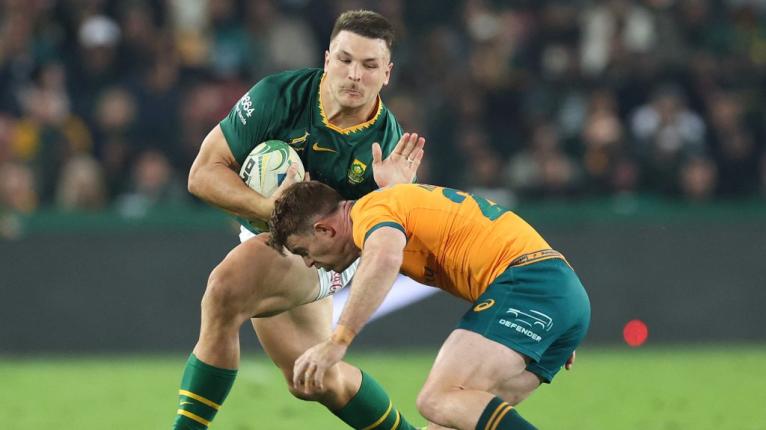
Rumours of the Bomb Squad’s demise, however, are grossly premature.
Erasmus has used a forward-dominated bench for specific matches and purposes in the past, and it wouldn’t come as a surprise to see the formation rolled out during November.
Last season, in the tour opener in Scotland, the Boks opted for a seven-one split, as Erasmus looked to spread the team’s game time ahead of a marquee match against England six days later.
Over the years, the Bok coach has favoured a six-two split against Ireland, and it’s possible that same formation will be unleashed when the South Africans visit the Aviva Stadium on 22nd November.
The Boks aren’t the finished product
The Boks have been criticised for a dearth of bodies and ultimately a lack of accuracy at the attacking breakdowns.
In response, they’ve pointed out the new approach requires more players on their feet for the subsequent phases. While it’s a fair point, they certainly have room for improvement in that area – and will have to improve before they face ruck disruptors in France, Ireland, and even Wales, now under the supervision of defence specialist and former back-row, Steve Tandy.
Ruan Nortje has been one of the standout Springboks this season, and is part of the new generation lending fresh energy to the team’s attack and lineout. Nortje and Pieter-Steph du Toit made telling lineout steals throughout the Rugby Championship.
And yet, Nortje and company will be disappointed the Boks win just 83% of their own lineouts – and the negative impact this had on their maul and overall attack.
The Boks produced an improved lineout performance, however, against Argentina in London, with Marx scoring off the back of a well-executed maul.
It will be interesting to see how much emphasis they place on this area before facing some of the northern hemisphere’s premier set-piece sides.
In a sense, the fact the Boks aren’t the finished product should worry their future opponents. They’ve won eight of 10 matches this season and shattered Rugby Championship records while still a work in progress and using nearly 50 players.
The showdowns with France and Ireland are must-wins, and Erasmus looks set to unleash his best possible team in Paris and Dublin.
At the same time, he will know there is enough quality and depth across the squad to secure victories against Japan, Italy and Wales – and a five-from-five return up noth is well within their grasp.


Comments
Join free and tell us what you really think!
Sign up for free