
The Scott Robertson era has not delivered in line with expectation, having produced just four wins in his first seven tests.
When he was given the job in March last year at the end of an unprecedented decision to conduct the process for the next All Blacks coach when incumbent Ian Foster still had six months to run on his contract, the sales pitch to media was all about bringing change in 2024.
And change, so the narrative went, would bring improved results – it would see an end to shock losses to Argentina and boost the All Blacks past Ireland and the Springboks to the top of the world rankings.
But here we are now, halfway through Robertson’s first year in charge and there has been a shock loss to Argentina and two defeats to the Springboks, making it impossible – maybe not mathematically – to see the All Blacks finishing the year any higher than number two in the world.
Even that, though, is a stretch because not only do they still have to play England, Ireland and France in consecutive weekends in November, they have a multitude of selection and strategy decisions to work out, as the two tests in South Africa exposed some failings in both areas.
As one of life’s great optimists, Robertson was willing to cast both defeats in a positive light. He emphasised that in both games, the All Blacks were in control through the first 60 minutes, only to lose the momentum when the Boks brought on their fabled bomb squad and shifted the dynamic.
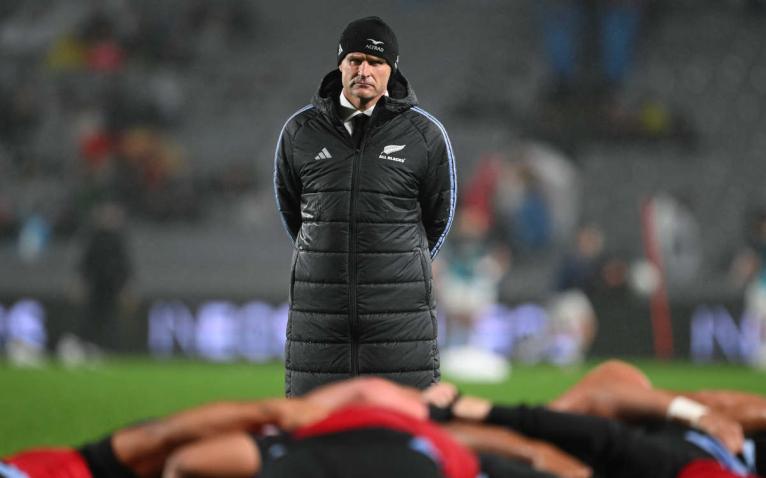
“We are playing some good footy,” he said after the second test. “I want to try and be a little bit more optimistic here, because, man, we were one pass many times from breaking them. Our attack shape, our care on defence, the most breakdown turnovers I think South Africa has ever had against them.”
His view on why the second test slipped away was much the same as the one he offered after a 27-17 lead was given up at Ellis Park the week before and turned into a 31-27 defeat.
“Probably converting a couple of opportunities with kicking a goal here and there, as simple as that really,” he said.
“You’ve got a team who are hugely desperate and world number one, you’re away for a couple of weeks and we had two chances to win it, we didn’t take it and that’s Test footy.
“It’s there, that’s the great thing about it. It’s there for us. We’ve got to be brave and be clutch and take it.”
It’s true that Robertson appeared to lose his way with selections, panicking to some extent after the first test by dropping veterans TJ Perenara and Beauden Barrett to the bench.
His optimism is understandable. The All Blacks scored four tries at Ellis Park, had the Boks in trouble in Cape Town and created enough opportunities to win both tests.
There were patches of fluid attack, big defence and cohesive rugby that saw the All Blacks effortlessly stretch the Springboks, and Robertson’s assessment that his team really were just one good pass or dropped ball away from scoring a lot of points in both Tests is credible.
But equally, it’s true that Robertson appeared to lose his way with selections, panicking to some extent after the first test by dropping veterans TJ Perenara and Beauden Barrett to the bench to counter the bomb squad, promoting Wallace Sititi to blindside where he had only played two first class games in his fledgling professional career, and restoring Will Jordan to fullback, where he looked gun-shy and ineffective.
The impression was given that the second test team was picked more in hope than expectation, and Robertson and his fellow selectors need to make some hard decisions and stick to them for the remainder of the year at least, if not the rest of this World Cup cycle if they are going to develop the art of winning those close encounters.
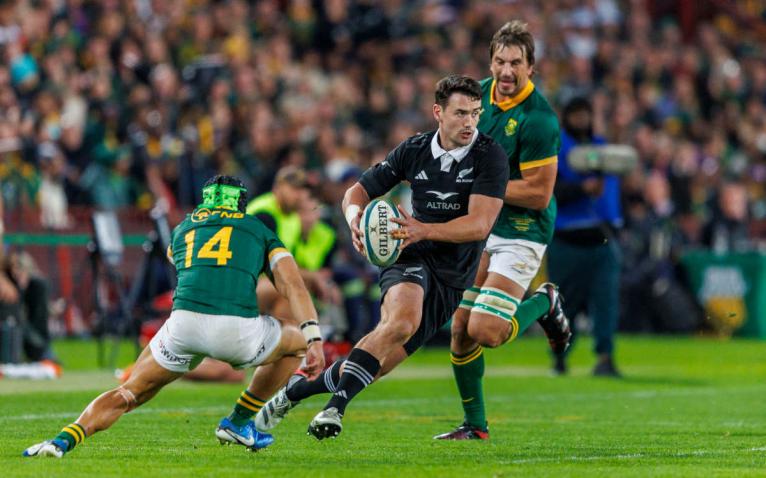
Robertson, like his predecessors, has said he values versatility in his squad – sees it as a major advantage having players who can play two or more positions.
But as much as this has proven to be a blessing over the years, so too has it been a curse and Robertson may be befuddling himself by trying to fit who he sees as the best players into the team, even if it means ramming them in there out of position.
Sititi, just 22 and who was barely heard of prior to this year’s Super Rugby competition, made his presence felt wearing No 6, but it is not his natural position.
He’s a No 8 who was asked to play out of position because incumbent Ethan Blackadder picked up an injury in Johannesburg.
As Robertson noted of Sititi: “He can play, can’t he? I’m really pleased for him. He’s an exceptional young man when you get to know him.
“He’s got a great skill set. He’s mentally tough, he’s physically tough. It’s hard to believe he’s so young and performs like that.”
Previous All Blacks coaches have made the mistake of believing they can ignore the specifics of each back-row position and shift individuals as circumstances dictate, but there is no evidence it ever worked.
But continuing with Sititi out of position seems like it would be a mistake – one borne of desperation because Robertson can’t quite find the player he is looking for at blindside.
He started the season with Samipeni Finau in the No 6 jersey, then tried Luke Jacobson, before switching Blackadder there after fielding the Crusaders loose forward at openside against Fiji.
Previous All Blacks coaches have made the mistake of believing they can ignore the specifics of each back-row position and shift individuals as circumstances dictate, but there is no evidence it ever worked.
In stark contrast, the All Blacks best back-row of the last 20 years – probably ever – was Jerome Kaino at blindside, Richie McCaw at openside and Kieran Read at No 8 – and it was a combination that came right in 2009 when the coaching group swapped Kaino (who had been used as a No 8) and Read (who had won caps at blindside) and then committed to keeping them there.
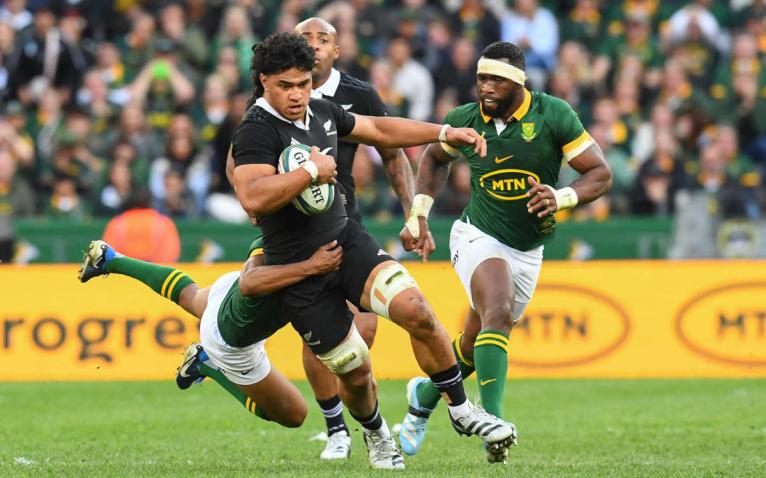
There is a strong argument now that Robertson needs to be similarly decisive and commit to Sititi as his No 8, switch Ardie Savea to his natural home of openside and continue the search for a specialist No 6.
Converting Sititi seems a dangerous road, as Savea has already been shifted from openside to play at No 8, and Sam Cane, who is currently the preferred No 7 is set to leave New Zealand at the end of the year, which means the hunt will be on for a new openside in 2025.
Shannon Frizell may return from Japan next year giving the All Blacks the bruising, 1.95m, 114kg blindside they are after, and a backrow of him, Sititi and Savea has the feel of one that could go the distance to the World Cup with every base covered.
It would be a combination with defensive grunt, ball-carrying power, speed, presence and technical expertise at the breakdown and lineout capabilities.
Equally, there is a case to be made that Robertson has to fix on what he is doing with Beauden Barrett.
The veteran began the season on the bench, made such an impact in the two tests against England, that he was promoted to the starting XV, and stayed there until he was dropped back to the bench for the Cape Town Test – a move that enabled Will Jordan to play in his preferred fullback role.
But Jordan was exposed as lacking the skills and positional anticipation to deal with South Africa’s contestable kicking strategy and was subbed off after 60 minutes.
Robertson needs to make his mind up whether Barrett is a fullback, bench player or No 10, and also, he needs to commit to Jordan being a wing or fullback.
He may fear that committing to Barrett, who has turned 33, may be risky as he’d be 36 in 2027 – but the Springboks are still picking the 35-year-old Willie Le Roux at fullback and getting plenty out of him.
And the final decision to be made is whether to give-up what has been a four-year experiment to convert Rieko Ioane from a world class wing to a world class centre.

Ioane was dropped for the Rugby Championship opener against Argentina and then returned to the No 13 jersey for the re-match – suggesting Robertson is not convinced that he has one of his best players in the right position.
But against South Africa in Cape Town, Ioane was shifted to the wing in the final 20 minutes and provided a strong reminder that’s where he causes the most damage.
Ioane wants to play centre but the All Blacks need him on the wing, where his pace and power can be better utilised, and that would open the way for 25-yerar-old Billy Proctor to be installed in the midfield alongside his Hurricanes partner Jordie Barrett.
Robertson is not delivering in line with expectation, but there is at least a clear pathway for him to follow to correct that.


Comments
Join free and tell us what you really think!
Sign up for free