
There are some things in life you only get to do once. Seeing your baby smile for the first time, hearing Pink Floyd’s ‘Shine on You Crazy Diamond’, or scoring the points which qualify your team for a Rugby World Cup.
Remarkably, Santiago Videla got to do the latter twice, as after kicking the decisive penalty to sink the USA and earn Chile a maiden World Cup berth three years ago, he slotted the conversion which booked Los Condores back-to-back trips to the big dance this month.
This was no mere coincidence. The utility back has been involved in some of Chile’s most significant feats and records, and is the second-highest points scorer among the world’s top 20 nations this calendar year. Indeed, nobody in that bracket has kicked more points than the prolific Chilean.
Videla’s rugby journey only truly took off in 2015. Back then, he still divided his time between rugby and other sports, and there was a chance he would’ve gone down another path if it wasn’t for the intervention of the Saavedra twins, Chilean internationals Clemente and Domingo.
View this post on Instagram
“I wasn’t expecting to be selected for the U20s, as at least 45 players were fighting for a place in the squad, and I wasn’t even on the initial selection list,” Videla, who plays for Miami Sharks, remembers. “However, Domingo and Clemente Saavedra talked with the head coach, Bernard Charreyre. They made such a compelling case that I was invited to join the practice sessions to show what I could do. It was the moment my life changed.”
From that point on, Videla set his sights on becoming his country’s top player. After featuring in the Sudamericano U20, he became a vital member of the juvenile national team. He was eventually called to the seniors in 2016, making his debut one year later in a Test match against Kenya.
Despite being respected today as one of the best centres on the Emerging Nations scene, Videla made his debut wearing the number 10 shirt, with stints at wing and full-back as well.
“I am pretty sure I played at least once in every position on the backline,” says the 27-year-old. “It gave me the chance to up my game, but there were some challenging moments, such as when I played on the wing. It wasn’t my preferred position, but my focus was on helping the team, so I gave my all in that time I played as a 14.”
Rugby was a sport mostly practised in schools influenced by English exiles. It wasn’t a question of being an elite sport; it just wasn’t native to the country.
Videla’s first steps as a senior player came in a time of transition for rugby in Chile. While they are now stealing everyone’s hearts and minds, the Condores went through their share of hardship, labouring through dark years when victories were brutally scarce.
“When I first experienced rugby, there weren’t that many people playing it,” Videla says. “It was a sport mostly practised in schools influenced by English exiles. It wasn’t a question of being an elite sport; it just wasn’t native to the country. However, its status has undergone a complete transformation and is gradually becoming a mainstream sport. The 20,000 fans supporting us at Estadio Sausalito are proof of how the whole country now embraces rugby.”
Steadily, Chile began a revolution, winning a few Test matches and making life hard for their South American rivals such as Uruguay. The qualification for the 2023 World Cup was the tipping point for them, as Videla himself states.
“That World Cup allowed us to be under the spotlight, with fans noticing us more, even those who aren’t rugby affiliated. I grew up watching Chile’s men’s football team win the Copa América and qualify for the World Cup; nowadays, we have kids growing up watching Chile’s men’s rugby team qualify for the World Cup, and that will have an impact on our numbers in the future.”
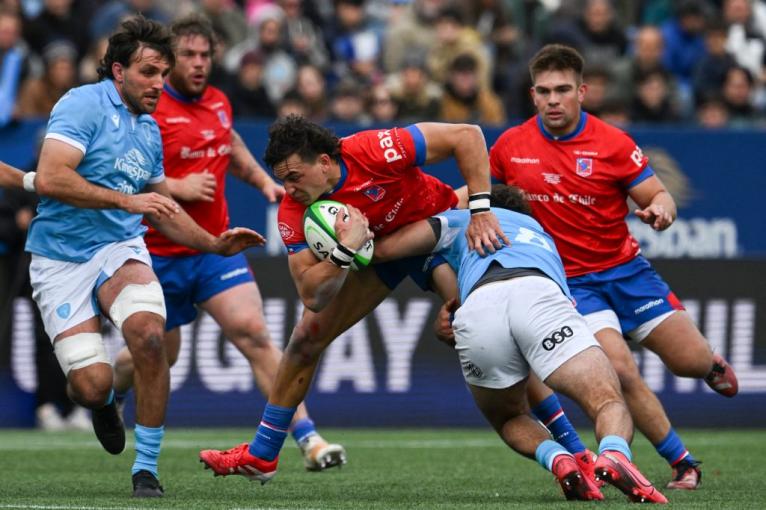
The World Cup qualification didn’t happen out of nowhere, as significant investments were made by the union and clubs, who have redoubled their efforts with sights trained on Australia 2027. For Videla, the growth is clear and the potential tantalising.
“There’s a collective and concentrated effort to make rugby massive in Chile. Our infrastructure has improved in quality and quantity. More people are playing, coaching, volunteering and managing at every level, and this improvement has been widespread throughout the whole country. We want to deserve and win the respect of the world, and I believe it is within our reach to surpass even Uruguay.”
At the heart of it all sits Pablo Lemoine. For Videla, the head coach was the key to unlocking what Chile could offer and enhancing their rugby infrastructure and resources.
“Pablo Lemoine has been making a profound impact on Chilean rugby, and I think people should value him even more,” Videla says. “For the first two years, we didn’t win any games, but he never stopped believing in us and pushing us to become better players and athletes. Pablo managed to create depth in our squad, instilling in us the drive to be better. We believed in him and in the staff’s ideas, and now we are headed for our second World Cup.”
Lemoine built a superb squad packed with heat and flair. There are also several sets of brothers, four of whom were selected in 2023: Santiago and his brother Benjamin, the Saveedra twins, Nicolas and Matias Garafulic, and Alfonso and Diego Escobar.
Chile’s family isn’t just those who are blood-related; it is everyone. That’s why we have accomplished so many incredible things together.
“It is such an incredible thing!” Videla says. “But Chile’s family isn’t just those who are blood-related; it is everyone. That’s why we have accomplished so many incredible things together. That’s what defines us: unity and communion.”
Videla is in fact one of five siblings, who, as you might imagine, loved competing with each other. Benjamin, two years younger and primarily a half-back, is a shooting star.
“It is a great thing to play alongside my brother,” Santiago says. “We have different playing styles, but he is better than I am. His energy, self-belief, ‘ganas’ [desire] and work rate are incredible and inspiring. We normally paired up against two of our other siblings, which made us have an even stronger connection.”
While Benjamín was uncapped heading to France 2023, he started with Santiago in both of the recent 2027 qualifiers against Samoa. The 31-12 triumph in Chile sparked vibrant celebrations, with fans flocking to Santiago, the nation’s capital, and rejoicing in another World Cup journey.
“While it doesn’t happen that often, I haven’t gotten used to being recognised by fans,” Santiago says. “In the week following our World Cup qualification, a few fans approached us, expressing that they were still emotional and crying over what we had achieved. It resonated within us, and it is why we devote ourselves to this sport we call rugby.”
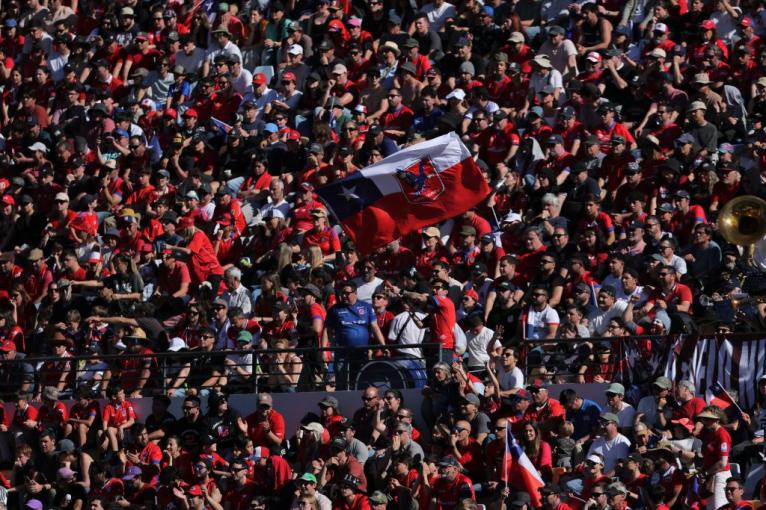
With another World Cup on the horizon, Videla is still savouring what was an incredible afternoon, recalling every single great passage of play, like Nicolás Saab’s last try.
The contrast between past and present is stark. Videla witnessed a long spell of stagnation – now, the future is bright and enticing.
“Fifteen years ago, we didn’t have any goals and objectives,” he says. “Players would give their best, but no ambitions were driving them. Nowadays, we play to accomplish what some would call unrealistic dreams. It is a new age for Chile and for the Condores.”


Comments
Join free and tell us what you really think!
Sign up for free