
Late last year, All Blacks coach Scott Robertson was adamant that New Zealand Rugby’s eligibility policy was no longer fit for purpose. It was a point he had made six months before starting the job; a point he made six months into doing the job and it was a point he made as he signed off after his first full season in charge.
He never stated publicly where he felt the policy was lacking – his message was only ever that he asked NZR’s board to retain an open mind – but it’s believed he wanted there to be amendments to the sabbatical clause that is offered to senior players as an incentive to sign a long-term contract to stay in New Zealand.
Sabbaticals are effectively offered to players who have 70 test caps and who sign a long-term contract (three or four years) and it enables them to play somewhere else in the world (typically Japan although Jordie Barrett has gone to Leinster for six months) for one club season and remain eligible for the All Blacks when they come home.
Robertson was of the belief that the 70 test caps threshold was too prescriptive as there would often be players who probably would have won 70 test caps but for injury and that the system would benefit from being more subjective – that is, giving the All Blacks coach more control in deciding who should be offered a sabbatical.
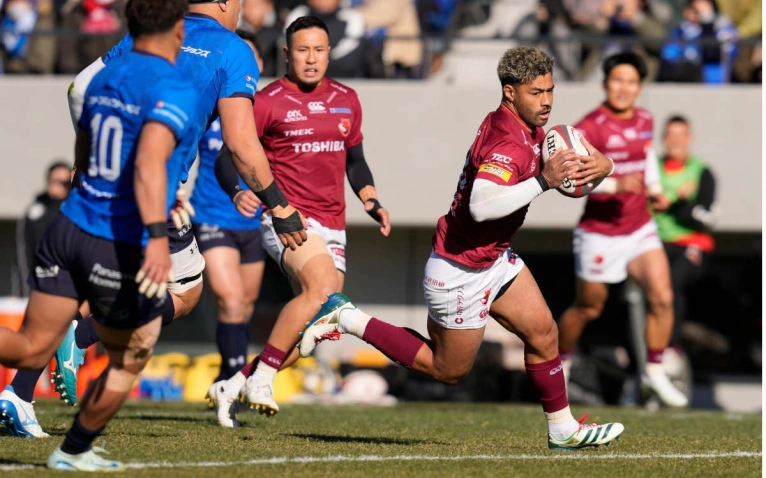
He also felt that it would make more sense to let players play two consecutive seasons in Japan as part of a long-term commitment to New Zealand – which, using the example of Richie Mo’unga, would have meant he could have played for Toshiba in 2024 and been eligible for the All Blacks, and then returned to Toshiba this year and then transitioned to his long-term NZR contract.
The point of this change was to off-set the changing view in Japan about signing All Blacks for one campaign – they want more commitment than that and if the one-year contracts dry up, it will effectively render the current sabbatical clause redundant.
Razor would love to pick him [Cane] this year and maybe even beyond – partly because he feels the veteran can still play at the right level the team needs, and partly for the leadership qualities he brings in keeping team mates honest.
It’s also believed that he would be in favour of having the right to select a small number of experienced players from offshore clubs.
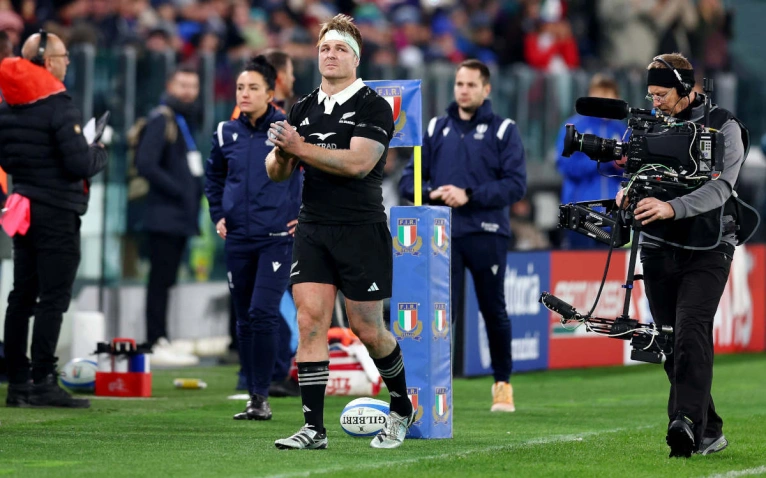
Having not necessarily been a Sam Cane fan when he came into the role in 2024, Razor quickly came to see the value of the former All Blacks captain.
Cane, who is now 33, signed a three-year deal with Suntory, but Razor would love to pick him this year and maybe even beyond – partly because he feels the veteran can still play at the right level the team needs, and partly for the leadership qualities he brings in keeping team mates honest, driving All Blacks values and mentoring those around him.
If the policy was amended to allow some access to offshore players who have met a threshold of test caps, Razor would likely be in favour. All this seemed a sensible and well-considered means to future-proof the eligibility policy and to give Robertson greater scope of using players throughout a World Cup cycle.
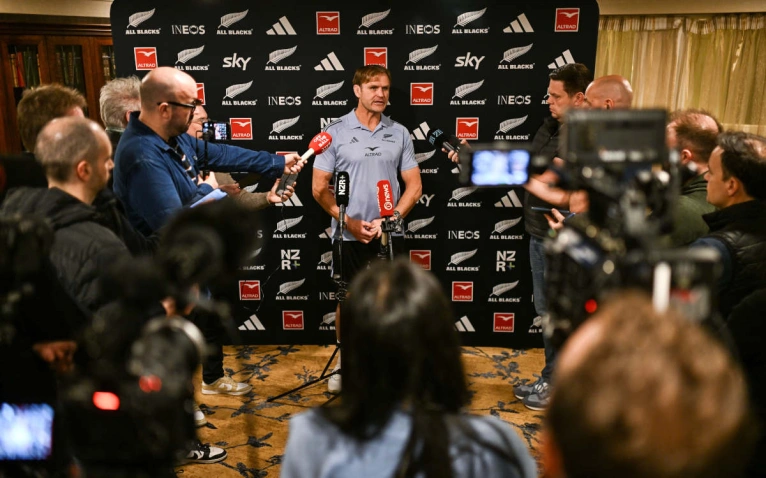
But, somewhat surprisingly, he, alongside NZR chief executive Mark Robinson, appeared on ZB’s Rugby Direct podcast last week, to say he’d had a major rethink and had come to see that the existing policy was in fact doing an excellent job.
“I had a year to look at it and where we stand,” Robertson said.
“The first thing is my intentions with my comments were, was it fit for purpose still? One of my jobs is to make sure our pathways are strong so we can continue the flow of quality professional rugby players.
“I understand how important it is and I’ve probably now got more insight around the flexibility there is in the current regulations. It is fit for purpose. There is flexibility there.”
But this newfound support for a policy that he was critical of just three months ago, is hard to take without a touch of scepticism.
The disunity between Razor and his employer was starting to become embarrassing and clearly, the decision for both to appear on a podcast was a deliberate attempt to showcase how there has been a meeting of minds.
Has Razor really seen the light or has he been told he needs to say he has because NZR was unhappy that the All Blacks coach was publicly undermining the organisation last year?
The answer is likely that both factors are true – that Razor has been told he can have a greater role in privately advocating for specific players to be offered sabbaticals to try to keep them here, and so too has he been asked to toe the party line and be publicly supportive of an issue that creates considerable media and public debate.
The disunity between Razor and his employer was starting to become embarrassing and clearly, the decision for both to appear on a podcast was a deliberate attempt to showcase how there has been a meeting of minds.
That’s all fair enough as it is reasonable for NZR to expect the All Black coach to be publicly aligned with an important policy.
But this does pose the question of whether a desire to present a united front, is preventing the necessary debate and scrutiny to be placed on an eligibility policy that Razor was right to question as perhaps not being fit for purpose. There are specific positions and issues that highlight how changing the system would benefit the All Blacks immediately.
The example of being able to pick Cane already given is a good illustration of where change would have positive impact without blocking pathways or devaluing domestic rugby.
Cane, even though he is in Japan, is arguable still New Zealand’s best No 7, or second best if Ardie Savea is also considered an openside. The third-ranked openside is probably Peter Lakai, who is 22 and won a few caps last year, just ahead, maybe, of his Hurricanes teammate Du’plessis Kirifi, who is uncapped.
The other contenders feel like they are a long way back. Dalton Papali’I appears to have fallen out of favour. Ethan Blackadder has been ravaged with injury but looks a more natural blindside anyway and there just aren’t many talented No 7s coming through.
The situation at No 10 is similarly precarious in that the top ranked 10 is 34-year-old Beauden Barrett, with the near 30-year-old Damian McKenzie behind him. The issue is not that they are too old now, but that certainly the former and possibly the latter, will finish in New Zealand after the World Cup.
To that end, it seems mad not to be able to keep picking Cane and mostly start him this year, with either Lakai or Kirifi taking game time off the bench and starting against lower ranked opposition – all the while gaining the benefit of being in a squad with a former All Blacks captain.
Cane wouldn’t necessarily merit selection next year, but there is a sense that the All Blacks don’t have an openside capable of bringing the hard edges of Cane to the international arena just yet, and that it would be beneficial for Lakai, or Kirifi, to spend another year slowly being developed.
The situation at No 10 is similarly precarious in that the top ranked 10 is 34-year-old Beauden Barrett, with the near 30-year-old Damian McKenzie behind him. The issue is not that they are too old now, but that certainly the former and possibly the latter, will finish in New Zealand after the World Cup.
Richie Mo’unga, who is currently ineligible because he’s in Japan, may return in 2026 and play in 2027, but he too will almost certainly not be in New Zealand in 2028.
New Zealanders like to think the system will always push through the next generation, but with Barrett being so critical to the Blues, there is little opportunity for Stephen Perofeta to learn his craft.
And what’s undeniable is that the domestic system needs turnover – it needs for experienced players like Barrett to make way and provide opportunity to develop the next tier.
There would have been some value, and sense then, in letting Barrett stay at Toyota Verblitz, where he played last year, for at least another season, if not two, but keep him All Black eligible.
Perofeta needs opportunity, so he can be one of the candidates ready to compete for the All Blacks No 10 jersey in 2028.
NZR says the eligibility policy is flexible, but is it flexible enough? Has a desire to get the PR right papered over the cracks in the system and left the All Blacks vulnerable?
The prospect of the All Blacks starting 2028 with a No 10 who has no or limited test experience is real and, again, this was a point Razor hinted at all last year – that the Springboks have a genuine advantage in that they can retain their most experienced players no matter where in the world they are playing and it is this which may in fact be the true strength of the fabled bomb squad.
That is to say, that the Boks can call upon the likes of Pieter-Steph du Toit, Handre Pollard and Damian de Allende, while the All Blacks can no longer pick the likes of Brodie Retallick, Sam Cane and Richie Mo’unga – and that’s partly why New Zealand couldn’t match the Boks in the final quarter of games last year, because they lacked similar firepower.
NZR says the eligibility policy is flexible, but is it flexible enough? Has a desire to get the PR right papered over the cracks in the system and left the All Blacks vulnerable?

News, stats, live rugby and more! Download the new RugbyPass app on the App Store (iOS) and Google Play (Android) now!
Whether you’re looking for somewhere to track upcoming fixtures, a place to watch live rugby or an app that shows you all of the latest news and analysis, the RugbyPass rugby app is perfect.


Comments
Join free and tell us what you really think!
Sign up for free