
The weather is starting to turn in the Northern Hemisphere and you can almost smell Test rugby in your nostrils with the Nations Championship and Nations Cup but weeks away, but first there’s a glut of top class domestic rugby to salivate over and these are some of the vignettes I’ve taken note of in the past few weeks…
Cameron Hanekom is becoming a problem…for the opposition
There are plenty of players in rugby who, over the course of a season, look to have mastered the game. But then there are players who rise above even that high bar and make the game look almost easy – Cameron Hanekom is one of them. He is a back-row forward whose metres carried should be measured in kilometres, not metres. Once he has broken the first line of defence with the power of a Test-level number eight, he accelerates with the speed of a Test-level centre. His line break against the Lions was impressive enough, but it was his nonchalant hand-off on Lions’ wing Richard Kriel that made you realise Hanekom is moving into a different level of play. Kriel is 6ft 4 ins tall and the best part of 100 kilograms – Hanekom flicked him away like an early Halloween cobweb.
Attacking rugby is back and beautiful
Rugby is once again an attacking sport, and it is great news for attack coaches. Long gone are the days when attack coaches had to sit at the back of the team briefing, heads bowed, hands trembling and brows quivering, only to look up at the overly confident defence coaches with their chests puffed out. We’re witnessing an increase in tries across all the major northern hemisphere leagues this season: the Premiership is up by 0.9 tries per match, the Top 14 by 0.8 and the URC by 0.6. You’ll see no better example than Northampton Saints v Bath. It was all-out attack in a manner not seen since ‘Little Nicky’ Scarfo took over the Philadelphia mob in 1981. Northampton won 71–48 in a 19-try match that was as close to Super Rugby as the English Premiership has ever been. The result is a game that feels faster, looser and less predictable. Some old-school supporters are not fans of this new style, often referred to as ‘rugby basketball’.
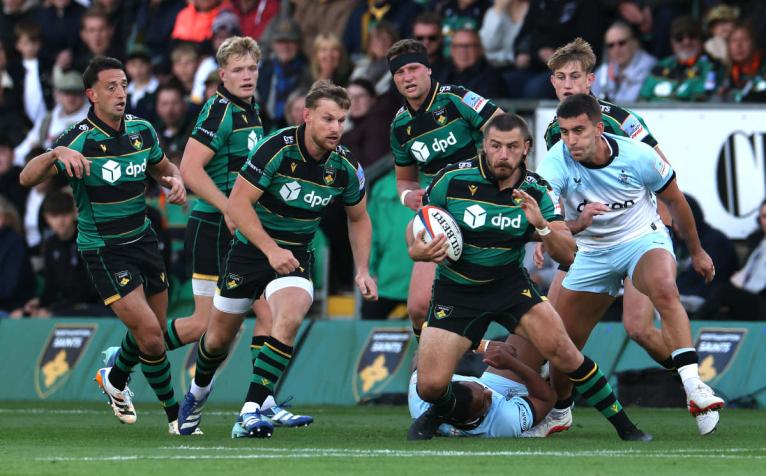
Their criticism is that rugby has become flaky, and tackle adverse. But there is a big difference between missing a tackle and being beaten. Rugby has not suddenly stopped tackling, and professional players have not suddenly become scared of contact. The reality is that the removal of ‘tackle escorts’ has made contestable kicks genuinely contestable. More than that, they often favour the attacking team because their jumpers are moving forward. Let’s also not forget that lowering the tackle height, and the resulting increase in opportunities to offload above the tackle, has created more broken-field chaos – exactly what rugby needs. Five seasons ago, much of the discussion around rugby focused on how defensive and unappealing the game had become. That has now been fixed. Add the desire to kick to the corner, driven by the efficiency of lineout mauls, and you have a game that rewards tries scored over tackles made, which is the way it should be. Well played, rugby.
Sam Prendergast has powered up
Sam Prendergast looks to have lifted more tin this summer than a Cornish miner in 1870. On his return for Leinster, he looked visibly different, and the impact on his performance was noticeable. He has always had the hands, step and vision to play elite rugby, but now he also has the arms and legs to match. His neck also seems to have moved up to chunky magic-marker size from the pencil people rather cruelly compared it to before. Against Cardiff, you could see that Prendergast now has the size to hold the ball and delay the pass for longer without getting blasted by a defender.
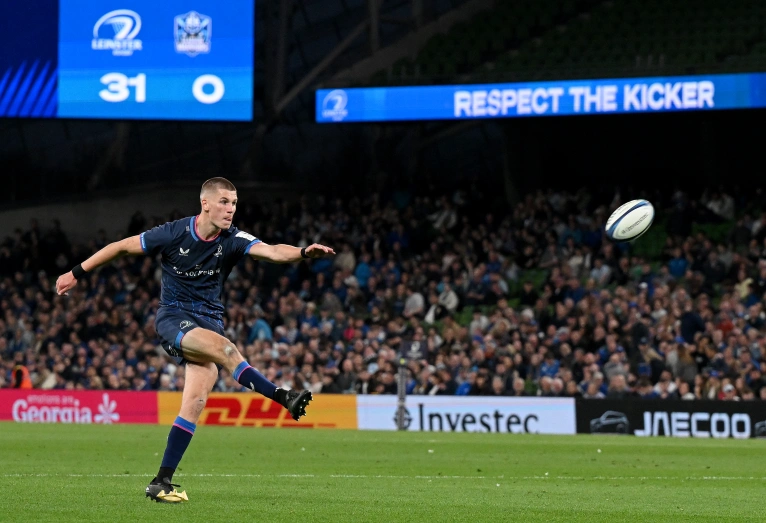
The same can be said of his tackling, which looked far more assured. That physical confidence should also give his playmakers more options around him. Prendergast’s extra size will not only make him more dangerous with and without the ball, but will also allow him to compete for longer in matches. Playing rugby at an undersized weight is tiring, and now, hopefully, Sam P can use that extra mass to trouble the opposition rather than allowing his lack of mass to limit his incredible skill set. Well trained, Sam.
The rise of Taine Basham at Cardiff
Taine Basham has always been a good ball carrier. You can’t have a frame like that and not be good at running through stuff. If you’ve never seen him up close, he’s built like a Belgian Blue bull standing upright on its two back legs. But this season, and arguably since his move to Cardiff, his carrying has gone up a level. Basham is now Cardiff’s premier ball carrier, and it’s not even close. There are other very solid carriers in the Cardiff pack: the immaculate Josh McNally and Teddy Williams both require two tacklers to stop them. Basham, however, is one of those players who occasionally requires three defenders to bring him to ground properly. That consistency has made him increasingly central to Cardiff’s forward momentum. His performances for Cardiff so far this season have been beyond impressive, and a recall to the Wales squad is not a matter of if, but when.
Freddie Steward, the stepper
From one player, Sam Prendergast, who appears to have added a few kilograms, to a player who appears to have lost a few. Freddie Steward looks like a totally different beast this season. Steward has always been an excellent full-back, and the change to the escort rules means that being able to kick, catch and clean out as a back-three player is now more important than ever – but so is posing an attacking threat from 15.
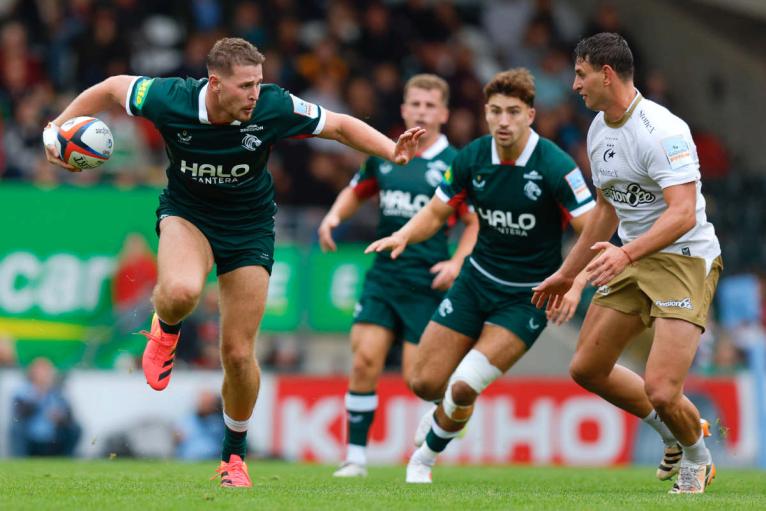
With broken-field defences now the norm rather than the exception, having a full-back who can make metres in space has become crucial; a reputation for making metres in contact is no longer enough. Seeing him make 10-metre breaks and glide around defenders has been a joy so far this season, and long may it continue. Well played, Freddie.
 Register your interest to receive priority updates on RWC27 ticket releases. Don't miss out, stay in the loop!


Comments
Join free and tell us what you really think!
Sign up for free