
Back in 2014, under the lights at Murrayfield, Scotland were trailing New Zealand 14-13 and I was warming up to come off the bench. The usual thoughts whirl through your head as you spin your legs on the Wattbike and loosen your shoulders hitting bags: do your job, make the first shot count, play for your teammates. I came off the bench at the same time as Steve Hansen sent for Sonny Bill Williams. As I looked along the touchline at this colossus in black, I distinctly remember feeling like a school child. I was meant to be a hard-hitting number eight. He was a centre. It was like standing next to the Mountain from Game of Thrones.
We ran New Zealand close that day, staying within a score until the final six minutes, when Jeremy Thrush touched down to put the game to bed. We left the field ruing a huge missed opportunity, and wondering if we’d ever get such a tantalising crack again. For me, the answer was no. That was my one and only shot at the All Blacks.
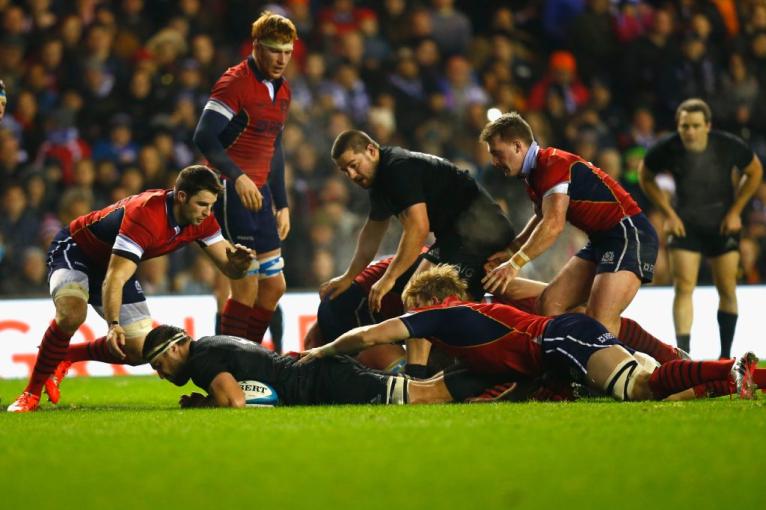
The narrative around Scotland was beginning to shift back then, in the early days of Vern Cotter’s reign and the start of some exceptional careers, particularly the rise of a young Finn Russell. We were creeping out of the doldrums, playing more ambitious rugby and had dared to believe a first-ever win over New Zealand might be possible.
There was never that sense growing up in Scotland. I remember getting up early with my dad – part of the 1983 Scotland team to draw against New Zealand – and walking across to the Glasgow Accies clubhouse to watch Scotland’s tour matches in New Zealand during the summer of 1996. We got absolutely humped. Twice. That famous All Blacks aura was drilled into me even then: our country gets battered by theirs.
For years, New Zealand would send their second string to Murrayfield, keep the big dogs in reserve for the stronger tests presented by the other home nations, and still win at a canter. Scotland even threw a 2007 World Cup match, fielding a hugely rotated team so the front-line XV was rested for the crunch game with Italy which followed. That’s the psychological difference. That’s the fear factor New Zealand carry. As a sporting brand – never mind a rugby team – they have one of the highest win percentages of all. They were so far ahead of the curve in skill level, cohesion, rugby IQ, professionalism, and the wonderful athletes they produced.
Zander is the most important player in Scotland. People assume Finn Russell is the essential figure, but Zander offers us a robustness, a solidity, to allow everything else to happen.
I played with and against a load of Kiwis in France. I’ve been asked if they are different to us, as if they have this innate edge in the business of winning Test matches. Honestly? No. They are not radically different or better than our players. They have a different gene pool but their approach to rugby is actually very similar to our own. They take their work very seriously. Many are from farming backgrounds. They love a beer. With their school system, rugby heritage and the advent of Super 12, they were simply way out in front of the pack.
That gap between New Zealand and the rest has closed now. Ireland have routinely beaten them. France have smashed them apart. The Springboks inflicted a record defeat in Wellington only two months ago, after Argentina had claimed their first home win over New Zealand. What’s happened around the rest of the world, specifically in the north, is that competitions have advanced, and teams have unearthed their golden generations. Ireland and France have theirs, Scotland would argue the same. I know some people are sick of hearing that, but this group have punched some tickets many of their predecessors failed to get done. So, the black mystique hasn’t gone, but it’s cracking a little. This feels like Scotland’s biggest chance to end their longest hoodoo.
Gregor Townsend has a blueprint which suits his players – fast, expansive, dynamic – and could expose Jason Holland’s defence. Townsend knows his team may lack power, and has delivered a style which is good fun to watch and respected by a lot of other rugby nations. Scotland sometimes struggle against big, muscular opposition. France and South Africa have a hard blitz defence. Ireland are incredibly direct and have steamrolled Scotland over and over. New Zealand, under Scott Robertson, use an ‘up and out’ defensive structure which allows you to get to the edges, and that’s where Scotland find a lot of joy. You still need the physical elements to knock over top-tier teams, but they will be allowed to generate go-forward, they will be allowed to generate space, and other teams don’t give you that access. That plays in Scotland’s favour.
There are things which trouble me, though. Scotland are down two top-class starters. There is no out-and-out replacement for Huw Jones at 13, although Rory Hutchinson is a player whose nine caps are a pale reflection of his ability.
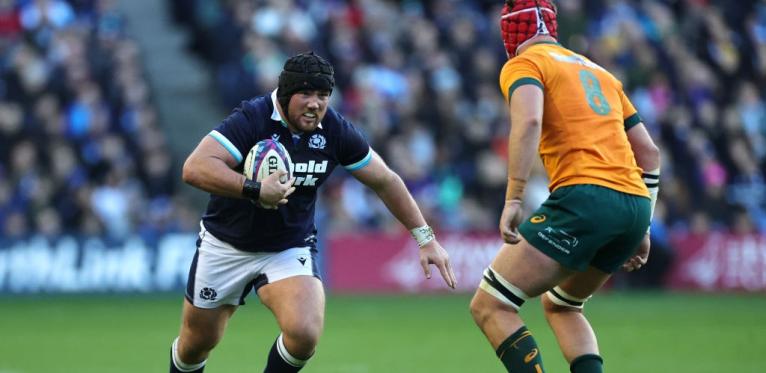
The most painful loss, though, is Zander Fagerson, who hasn’t quite recovered enough from the calf and knee injuries which kept him out of the Lions tour.
Zander is the most important player in Scotland. People assume Finn Russell is the indispensable figure, but Zander offers us a robustness, a solidity, to allow everything else to happen. Look back at the lineage of great Scottish tightheads – Sandy Carmichael, Iain Milne, Euan Murray, and now Zander – and it’s obvious they don’t come along too often. Zander is a two-time selected Lion. He plays 80 minutes most weeks. He offers us guaranteed parity – at worst – in the set-piece which allows us a way into the game.
Without him, beating New Zealand becomes much more difficult. His work rate is ridiculous for a big man; his quality of clean, his hard carries, he doesn’t miss tackles, and he is always back on his feet and back in the game. With due respect to D’Arcy Rae and Elliot Millar Mills, his absence leaves a drop-off in quality.
This is easily our best squad since the 1999 Five Nations title but it won’t last forever, and frankly, I don’t know what is coming through our talent pathways to replace it.
People often overlook the sheer efficiency of New Zealand’s scrummage. It’s trendy to talk about the Springbok Bomb Squad, the French behemoths, the Argentine powerhouses, but the All Blacks have always been ferocious. Technically very, very good and incredibly well-drilled. One or two scrum penalties either way can have a huge influence on a Test match. Scotland cannot concede 40m swings in territory against this opposition. New Zealand will bring two 6ft 4ins, 140kg props off the bench – that’s a big concern for Gregor Townsend.
So the scrum is something for Scotland to avoid. Traditionally, you want to keep the ball on the field against heavier teams, but not New Zealand. This will be two enterprising, supremely fit teams fighting fire with fire. Scotland will not go confrontational in the middle of the field. They will tip the ball on rather than using a hard carrier first up. They will pull it back to Finn Russell and shift that point of contact, then work around the corner. New Zealand have an exceptional scramble defence and defensive breakdown, so it’s high risk, high reward.
Selecting Kyle Steyn over Duhan van der Merwe will raise many eyebrows, but it’s an intelligent call. Steyn is better in the air than Van der Merwe, and I think we will see a lot of kicking in this match. Scotland will look to bypass the physical contest and go to the skies. If anything is slowed down, they will look to a box kick or a Finn Russell up and under to bring Steyn and Blair Kinghorn into the game. If you can generate those 50-50 duels, you give yourself opportunities and a foothold into the game, as England did against the Wallabies so effectively. It used to be boring, but now the fight for aerial supremacy is a true contest.
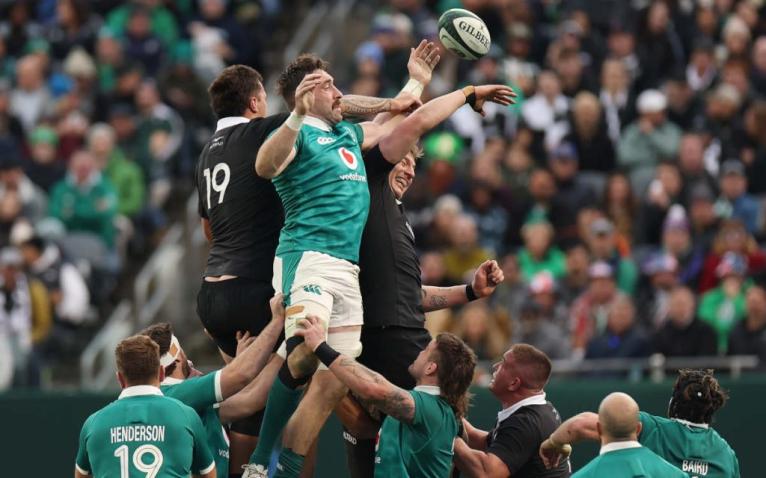
It has to be a great day for Scotland’s lineout too. The Kiwi locks are excellent, but inexperienced. Scott Cummings, Grant Gilchrist and Gregor Brown are three big options to get up and disrupt an All Black set-piece that didn’t fire convincingly in Chicago.
Ultimately, though, rugby is a game of power. New Zealand are abrasive and explosive up front. As is their centre pairing. As is Caleb Clarke on the wing. We know that is going to generate mighty collisions, offloads and quick ball, creating opportunities for a lethal backline. Scotland have to do the same thing. Step forward Jack Dempsey. Step forward Brown. Step forward Cummings. Step forward Pierre Schoeman. We have to penetrate and be dominant in our carries to produce the ball for Finn Russell to thrive. And we have to absolutely ruin some of the New Zealand carriers. Lee Radford’s new-look defence has to be ravenous on the gainline.
Gregor’s new contract takes him to the end of the 2027 World Cup. Realistically, he has two chances left to win Scotland a Six Nations title, and then do something special in Australia. He won’t be there in five years, and nor will several key members of the playing group. This is easily our best squad since the 1999 Five Nations title but it won’t last forever, and frankly, I don’t know what is coming through our talent pathways to replace it. Where is the next Finn? Where is the next Zander? If Scotland don’t win on Saturday, then when will they finally break that 120-year drought? The players know how limited their chances are and how precious this one could be.
Today’s All Blacks carry a different respect for Scotland. Their selection for Saturday shows as much. They will have seen how Scotland have performed at Murrayfield, seen their backline, seen how they fire, and I hope they are nervous. Which would not have been the case 10 years ago. Now, it’s a different ball game. Scotland are a different proposition. And as much as you want to be the first Scot to beat New Zealand, you don’t want to be in the first All Blacks team to lose to Scotland. I hope there are nerves. I hope there is a lot of noise. I hope Scotland make this a real humdinger of a Test match.
I say all this knowing only too well how things could fall apart, and how the history of Scottish sport is littered with false dawns and gallant defeats. My generation lost a lot of games. You can joke about it now but some boys I played with will have a 70%-plus losing record in a Scotland shirt. Horrible to say, but true. There were periods when it was utterly desperate and I played in those teams. It was horrific.
When you string it all together, with nearly 70,000 people at your back, you have the chance to be part of Scottish folklore. Many are capped, but few deliver these seminal, lifelong memories.
We actually now play in a way which can topple the top teams, even if we haven’t done it consistently enough to contend for a Six Nations or push deep into a World Cup. We may never have the player pool to compete over the long term but we do punch well above our weight considering the resources. When you string it all together, with nearly 70,000 people at your back, you have the chance to be part of Scottish folklore. Many are capped, but few deliver these seminal, lifelong memories.
Perhaps beating the All Blacks wouldn’t be some watershed moment for Scotland, where suddenly the mindset changes and the elusive consistency follows and at last, there’s some silverware in the trophy room. Ending barren runs in Wales, England and Paris has not led to a title charge. Nor has Glasgow’s superb URC triumph in Pretoria.
So maybe it wouldn’t transform Scotland from nearly-men to winners. It wouldn’t solve any of the wider issues dogging Scottish rugby; the questions about mentality, about player pathways, about the next generation and the performance of the Under-20s; about Edinburgh’s fluctuating form; about budgets and recruitment policies and the contracting of the women’s side. But that day – that one special November day – could be the greatest moment of their sporting lives.


What a beautifully written and eloquent article. Well done to JB from a Welshman.
I think this will be a humdinger of a game. New Zealand are taking it seriously, and Scotland smells blood in the water. The international game is in a good place.
I have successfully procured my pair of edible undies for this match.
They’re a little frilly and tight for my liking - but if I have to eat them, I will!
Doubt it though. I may just nibble on them during the game out of boredom.
they could be gone by half time then, watching BB and Roigard box kick everything as per Foster 2.0 because the back line doesn’t have an attack coach.
A win would be transformative for Scottish rugby.
Would love to see them do it.
Is it realistic tho? Scotland arnt ranked 8 because they are great.
A Scots win would also be transformative for the ABs, in the coaches box!
Mon Scotland!