
Move over Benedict Arnold, step aside Judas Iscariot, there’s a new benchmark for traitors and turncoats. Tony Brown has swapped green for black as he’s set to leave his post as attack coach of the Springboks to join the ranks of the All Blacks. Shakespeare himself couldn’t dream up such treachery.
Official World Rankings in the App 📱
You can now check the official International World Rankings in the RugbyPass App!
Of course, the truth is far more mundane. Brown, a former All Black, will only be heading to his native land after the 2027 World Cup. He remains committed to the South African cause and, by all accounts, has been upfront about his desire to one day coach the team he used to represent. South Africa have not been burgled in the night. New Zealand have not activated some sleeper agent. A good coach has bagged a plum job. That’s it.
Still, the image is irresistible. One of the brains behind South Africa’s evolving attack will soon be helping New Zealand solve theirs. Same coach. Same ideas, but refined and repackaged.
If this feels oddly familiar it’s because it is. Your local coffee shop is actually part of a chain. Your closest museum is putting on another immersive Van Gogh experience. Your streaming homepage offers 19 shows starring Zendaya. The new restaurant in town serves small plates, natural wine and something “for the table”. The algorithm has discovered your taste and is now feeding it back to you until it no longer tastes of anything at all.
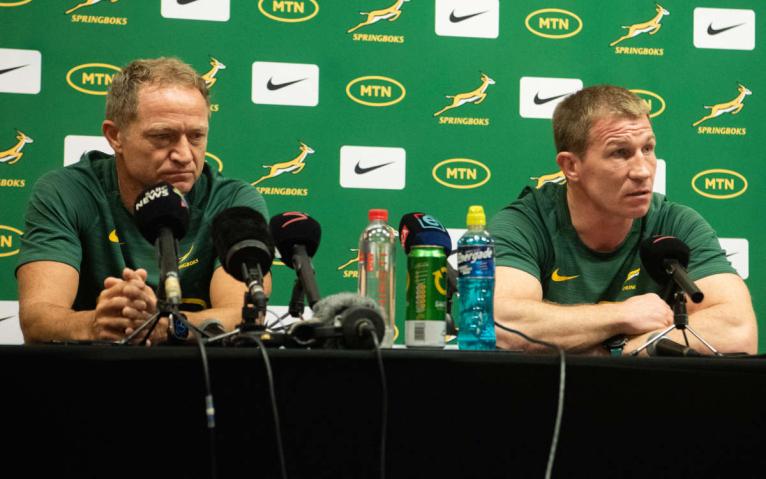
Culture is flattening. Rugby is not immune to this. In fact, rugby may be particularly susceptible to it because, for all its chest-thumping about tradition, it is often a deeply conservative sport. We like to think of it as mud, blood and instinct. But at the top end, rugby is spreadsheets, succession plans, risk registers and people in quarter-zips saying “alignment” with a straight face.
So the same faces keep appearing at different press conferences. Eddie Jones in Japan, then England, then Australia, then Japan again. Jacques Nienaber in green, then blue. Felix Jones with the Boks, then England, then back with the Boks. Don’t worry, Shaun Edwards may be out of work, but he’ll soon be back barking instructions at a defence near you.
Brown has helped South Africa ask different questions of themselves. The caricature of the Springboks as set-piece, maul, bomb, tackle, repeat was never entirely fair, but it was useful shorthand. Under Rassie Erasmus they have always been more layered than that.
Elite rugby has started to resemble a multinational consultancy business. The same names fly between the same hubs, carrying intellectual property from one boardroom to another. There are not coaches anymore so much as coaching corporations: compact, portable, high-value units of expertise, complete with trusted lieutenants, preferred language, familiar drills, and a PowerPoint deck that has probably been through more airports than most Test players.
This is not necessarily a bad thing. In fact, much of it is obviously good. Rugby at the sharp end feels better than ever. Does it really matter if the Walt Disney Company also owns ESPN, Marvel, Hulu and the Star Wars universe if their content is entertaining?
Brown has helped South Africa ask different questions of themselves. The caricature of the Springboks as set-piece, maul, bomb, tackle, repeat was never entirely fair, but it was useful shorthand. Under Rassie Erasmus they have always been more layered than that, but Brown has injected a fluency and sharpness into the side. There are more pictures, more passes, more licence for flair players to strut their stuff.
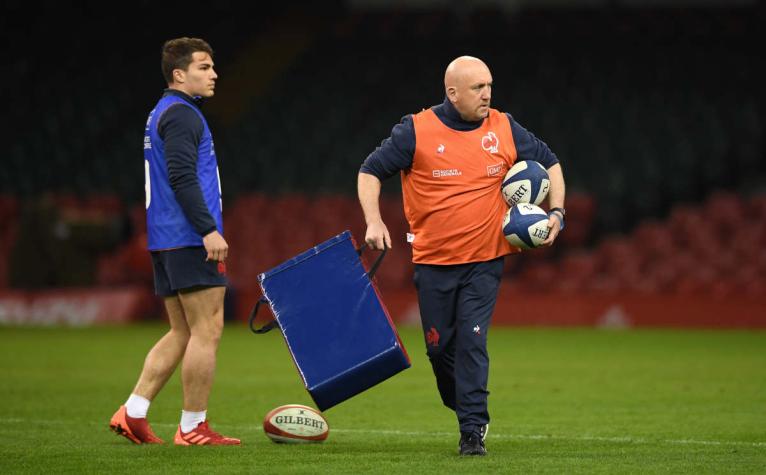
If that knowledge later returns to New Zealand, so be it. This is how ideas move. South Africa borrowed a New Zealand attacking mind without becoming New Zealand. Leinster hired a Springbok defensive architect without becoming the Springboks. England briefly reached for Bok detail through Felix Jones. The modern game is a network, not a set of sealed borders.
Cross-pollination is not the problem. The problem is when cross-pollination becomes closed-loop pollination. The same flowers, the same bees, the same honey sold back to us with changing labels.
You can understand why unions do it. International rugby is a brutal hiring environment. A chief executive does not get much credit for developing a young coach’s potential if the scrum folds in Paris or the line-out malfunctions in Wellington. World Cup cycles are short and patience is shorter. Supporters want innovation, but preferably innovation that arrives with a CV and a winner’s medal. So the safest radical move is to hire the familiar revolutionary.
Who gets to be the next Tony Brown before he is Tony Brown? How does a young coach in the Currie Cup, the NPC, the URC, Super Rugby Americas, Major League Rugby or the women’s game force their way into the conversation.
That is how reputations become self-perpetuating. A coach works in a successful environment, becomes associated with success, and is then invited into the next successful environment because he has worked in a successful environment. And fair play to them. It’s good work if you can get it.
But it does create a narrowing effect. If the same people keep getting the biggest jobs, the door behind them starts to close.
Who gets to be the next Tony Brown before he is Tony Brown? How does a young coach in the Currie Cup, the NPC, the URC, Super Rugby Americas, Major League Rugby or the women’s game force their way into a conversation that often seems to begin with: “Who has already been in a World Cup coaches’ box?”
This is not a plea for novelty for novelty’s sake. Nobody deserves to run the Springboks attack as a result of a winning lottery ticket. But the pipeline matters. And, from the Springboks’ own perspective, the interesting question is no longer whether Brown is leaving. It is who has been developed enough to make that departure feel manageable.
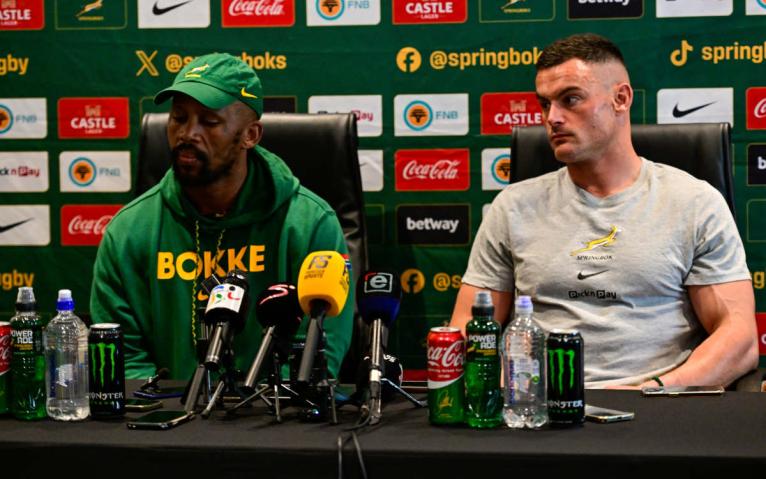
That is where South Africa should have an advantage. Erasmus has not built a one-man band. Mzwandile Stick has been around the national set-up for years. Deon Davids and Daan Human are part of the furniture now. Duane Vermeulen has moved swiftly from on-field general to backroom apprentice. There are analysts and assistants inside that system who understand the language, the pressure and the odd little alchemy that makes this Springbok machine work.
If Brown’s exit reveals anything, it should reveal how much of that knowledge has been shared. The healthiest organisations do not merely attract expertise. They multiply it. They make sure that when one smart person leaves the room, the lights do not go out.
There is a version of this story that ends happily for everyone. Brown helps South Africa through another World Cup campaign, returns home with a sharper view of the sport, and New Zealand benefit from a coach who has been tested inside the most demanding environment in the game.
That is what should dominate the conversations on X threads and WhatsApp groups. Not plastic outrage over Brown’s departure, but curiosity over who follows him. The Springboks have become the most interesting coaching laboratory in the game precisely because Erasmus has been willing to stitch together different minds, accents and rugby upbringings.
There is a version of this story that ends happily for everyone. Brown helps South Africa through another World Cup campaign, returns home with a sharper view of the sport, and New Zealand benefit from a coach who has been tested inside the most demanding environment in the game. The Springboks, meanwhile, use his exit not as a wound but as proof of concept. If your staff are being poached by the All Blacks, you are probably doing something right.
But being a destination for great coaches is only half the job. The other half is becoming a nursery for them. The last thing any successful organisation needs is velvet ropes that only open for those with proven track records.
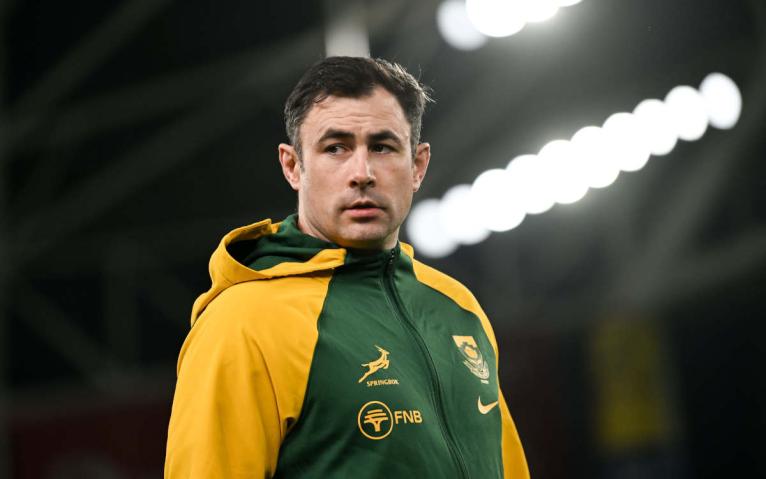
Brown wearing black after green is not the problem. Nor is Nienaber in blue or Jones in red and white. The problem would be if the game starts believing there are only a dozen people capable of serious thought.
Culture is flattening because familiarity sells. Rugby should be careful it does not confuse the familiar with the best.
 Register your interest to receive priority updates on RWC27 ticket releases. Don't miss out, stay in the loop!


This is very good news for All Black rugby and New Zealand.
NZR have stipulated they require their All Black coaches to have international experience, Brown fits that criteria and at 51 is just coming into his prime as a coach. Hes traveled the rugby world to ply his trade and improve as opposed to Razor (for example) who chose to stay local. Wayne Smith always welcomed sharing ideas between rival coaches and teams. Share an idea openly Smithy will tell ya, and you will receive two or three new ones in return. Sharing info also keeps coaches fresh, they have to create new ideas and strategies to be better and keep one step ahead of the opposition. Tony Brown wont return to NZ running the same plays he ran withthe Boks. Hes a lateral thinker and an innovator. Exactly what the ABs have missed.
well no its a sign of having people with coaching experience involved with the allblacks and giviving guidence
Pretty happy with the development of coaches in NZ. The Canes are developing a few and certainly Corey Jane seems to be growing in stature, The Chiefs have Jono Gibbs and have also brought in some young ones. The Crusaders stable is pretty good and both Otago and the Blues have got young ones coming through. I think some of the newbies will need to go off shore at some stage so they can develop further but it is looking pretty good.
While a lot of ex players have gone on, for me there were a few who moved too far too fast and then crashed and burned. There’s a huge difference from being a good player to being a good coach and NZR needs to ensure they have the development pathways needed for them. Going ok for now but like everything needs to be reviewed and challenged.
All due respect to Tana but I would love to see Shaun Edwards employed by RNZ as a defence consultant Perhaps as a mentor and a resource for Super and NPC.Edwards is a transformational coach. Improves teams wherever he goes.
traditional wisdom would suggest, an employee hired by the biggest competitor being released from his contract with immediate effect …. it’s quite a statement Brown keeping his position in the Boks camp - another Rassie mind game
(btw I am glad the Boks keep Brown - his heart might be rather black than green, but I am absolutely certain he is 100% dedicated to the mission of claiming a third RWC)
Ian Fraser seemed to lose control of the narrative when Scott Robertson was appointed in advance. Will the same happen to Rennie if he is not winning everything ?
treachery?
Tony Brown will be out of contract, a professional contract, when he finishes it.
rugby talent in players + coaches is a big kiwi export. those pro contracts don’t tie them to the host competition’s nation for life, however.
at the 2019 rwc 10 of the 24 head coaches were kiwis; would 9 of those teams renounce competing as they didn’t have a patriot coach?
would the red roses give up their wc due to the fact that their coach is kiwi?
treachery? or northern insecurity?
I wonder when they announce the appointment of Rassie as head coach of the AB’s?
Rassie is not a one-man show. He is surrounded by specialists in their field. You can take Rassie and give him to the AB’s; it’s no guarantee of success, but if you take him with his team, you will see the difference toward success. A point in case is our friend who went from Australia to Japan to England to Australia, and back to Japan. He is a one-man show.
when hell freezes over?
Interesting article. It would be a shame if test rugby became samey through a lack of churn in the coaches of the top sides.
But I think there is still quite a lot of diversity in the way each side plays still. Less than in 2023 though so maybe there’s a point to be made here.
At one stage I was very worried we were going to see all teams operating the same box kicking heavy strategy at the 27 WC. But that looks to be dampened down and being used more selectively already as defenses have adjusted.
Oh, and 2-4 year revolving door contracts don’t help the optics either. I think it’s a revelation that Rassie Erasmus has been retained this long. I doubt the average tenure of any bok coach before him was more than 2.5 years!
I don’t quite follow the logic - that top coaches moving about teams is a sign of fewer talented coaches being recycled.
Certainly there are a handful that have moved about like travelling salesmen. But for the most part - I don’t think there’s been a larger quantum of highly respected and qualified coaches, ever. The professional era and club scene has created an enormous number of vacancies for good coaches. And in recent years, the number of players turned coaches seems to have ballooned.
Many of these are still stretching their legs in club/domestic settings before being given the keys to international gigs. Turns out, that’s a step worth taking slowly - as a failed international gig does seem to be the end of the road for some…
When I was in nappies, many of the top tier teams seemed to be coached by teachers, policemen, 2nd rate players turned coaches, and mythical men who seemed to have been there since the darkages. Guys with wooden legs and nicknames earned in the trenches.
Nowadays almost every tier one international team is being coached by a former professional player.
The person I would love to see take over from TB is either Ronan O'Gara or Brad Mooar.
Who is this Gallan oaf? Honestly what a load of tripe!
Cheers mate. Always good to get constructive feedback from a satisfied reader. Loved your work by the way. Keep it up!
It’s an exciting move for All Black fans. But at the end of the day, the talent and quality on the pitch is what wins you games.
The talent and quality on the pitch is shaped by the ability of the coaching staff. The AB side of 2024-25 stagnated under the coaching team….. lots of talented players but no clear understanding of how coaches wanted team to play the game.
Talent quality and the double D Determination and Dedication.