
It is maybe fitting that the All Blacks delivered their most resilient performance since the 2023 World Cup quarter-final defeat of Ireland at Ellis Park.
NEW: Follow Your favourites in the App 📱
You can now follow their favourite teams, tournaments and players in the RugbyPass App!
The spiritual home of South African rugby has been a happy hunting ground for the All Blacks in the recent past. They had won three of the last five times they had played there prior to winning the opening Test of Rugby’s Greatest Rivalry 33-16.
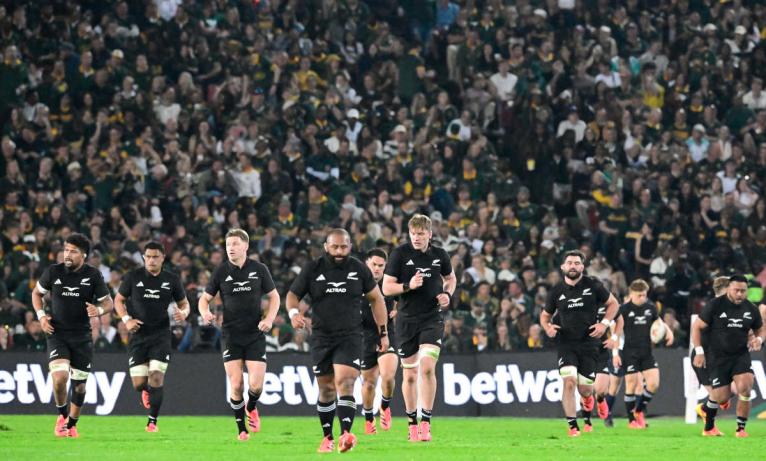
The hard ground, dry ball, thin air and hostile crowd suits their game plan and mindset. In the end, the All Blacks won because their leadership group held their nerve better. In Ardie Savea, Luke Jacobson, Codie Taylor, Cam Roigard, Ruben Love, Jordie Barrett and Will Jordan, they had the more astute tactical readers and mature decision-makers.
And that was deeply symbolic because this was the ground at which the All Blacks fell apart 22 years ago – a defeat that led to the most profound changes.
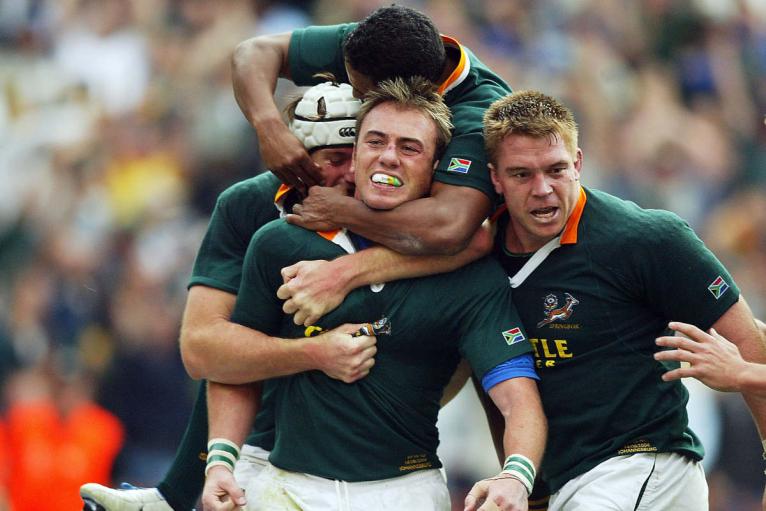
In 2004, the All Blacks were beaten 40-26 in the final game of the then Tri-Nations, in a Test that saw them play as individuals when the pressure came on.
Also, when the pressure came on – and even when it didn’t – captain Tana Umaga was left to make all the decisions on his own. There was no leadership group back then.
But worse was to come after the game when a pre-determined so-called court session (a time-honoured ritual where players are charged with real and fictitious humorous crimes and made to drink as punishment) got completely out of hand.
There were players lying unconscious in the gardens of the team hotel and the embarrassment was so acute that assistant coach Wayne Smith put a letter under head coach Graham Henry’s door and said that if this was how the All Blacks were going to behave, he would be quitting.
Henry, who had come into the job earlier that year, felt the same way.
What followed in Wellington was the biggest cultural change in the All Blacks’ then 100-year history.
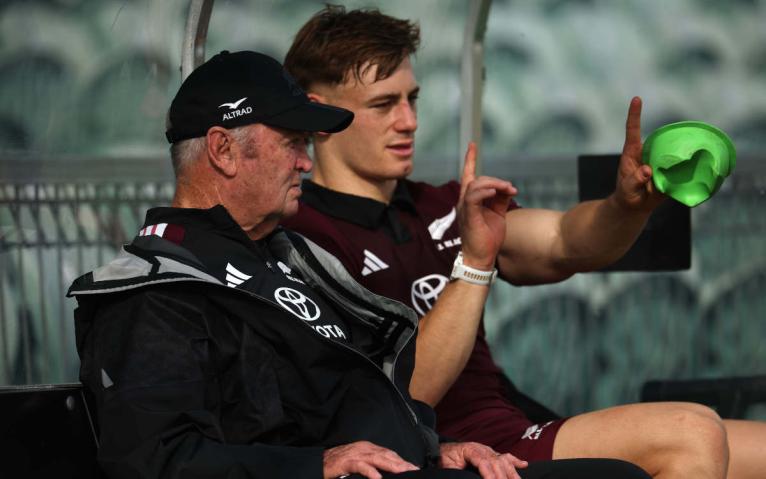
“We had visions of changing the culture anyway, but we didn’t have the space because it was Test match after Test match,” Henry, who is in South Africa with the All Blacks as an independent selector recalls.
“We got back to the hotel [after the game] and it was the first space we had, and they [players] weren’t going to play until the Northern tour which was about two months away.
“And they carried like they normally carried on when there was a big space until the next game. Quite frankly I was amazed and I like a drink. But that was the catalyst for major change. We organised to meet senior players and staff in Wellington at HQ.”
What followed in Wellington was the biggest cultural change in the All Blacks’ then 100-year history. The coaches and senior players – led by Umaga and vice-captain Richie McCaw – agreed to rip up what had gone before and plough a new way forward for the All Blacks.
They built a collaborative model of leadership – one where the players worked with the coaches and had a say in every aspect, from training methods, strategic plans, off-field matters, and expectations around standards of behaviour.
The days of coaches telling players this is how it is going to be and only the captain being involved in decision-making were over.
There would be consultation and it would be between coaches and an identified group of senior leaders supporting the captain.
“I said to them [senior players] how do you enjoy playing for the All Blacks?’. “We feel very privileged Ted ‘but we don’t enjoy the culture,’ they said, ‘and we don’t enjoy the pressure’.
“That was gold. Because the culture was amateur and it was just the way it was. It had been like that for ever. It was a heavy drinking culture. A pressure culture from senior players to adhere to that way of life.
“We set it up from there and it was set up by senior staff and senior players. What’s our purpose what’s our culture and it became the backbone of the team for a long time.”
It didn’t just become the All Blacks’ way of operating, it was a model adopted by sports teams across New Zealand and rugby teams across the world.
The way the All Blacks found a way to win when they were being broken at the scrum and under so much pressure for 55 minutes was incredible.
At the peak of their powers, when they won back-to-back World Cups and had a win ratio of 87%, the All Blacks’ players had an incredible level of ownership in the team and sense of accountability and responsibility.
Henry said that allowing players such as McCaw, Dan Carter, Conrad Smith, Kieran Read and Keven Mealamu – to have such strong ownership in the team was incredibly powerful.
And since he returned to the team earlier this year, alongside mental skills coach Gilbert Enoka, who was the architect of the leadership model changes that were made 22 years ago, both men have been eager to restore that sense of ownership.
The evidence produced at Ellis Park, would suggest they, alongside the coaching team, have made significant progress.
The way the All Blacks found a way to win when they were being broken at the scrum and under so much pressure for 55 minutes was incredible.
They looked down and out – finished even – when the Boks were scrumming them to death and threatening to turn a 16-12 lead into something much bigger.
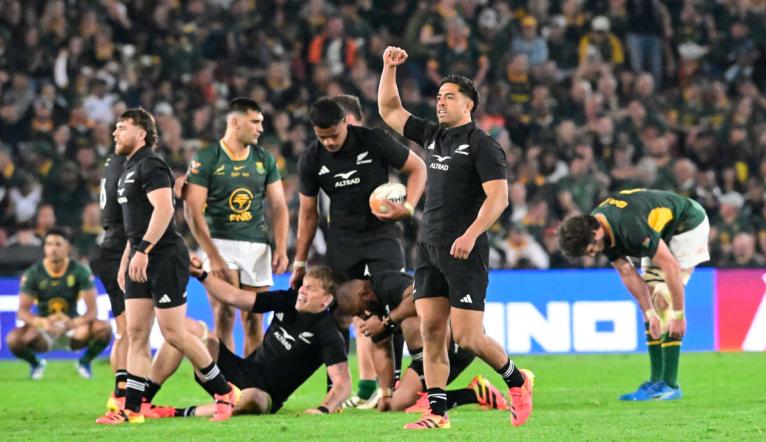
But the All Blacks found a way to keep cool heads and patch up their scrum. They were calm and methodical – first subduing the Boks, then sucker-punching them by scoring three clinical tries, all of which took considered strategic management to be set-up.
It was strong, meaningful leadership and it was integral to the All Blacks winning the game. “I thought our leaders did a really good job,” Rennie said. “We won a lot of key moments in both defence and attack and we have learned a lot about ourselves.
“It gives the guys a bit of belief and I think you have to go through that kind of stuff. I was speaking to Ardie [Savea] and Luke [Jacobson] and they were saying how calm the decision-makers were.
“There were times we probably could have taken three points. We went for the corner and some of that was based on momentum and some of it was based on their kick-off being excellent and able to put us under pressure immediately.
Enoka says the most surprising thing he has discovered on his return to the All Blacks is the way a handful of key players have matured.
“You kick three and then you are under the hammer down your end of the field. I thought a lot of the decisions we made were pretty solid. We were well connected and worked harder for each other and found a way out of it.”
Since Enoka returned to the All Blacks this year, he’s been licensed to reduce the number of players in the leadership group, empower it to take have more say and control over all matters and help improve decision making and communication.
There was a sense that while the All Blacks built an enduring model of leadership 22 years ago, that some of the basics were eroded under the previous Scott Robertson regime and that the players were reduced to being more of a social committee than drivers of the strategy and culture.
Still, despite that, Enoka says the most surprising thing he has discovered on his return to the All Blacks is the way a handful of key players have matured.
“People say, ‘What have you noticed since you came back?’. “I left in 2023 and back in 2026 and the biggest shift for me is in guys like Cam Roigard, Jordie Barrett, Anton Lienert Brown, Will Jordan, Ethan de Groot – these people were kids when I came in but have I seen a ramping of their responsibility and ownership and it has been amazing.
“Some of that has been because they have been through a furnace because the last one [coaching regime] wasn’t easy and that to me has been a noticeable shift.
“All of a sudden you have got men and what has happened has helped them and they are in a much stronger position than when I left.”
The All Blacks of 2024-2025 would likely have crumbled under the sort of pressure the Boks exerted at Ellis Park for 55 minutes. Those teams were notorious for melting down after half-time – be it in the fourth quarter (2024) or third (2025).
They simply didn’t have the quality of leaders or strength of systems to stay calm and think their way out of problems, and the fact that the current team did, is down to what happened on the same ground 22 years ago.
 Register your interest to receive priority updates on RWC27 ticket releases. Don't miss out, stay in the loop!


The fact the mid week team also display that same composure is very encouraging.
Well done to the All Blacks. Boks are hurting. Expect them to be alot more ruthless & clincal this week.
Indeed All Blacks we r de best
Maybe if they woukd have crumbled last year that is an indictment on the players as well as coaches
Like the article says, it depends how much ownership the players have over plans on the field. You get the impression from the results and Robertson’s axing that they didn’t have much.
I’m really excited to see the all blacks grow before the next World Cup! 🖤
Hey Gregor, facts matter.
The leadership group is Savea, Jacobson, Taylor, Roigard, J. Barrett, and Jordan.
Love is not part of the leadership group no more than McKenzie is. Both play a decision-making position but neither is part of the leadership group.
Mental resilience cannot be underestimated and Enoka seems to have moved the dial for this group. That in itself differentiates Rennie’s men from the recent past - along with more accuracy in game plan execution. That said, their mental resilience will be severely tested this weekend.