
After the round one loss to France, it was all over bar the shouting. Andy Farrell’s men were done and dusted, dead and buried. The last rites had been performed and the priest had left the building. Obituaries were being been written in the media, within the country and outside it. The golden age of Irish rugby had officially ended.
By the end of the tournament, Ireland were only 30 seconds and one kick away from winning the Six Nations. The rumours of a rugby nation’s demise have been greatly exaggerated, and the emerald green rose again in the last four rounds of the competition. Two close shaves versus Italy and Wales were punctuated by a couple of outstanding performances against England and Scotland which generated over 80 points, net.
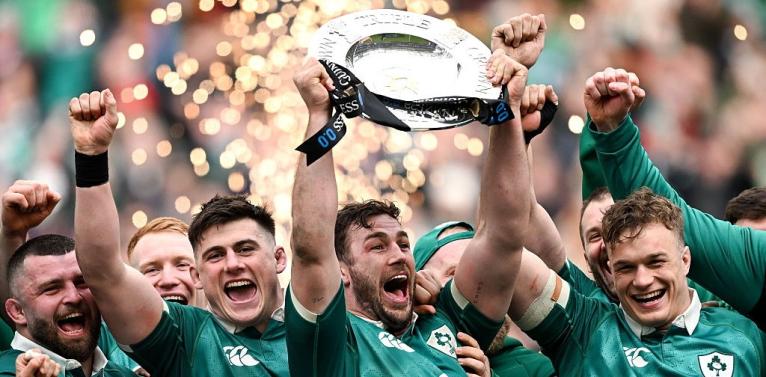
That is what it is to be in transition, to move from the end of one cycle to the start of another. It is the hardest part of the lifetime of sporting teams to manage, but death is rarely as final as it appears.
The questions are still many and varied. How does Farrell manage the changeover from a pool of props who have done trojan service well into their thirties – namely Tadhg Furlong, Andrew Porter and Finlay Bealham – to a group who are on average eight or nine years younger, with Paddy McCarthy, Jack Boyle and Tom Clarkson foremost among them? Sometimes, the golden era can skip a generation or two.
The quality and pecking order at number 10 is nowhere near as certain as it was in the Age of Sexton. Double European Champions Cup-winning head coach Ronan O’Gara was stoking that debate just before the climactic final round game against Scotland in his column for The Irish Examiner.
“What we have at 10 right now is simply not good enough for a nation ranked third in the world. There is a dearth of quality, whoever plays… The sobering reality is that the man in possession of the jersey now has a serious body of work to do.”
That discussion took place among a corps of recent ex-Ireland internationals including Shane Horgan, Rob Kearney and Peter O’Mahony on the Virgin Media Sports show. The response of the most recently retired of them all, Cork man O’Mahony, distilled the unsettled state of Irish rugby at number 10.
“I think Jack [Crowley] is a guy who’s working towards being a really, really good out-half. He’s showed brilliance for Munster and for Ireland. He’s still a relatively young man.
“You look at when Johnny [Sexton] took over the team properly — Johnny was 26. Sam [Prendergast] is very young. Harry [Byrne] is still a young man. They all have time to grow.
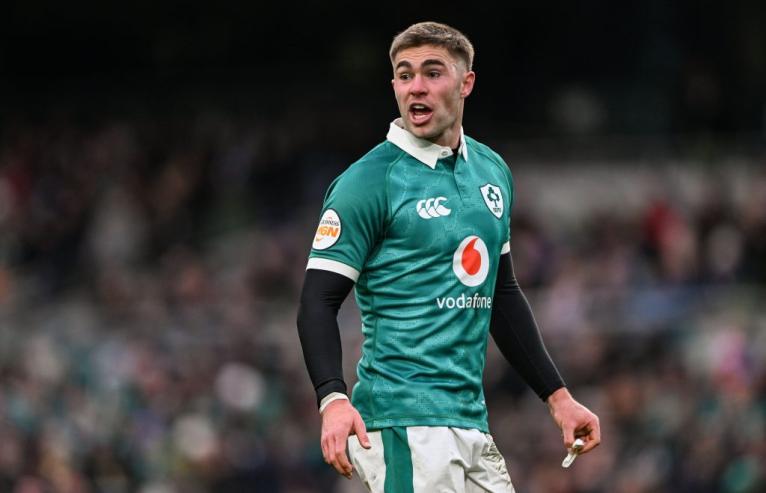
“They [all] need time. You need to fail. You need to make mistakes so that when you are 28, 30, 32, and you’re coming into your prime, all that stuff comes with you, and then you become the guy who is dictating.”
At fly-half and in several other positions across the field – notably at both propping spots, in the centres and on the wings – Irish rugby is in a space it has not visited for many a year: groping in the dark, and feeling its way towards solutions rather than selecting from a pool of proven performers. The hidden rip-tides are pulling this way and that, dragging some to the surface and others down to the depths, never to be seen again. That is the nature of a transition.
One area where continuity is more assured is the back five forwards. Five Irishmen toured with the British and Irish Lions to Australia – Joe McCarthy and James Ryan in the second row, with Josh van der Flier, Jack Conan and hybrid Tadhg Beirne behind them. Caelan Doris and Ryan Baird would almost certainly have been added to the touring mix had they been injury-free. The average age of that group is 29 – older, more experienced, but far from obsolete.
The key member of the crew also happens to be its senior statesman. Baird might argue the toss, but 33-year-old Beirne is only true hybrid, capable of delivering a top-drawer performance from either five or six in the pack. The Munsterman shows few signs of slowing down, and his individual showing in against Scotland was a performance for the ages.
Ireland chose to attack Scotland at their point of superstrength against France one round earlier. Scotland had won all of the 128 rucks they set and their expertise in contact was decisive. In response, Ireland opted to commit a second man to disrupt the breakdown more often than not. Where Scotland averaged 0.8 men committed per defensive breakdown, Ireland’s tally was 1.2.
Where Scotland tended to pull the second man out into the defensive line, in the early stages of the game Ireland established their second man within defensive breakdowns, especially when Beirne was a part of the effort in his characteristic blue hat.
— William Bishop (@RPvids1994) March 16, 2026
This is only the first shot fired in the war to come at the contact zone, with Beirne and scrum-half Jamison Gibson-Park staying in the contest and overloading the lightning-quick ball typically produced by immediate one-man cleanouts. Scotland are forced to commit the second man and it slows delivery of the ball down to four seconds.
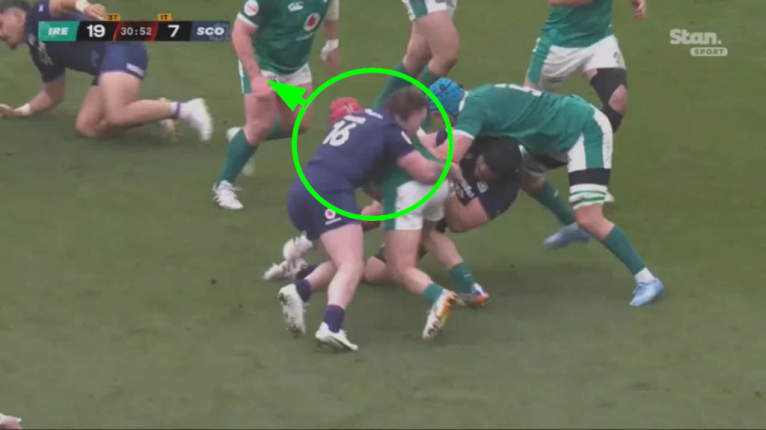
With the scene set, ‘second man added’ was the theme of two turnovers by the man in the blue hat later on in the game.
— William Bishop (@RPvids1994) March 16, 2026
— William Bishop (@RPvids1994) March 16, 2026
The function of the man in the red hat, Ireland seven Van der Flier, is highly significant at the turnover ruck in the first clip. As the assist tackler his role is to ‘chop’ the ball-carrier Zander Fagerson before releasing forwards, and straight into the path of the first Scotland cleanout support, number 16 Ewan Ashman. Red hat gives blue hat a clean shot at the ball on the deck – penalty Ireland. In the second instance, the man in the blue hat is once again working in concert with Van der Flier’s replacement, number 20 Nick Timoney, to overload the single cleanout by Finn Russell.
Beirne won four turnovers in total as the gameplan had him defending slightly off the line, angling to be more jackaler than tackler as the contact area unfolded.
— William Bishop (@RPvids1994) March 16, 2026
In the first clip, Ireland want first Furlong, then McCarthy at the tip of the tackling triangle, with the ex-Scarlets hybrid hunting for turnover opportunities behind them after the initial contact has been made. He finally gets his chance after the third hit by hooker Dan Sheehan.
Ireland’s relentless commitment of the second man at ruck time dismantled a Scottish cleanout which had been so outstandingly effective seven days earlier. Piece by piece, tackle by tackle, moment by moment, the bedrock of the Scottish game was dissolved.
— William Bishop (@RPvids1994) March 16, 2026
At three successive rucks Ireland commit two men to the post-tackle, and at the third breakdown the man in the blue hat strikes like a cobra to win the turnover. “Tadhg Beirne. Tadhg Beirne. That is all,” as the television commentary insists so eloquently.
Back in 1897, the American author Mark Twain famously responded to a rumour he was gravely ill and possibly dead, by writing to the newspaper concerned that “the reports of my death are greatly exaggerated”. The Ireland rugby squad mentored by Farrell could be excused for thumbing their collective noses now at the cognoscenti who so confidently predicted their demise.
Not only did Ireland stay alive, they did not fade away into obscurity or mediocrity. Quite the opposite. Like Crowley at 10 they are far from the finished article, and a long way off the performance peak which made the Emerald Isle the number one-ranked nation on planet rugby for 462 days between 18 July 2022 and 2 October 2023.
But Ireland had a chance to win it all until the very last minute of the very last game of the tournament, and they are managing the transition away from the sunset of their golden age, and towards the birth of new era of unknown quality and aspiration. The master-tailor Farrell is doing the best he can with the material at his disposal. To adapt another phrase of Twain’s, “we are always more anxious to be distinguished for a talent we do not have, than we are to be praised for the 15 [men in green] we do possess.” Amen to that.


Ireland’s best days are behind them. Much like New Zealand’s.
Discuss.
🍿