
Through a Nations Championship prism, Ireland did reasonably in their first ever southern hemisphere swing. They landed the vital punch in a slobber-knocker against Australia, handed out three Test debuts in a much-changed XV and outlasted Japan, and were left to rue gift-wrapping to New Zealand tries in an Eden Park loss.
Taking in a wider view – one that includes the 2027 World Cup – there are plenty of reasons to be fretful.
For a while, it was hard to tell exactly where Ireland stood in world rugby. In the past season alone, there had been uncomfortable losses to New Zealand, South Africa and France, but a record home win over Australia, securing a Triple Crown by taking down a dangerous Scottish side, and that emphatic Twickenham victory over England.
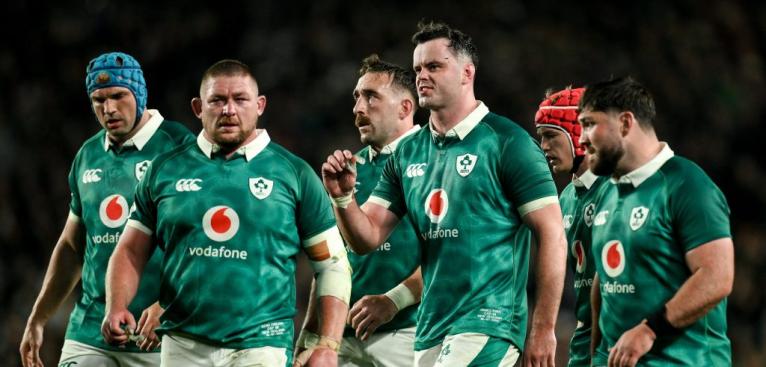
The Nations Championship confirmed what many suspected – Ireland are the fourth best team in the world. They are not in the top tier, however. That top three of South Africa, New Zealand and France are stretching into the distance.
In the aftermath of their 40-21 defeat in Auckland, Ireland captain Dan Sheehan reflected, “If we want to be serious about going on and really pushing world rugby standards, we need to be better… we have a bit of improving to do to get there.”
Almost every one of Ireland’s former strengths have been nullified over the past two seasons. Ireland love to play multi-phase attack, with lots of short passing, runners coming from different angles and quick ruck ball. New Zealand and France have recognised that and are not committing big numbers to rucks. It means they keep their defensive shape and those gaps around the fringes have been considerably narrowed.
Ireland’s lineout was up there with the best for many years but is now unreliable. Their predilection on many penalties – similar to Leinster – is to kick for touch and press for tries. Examples of this came in the win over Australia, with Ireland botching a couple of those attacking lineouts.
Ireland have now lost six in a row to the heavyweight talents of New Zealand, South Africa and France, all by at least 10 points.
For many years, particularly during Joe Schmidt’s time in charge, Ireland had the edge over most sides in the aerial contest. That advantage has now washed away. Hugo Keenan took one glorious catch on Saturday, but so did Jordie Barrett, Josh Moorby and Ruben Love.
Another element of Ireland’s high point under Farrell – the 2022 tour to New Zealand up to the 2024 Six Nations – were the fast starts they strived for. When they won their Test series against New Zealand four years ago, they scored a try in the opening five minutes of each of the three matches. In the Nations Championship, Australia, Japan and New Zealand all registered tries first. On Saturday, they were let down by basic errors. On four attacking parries in the opening 11 minutes, Ireland were repelled. There was a Garry Ringrose knock-on, Ringrose being held up and turned over by Quinn Tupaea and Luke Jacobson, a Sam Prendergast Garryowen which Moorby won from Keenan, and James Ryan knocking on. It took New Zealand until the 13th minute to enter Ireland’s 22. When they did, Patrick Tuipulotu cantered through a yawning gap to score the opener.
Ireland have now lost six in a row to the heavyweight talents of New Zealand, South Africa and France, all by at least 10 points. Dig into the three most recent losses to that trio, and you will see how Ireland have slipped from opening-bell blitzes to a side clinging to the ropes when the half-time whistle shrills.
Ireland’s half-time deficits:
- Ireland 7-19 South Africa, November 2025
- France 22-0 Ireland, February 2026
- New Zealand 28-7 Ireland, July 2026
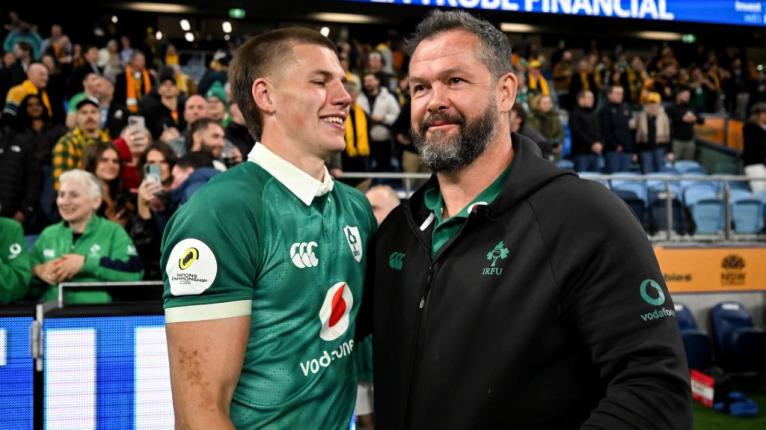
Perhaps the most worrying aspect of Ireland’s latest loss to the All Blacks was the amount of handling errors. On 15 occasions, Irish players shelled passes, knocked on from high balls, or tossed passes out of play. When Jeff Wilson put it to Farrell, post-match, Ireland were “inaccurate”, the Ireland coach allowed a grim smile. “Yeah,” he responded, “inaccurate is a word. Continuity just wasn’t flowing, for all sorts of reasons.”
There is an interesting coaching correlation between Farrell and Brendon McCullum. Both men – one in rugby, the other in cricket – loosened the shackles on players from the previous regime. They eased the pressure and told them to go out and express themselves. McCullum took an England side that had won just one Test out of 17. Under the Kiwi, they were victorious in 10 of the next 11. ‘Bazball’ was not just a style of playing – run towards the danger – it was a state of mind. Farrell followed up Schmidt’s rigid, tense final year as Ireland head coach and, after a tough opening spell, delivered a winning tour to New Zealand, Grand Slam and another Six Nations title.
In both cases, though, masterplans were affected by senior, world-class players retiring. McCullum lost James Anderson and Stuart Broad, while Jonny Bairstow flamed out after a short but glorious burn. In the past three years, Farrell has said goodbye to Sexton, Peter O’Mahony, Keith Earls, Cian Healy and Conor Murray. All have been sorely missed as the next generation attempts to figure out the pace and pitfalls of Test rugby.
It’s up to us as coaches to come to the party on that and challenge the players, and show them how to do that.
In the press huddle, an hour after Ireland lost at Eden Park, Farrell, who signed a four-year contract extension before this summer, delved deeper on where his team goes from here.
“I believe we’ve got to be the best team in the world, emphasis on team and all the variations of what makes that, in our opinion,” he commented. “Because there are unbelievable athletes in our team, but you can see the magic that some of these athletes [on other sides] can do. But that doesn’t say that we can’t beat them. We can.”
Pressed on whether he felt Ireland could become the best side in the world, Farrell insisted: “Yeah, yeah. Yeah, I definitely do. And it’s up to us as coaches to come to the party on that and challenge the players, and show them how to do that. To make sure the players have got the hunger to come back into preseason and show they’re willing to take that challenge on.”
“I’m not frightened of saying those type of things,” he added, “but I’m not actually coming out and making a statement. I’m just putting the reality to our lads, that has to be our ambition. It has to be, otherwise, what’s the point?”
Ireland have just nine Test matches left before Farrell names a wider World Cup training squad, and prepares his sides for 2027 warm-ups before the big show in Australia. From those nine games, the toughest will be against South Africa, France and England. All are at home. There will also be that Nations Championship finals weekend in London. By next summer, Irish supporters may be feeling more optimistic about where their side is. To get there, Farrell and his coaches must be willing to make some bold tactical and selection decisions.
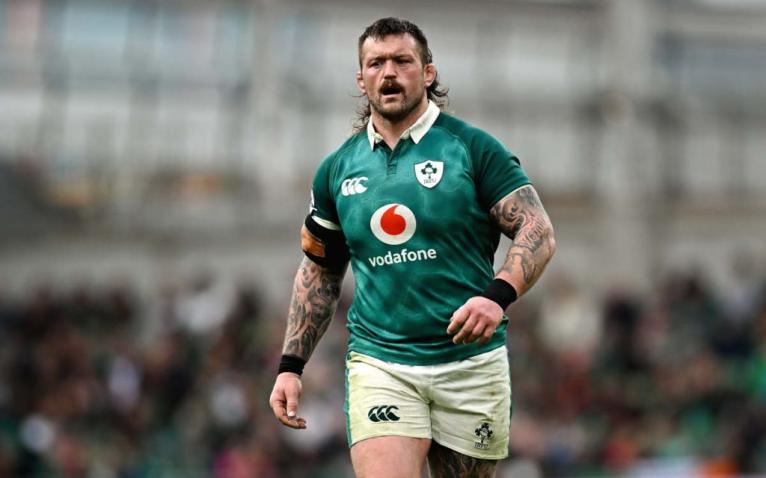
Take it as a given some of those involved in Ireland’s summer squad will face spells on the sideline. On the flip side, the following injured players will be pushing to get involved when the northern series of the Nations Championship rolls around – Caelan Doris, Andrew Porter, Mack Hansen, Ryan Baird, Jack Crowley, Tommy O’Brien, Paddy McCarthy, Jack Boyle, Edwin Edogbo and Calvin Nash. From that list, one would expect Porter, Doris, Crowley, O’Brien and possibly even Baird and Hansen to be in line for the starting XV.
On Saturday, Josh van der Flier saw another big game pass him by with little meaningful impact on proceedings. With Sean Jansen on the scene and Baird coming back as a blindside option, Farrell could take a proper look at Doris at openside. He could have two wingers with searing pace in his back-three if he goes with Rob Baloucoune and Keenan, with either Jamie Osborne or Mack Hansen getting a run at full-back.
A big question to mull over, and one that would have to involve Leinster, would be whether Andrew Porter should switch back to tighthead. Porter made the 2021 Lions squad in that position and is three-and-a-half years younger than Tadhg Furlong. With Tom O’Toole starting the past five Tests at loosehead, and Paddy McCarthy and Jack Boyle on the comeback trail, moving Porter eases the load on Furlong, with Thomas Clarkson and Sam Illo also on the scene.
Crowley faces another fight to get the 10 jersey back from Prendergast, when he returns for the new season. Ireland look more assured when Crowley is starting, but Prendergast will have rebuilt some of the shattered confidence that blighted his Six Nations outings. For 2027, all the chips look to be stacked on Jamison Gibson-Park. Nathan Doak got 10 minutes against Japan, while Craig Casey was left on the bench against Australia, started against Japan and came on for six token minutes against New Zealand. Gibson-Park, who will be 35 at the World Cup, has replaced Sexton as the player Ireland can least afford to do without.
Farrell is likely to remain loyal to his coaching staff, but should consider bringing in fresh voices and new ideas. Paul O’Connell and Andrew Goodman are the two assistants with most to be concerned about. Ireland look stale and out of ideas when their plan A gets stuffed, or their skill levels let them down. It has not been helped by the chopping and changing at 10, and with depleted front row stocks.
The man backed for this World Cup, and the next one, should ask himself what he wants this version of Ireland to focus and thrive on. How to reinvigorate a side that have a lot of heart, but are killing themselves with sloppy play.
Right now, the top sides have Ireland figured out. Farrell’s conundrum is how to make Ireland defy expectations again.

NEW IN THE APP: Official World Rugby Rankings hub! Compare team rankings side-by-side, with data going back 20 years.
Download the RugbyPass app on the App Store (iOS) and Google Play (Android) now!


I agree with all the analysis and criticism of Ireland, but one thing stands out to me—they have very few ball carriers—either forwards or backs—who break tackles when running. There is no threat with ball in hand; thus, France just spread out defensively and waited for a handling error.
Ireland are very much still in that top tier.
Ireland were at their best when Leinster played the same style at club level. Cohesion. Spain won the world cup, apparently they have played the same way at international level for years and years all the way up though the ranks. If this be the case, then IRFU needs to realign all four provinces with same cohesion as national side……….you could see similar results as Spain in the soccer ball……….just a thought that I would see as having huge potentail benefits to the national side.
100% agree. Leinster also focussed on handling skills which has gone out the window with the focus on when they don’t have the ball. This was the case until 2023. We have lost great players, but the overall skills etc have also declined too.
Connacht leading again playing the Irish way.
Ireland can easily be the best…Irish team ever by winning a Quarter-Final in a Rugby World Cup. Course they haven’t figured out how to do that yet. And yes they played the same type of game and didn’t always focus on the opposition at hand but rather what they felt they themselves were good at.
Not always a good style and certainly not helpful when the opposition understands your style.
That is why Rassie for instance changed up his game style after RWC 2019 and then also after RWC 2023. He knew others would figure out that gameplan so he knew he had to keep innovating
The RWC is a lottery. The team that won it in 2023 and 2019 were not even the best team in their pool. Draw based in more recent rankings now so improved but still not better.
Apart from 1991 any team that beat NZ in a knock out always lost the next match. Did you need to be the best team in the world to win the RWC? No, just be on the other side of the draw to NZ and if not hope that someone else beat them first.
I think that Farrell has to take a leaf out of the Gatland coaching manual and talk up his team publicly, but there are some real challenges around the park. Allowing for the fact that the list of guys missing from the 23 is probably Caelan Doris, Andrew Porter, Mack Hansen, Ryan Baird, Jack Crowley, Tommy O’Brien, Paddy McCarthy, Jack Boyle, that squad is playing allright is is marginally ahead of the Sco/Eng/Aus/Arg cohort but could lose to any one of those on the day. So in reality we are anywhere from 4th to 8th in the world rankings which is where we were before our peak from ‘16-22.
If there are 9 test matches before the WC, I am not sure when this squad will get the time to iron out all the inaccuracies that have plagued them. Maybe they’ll all get a decent rest and pre-season but at least one province is back at pre-season training already.
JGP is the one they can’t lose and I am not convinced that Casey is the solution, I’d like to see more of Doak. Crowley is a better OH but who are the best centres? Maybe Mack gets back but that could be long road for him so we are relying on T’OB and Bobby B as our starting wingers and neither can stay injury free? We need more options in the second row and if Baird can stay fit then he’s going to take that bench role as a 6/row hybrid for me, that might give us additional lineout options. I think Josh VdF needs a rest to try and get one more great year out of him, he has the skills still but I have not seen him slipping off tackles like that.
Anyway, the IRFU believe that Farrell is the guy to do it and I would guess that he believes he can do it, he just needs a bit of luck like all coaches do.
Imagine repeatedly starting someone at 10 who can’t play the sport ant any level and wanting to have success?
And then bringing in a bunch of his clubmates who haven’t been international level for years. And leaving the in-form players off the squad altogether.
Welcome to the fresh hell of watching Farrell submarine the national team intentionally.
Farrell and Nienaber must be in on it together then.
naaigie!! How ‘bout those Boks, hey? They played like 💩 and STILL put 43 points on Wales. And, best of it, it was to NOTHING!
I take it you watched the game on replay as it was aired during your backseat time. How were tricks?
100%. And I’ve been saying it since the 2024 6 Nations. Nothing new - AF has run out of ideas.
Perfectly coincided with the amount of time Schmidt’s been away and Farrell’s been in charge…
Just like Pieter de Villiers Springbok successes were thanks to the squad he inherited from Jake White, so has Farrell ridden Schmidts coattails to success. In the years Farrell's been in charge, he has dedicated very little time and planning to succession, and its now glaringly obvious in the national team’s results….
The lack of mastering the basic skills is a real worry. That thrashing of England may have just papered over some of the cracks.
The biggest problem Ireland has is that all their accumulated experience is concentrated in a cohort of guys whose average age is 34-35 which although generally considered the prime time places an absolute premium on their continued and constant availability.
This means that they continuously rack up more high level minutes as the team can increasingly ill afford to not have them on the field and when inevitably they get injured and their replacements have to come on they're often completely outmatched.
You don't normally see an Irish scrum getting manhandled by an Australian one but it happened all game in Sydney as well as the lineout being almost completely dismantled and the lads were lucky to escape with the narrow win.
Of course, there's no need to be overly dramatic about the fortunes as the guys who have been out will come back in and many of those first up problems will be immediately solved.
The question really is what can Faz do between now and the pre-cup match in Canberra against the Wallabies to sufficiently cover for this inherent weakness that was earlier exposed during the 6N?
There's not going to be a lot of high level competition for Ireland between now and November so where do they get their second and third guys the quality minutes they need at the level?
Can you describe these guys with that average age? Only JGP is that old. I agree Farrell needs to settle on Doak (who can step up) and give up on his loyalty to Casey.
But what group of players with that average age are you referring to?
“The biggest problem Ireland has is that all their accumulated experience is concentrated in a cohort of guys whose average age is 34-35 which although generally considered the prime time places an absolute premium on their continued and constant availability.”
The scary thing about your comment is that the same things was being said when the player cohort was 32-33.
It is very well known that Ireland are at their 4th or 5th choice at loosehead. The scrum and set piece held well against NZ.
A lot of the issues are fixable. I don’t think there are many 35 year olds on the team. But alot will retire after the next RWC. That’s the way.
We are off France, NZ and SA. But we know where we have to be. We will find out.
Can’t run, can’t pass and most importantly, can’t scrum. They are foocked….
AF should get in some fresh talent on his coaching team, who can adapt elements of their game. I think if things had worked out a little different - and maybe it’s not too late - Flannery and Jones post 2027? Or someone altogether different.
AF has mentioned that he doesn’t put a lot of emphasis on analysing the opposition - focusing more in their own game. If that’s still the case - some decent analytical work. Ireland play as if they have not analysed the opposition - doing the same thing regardless what the other team’s do. Whereas other teams have clearly done their homework on them.
There’s a lot he can do But I actually think his ego is too big to admit that he needs fresh ideas. The longer his stint has gone on the more arrogant he’s started to seem.