
The walking palm tree of the great Amazon basin apparently strolls from the shadows into sunlight by growing roots in the direction it wants to travel. Old roots disengage from the earth and die as it creeps imperceptibly toward the light. One paleobiologist has even suggested the tree can move as much as an inch or two per day. Perhaps Birnam Wood can transplant to Dunsinane Hill after all.
The law of the jungle is adaptation. If you don’t adapt quickly to the demands of your environment, nature tends to do away with you. In social media that law is reflected as trending posts or tweets which will quickly attract the interest of other users and go viral. If you don’t attract followers, your account rapidly becomes redundant.
Rugby coaches also do their level best to stay abreast of trends, the latest tactical developments in specific areas of play and the way in which refereeing is framing the advances of the game in general. At elite level awareness of refereeing trends is not optional, it is essential to success.
After dust had cleared in Sydney, Argentina head coach Felipe Contepomi was not a happy man. For the second week in a row, he felt the “things we don’t control, with a team of four [officials]” went against his side.
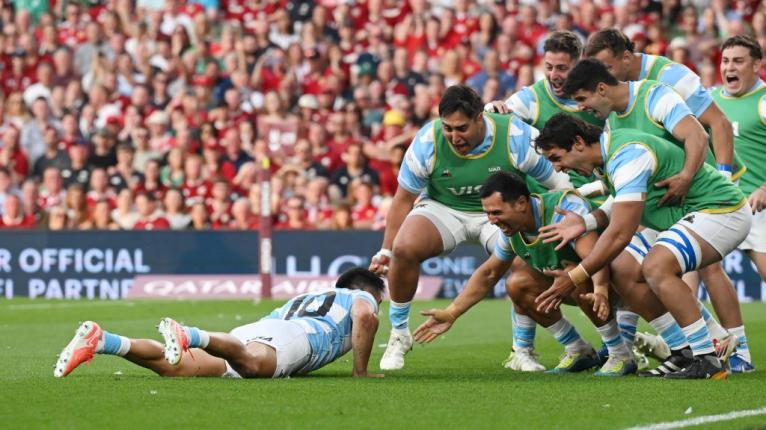
“We are again in the same situation as last week. It’s frustrating. I think we don’t deserve that. So, I’ve got mixed emotions. It’s very frustrating, because it’s not working. It’s as simple as that. It’s not working.”
Felipe’s ire was probably directed at a last-gasp Australian try which featured not one but two forward passes. The final delivery from Andrew Kellaway to Filipo Daugunu drifted at least a couple of feet forward out of the hands. That score may not have won the game for the Wallabies, but it did net them a couple of bonus points which may prove critical in the final table shakedown.
If the failure of the TMO to intervene on the review of one individual play was questionable, the judgement calls made by Englishman Christophe Ridley in general was most certainly not. If you’re still complaining after receiving a 14-7 penalty count in your favour, the failure of adaptation does not belong to the man in the middle.
Ridley is one of the most talented officials in the English game. He is young, fit and he gets most things right. His style also very much ‘on trend’: Premiership matches with Ridley in charge in 2024-2025 produced the highest average ball-in-play time [38 minutes] and the third-fewest number of penalties [19], ranking him just behind England’s other current international referees, Luke Pearce [17] and Karl Dickson [18]. A schoolmasterly curmudgeon he is emphatically not.
On Saturday he helped produce an open, exciting spectacle with 41 minutes of ball-in-play time and 218 total rucks in a game featuring only 21 penalties. He found solid mitigation and a good reason to avoid a yellow card after Wallaby skipper Harry Wilson made accidental contact with the head of Argentine scrum-half Gonzalo Garcia in the tackle and he was consistent in punishing negative play. Two deliberate knock-ons resulted in one yellow card apiece for Max Jorgensen and Santi Carreras. Ultimately Ridley created a framework for both sides to play and utilise their skills. What more can you ask?
If anything, Joe Schmidt’s Wallabies are moving further off-trend than Contepomi’s Pumas in terms of their adjustment to referees.
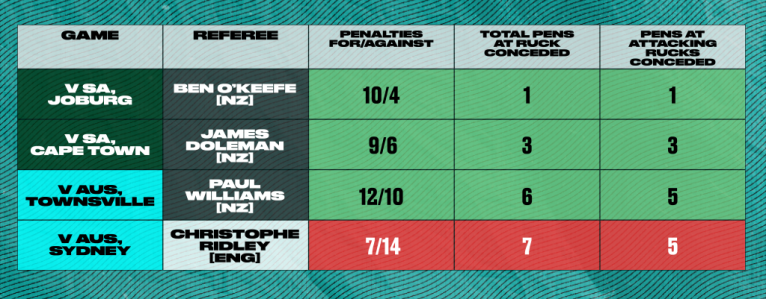
Schmidt teams like to keep possession and squeeze mistakes out of the opposition, then kick to the corner and squeeze some more. After four rounds of TRC 2025, Australia led the way with 52% of the ball and the most rucks built [an average of 98 per game] of any team in the tournament.
But the table illustrates a ballooning problem. The number of penalties conceded has increased with every round. More specifically, the number given up at attacking rucks has grown incrementally.
There are a couple of easy correlations to make: while the penalty count is well in the black in the three games with Super Rugby Pacific officials from New Zealand [+11], it dropped sharply into the red with an English Premiership referee in charge at the Sydney Football Stadium [-7].
There were also three times more penalties given up at ruck time when Wallaby forward talisman Will Skelton was not in the starting line-up – 13 versus Argentina compared to a mere four in the double-header against the Springboks. Skelton is unlikely to be available for the first Bledisloe Cup game at Eden Park on Saturday 27 September, with La Rochelle supremo Ronan O’Gara requiring his services in the Sunday night showpiece versus Toulon five and a half days earlier.
As the Top14-based behemoth told the Kick Offs and Kick Ons podcast, “The thing is, we [La Rochelle] play Toulon next Sunday, in Toulon. Logistically, it is obviously really tough to get back for that Bledisloe series, if you do the math. Tuesday [arrival], and then the game is not in Australia, it’s in New Zealand.”
With Schmidt requiring players to be available for training on Monday and Tuesday, it makes Skelton’s chances of playing against the All Blacks somewhere between slim and none, ‘and right now Slim is outta town’ as the saying goes.
Skelton’s probable absence is compounded by the presence of two more European referees for the double-header against New Zealand: Matthew Carley of England will officiate in the final round at Perth Stadium and Wallaby nemesis Andrea Piardi will control the away fixture at Eden Park seven days earlier. The URC-based Italian is the man denounced in some less temperate quarters of green-and-gold support for the loss of the Lions series, after Piardi ruled Jac Morgan’s cleanout on Carlo Tizzano to be legal in the dying embers of the second Test.
In general, referees in the north tend to allow more of a contest at the post-tackle and that makes ruck-building sequences tougher to manage.
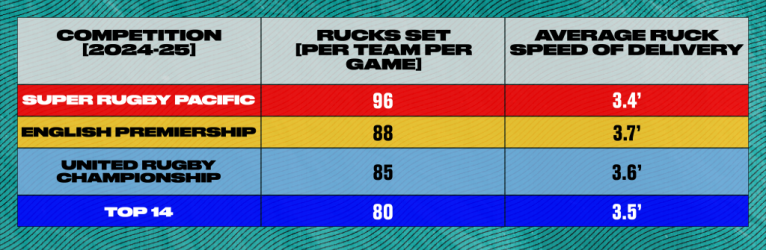
The differences look marginal on paper but they are significant in practice. In SRP referees will tend to allow the attack slightly more latitude at the breakdown, and that encourages teams to set 12 more rucks per game than the average north of the equator. The seminal moment at Sydney Football Stadium arrived when Wilson conducted an ongoing debate with Ridley after giving up another penalty at the attacking breakdown.
The Queensland number eight makes the shape of a ruck with his hands but Ridley replies “there is no offside, it’s a tackle only” and he is right. It is not enough to lean on the first defender and expect a ruck to be called automatically. In terms of communicating effectively and keeping the referee emotionally onside, it was probably Wilson’s least impressive outing with the captain’s armband.
The other area where Australia are slightly off-trend, just like their cousins across the Tasman, is in the composition of the back three. Corey Toole and Max Jorgensen have started three of the four games on the wing, even though they both stand well under six feet tall. With the new guidelines permitting no ‘escort’ or pocket of protection around the receiver of a high kick, both are vulnerable in any one-on-one contest in the air and Toole was overrun by sevens expert Rodrigo Isgró in Sydney.
Isgró won five first touches on his side of the field in all and the turnovers he won set his team up for coast-to-coast attacks on the very next play.
By the end of the first half, Australia were looking to drop Joseph-Aukuso Suaalii into the backfield in obvious kicking situations to combat the threat Isgró presented on chase.
In total, the Wallabies dropped Suaalii into defensive receiver duty on no fewer than five occasions during the match, begging the obvious question: if you want to defend with your ex-league star in the backfield, why not pick him at wing or full-back in the first place?
The aerial battle was one-way traffic. Isgró almost hung on to the ball in stride for what would have been one of the tries of the season on the right and Jeremy Williams reverted to old rules when blocking out Mateo Carreras on the left, at a time when the Wallabies were very firmly on the comeback trail.
“Adapt or die.” Rumours of a walking tree in the Amazon may be at least partly apocryphal, but the law of adaptation its story represents is real. Schmidt’s Wallabies now have two weeks’ breathing space to adjust to the likely absence of Skelton and the presence of two European referees for their Bledisloe Cup double-header.
Both factors have been instrumental in a mounting penalty count at the breakdown, and matters came to a head when Wilson argued the toss with Ridley throughout the entire 82 minutes the Sydney contest lasted. The captain was lucky Ridley was so patient with his not-so-polite enquiries on the day.
With Piardi and Carley managing the final two rounds, Schmidt’s charges need to adapt their rucking style to European interpretations because the referees will not change.
In time, Ridley will be seen to have hit most of his performance benchmarks. To meet their own criteria for improvement, Schmidt’s Wallabies will have to win at least one of their remaining two fixtures against the All Blacks. They need to find a way to replace Skelton up front and they have to be bigger and better at the back. Adapt or die


Comments
Join free and tell us what you really think!
Sign up for free