
Dave Rennie, having been appointed coach of the All Blacks, presumably realises he’s coming into a set-up that is vastly different to the one in which his predecessor Scott Robertson operated.
The scale of change within New Zealand Rugby in the last two months – personnel, mindset, philosophy, strategic direction and fiducial discipline – is unprecedented, and the organisation that Robertson worked in is unrecognisable to the one Rennie will find when he finishes with Kobe and starts his new role in late May.
Robertson, when he came into the job in 2024, was supported by chief executive, Mark Robinson, who was a former Crusaders team-mate.
His appointment as All Blacks coach was made by a New Zealand Rugby board that had no high-performance expertise on it and had been deemed by a major independent review to not be fit for purpose.
NZR’s head of high performance in this period was Mike Anthony, a former Crusaders conditioning coach who was a close, long-term friend of Robertson.
Chris Lendrum was head of professional rugby and instrumental in the decision to appoint Robertson six months before the 2023 World Cup and operate with a sitting All Blacks coach and an All Blacks coach elect.
It was seemingly all so cosy – no sense of a hard edge or robust discussions between professionals.
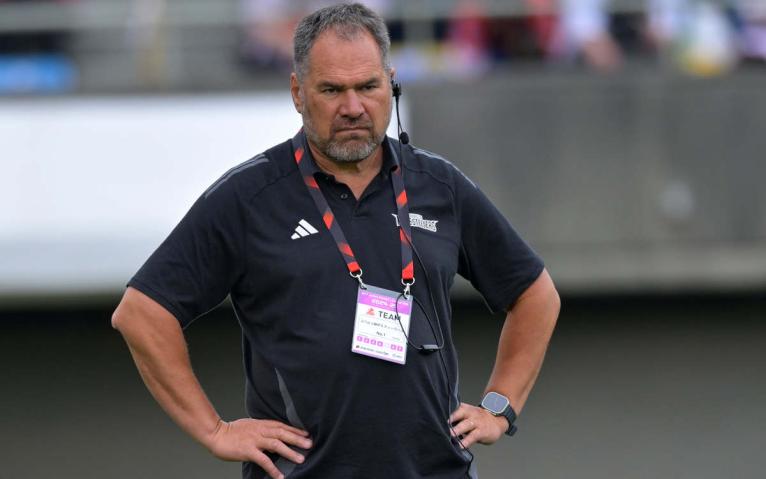
Robertson also appeared to have a licence to spend. His total coaching, management and support staff grew to 24 people, which was more than the 21 of his predecessor Ian Foster, and in late 2024, he was able to take an additional seven players to Japan – to provide training opposition – at a cost of around $500,000 in wages, flights and accommodation, all in a year in which NZR posted a $19m loss.
It’s not that Robertson operated without any boundaries or oversight, but there has been such a marked overhaul since his departure, that its apparent NZR felt significant changes to the entire high-performance set-up were imperative to enable the All Blacks to succeed.
Since mid-January, NZR has undergone a massive high-performance upheaval. Anthony resigned to take up a role with Brighton in the English Premiership (football), Robertson was let go, in late February, Lendrum resigned. By early March, the All Blacks head of performance, Nic Gill – who had been in the role for 18 years – announced he was joining NFL side the Baltimore Ravens.
Prior to that Robinson resigned last June, and the entire NZR board – minus one director – was ousted in late 2024.
In the wake of these departures, NZR has radically restructured and has created a new position of high-performance director, a role that will be more akin to the one David Humphreys holds with Ireland and David Nucifora with Scotland.
The upshot is that in the wake of these departures, NZR has radically restructured and has created a new position of high-performance director, a role that will be more akin to the one David Humphreys holds with Ireland and David Nucifora with Scotland.
The high-performance director will hold responsibility for the performance of national teams, but quite specifically, the role will have a heavy focus on the All Blacks.
The sub-text here is that Anthony’s vacated position has been revamped partly because NZR has been aware for some time that is out of step with the rest of the world in not having a performance director attached to the national team, but also as a direct response to some of the collective failings highlighted in Robertson’s tenure.
It would seem that in Robertson’s two years, there was not enough scrutiny of his methods, set-up and strategies until December 2025 when a deep-dive, independent review was conducted.
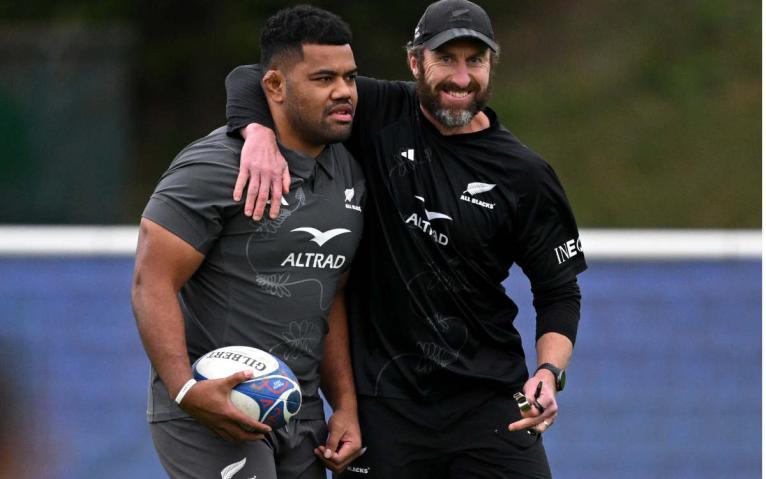
The findings of the review have never been revealed but they were enough for Robertson to be sacked. The bits and bobs that have leaked out suggest there were issues, which started early in Robertson’s tenure, with the team’s culture and coaching set-up as it pertained to division of labour and the players’ understanding of it.
Two assistant coaches left the All Blacks in those two years without the reasons for their departures being adequately explained or independently investigated, while there were constant, valid, questions about the way the team consistently fell apart after half-time in 2025.
With, on face value, inadequate, independent oversight, problems deepened and player frustration grew to the point there was overwhelming damaging feedback across the squad by December 2025.
The performance director job is a game-changer in terms of how the All Blacks operate because it means there will be constant oversight of Rennie and his coaching team – an experienced figure with the power to ask questions, offer advice and mentor the group.
NZR chair David Kirk, who made the call to part company with Robertson, said the All Blacks weren’t on the right trajectory, and the bit that didn’t get said is that he didn’t believe that would change if the incumbent coach stayed at the helm.
“The decision to change the coach was taken by the board of New Zealand Rugby,” chairman Kirk told Newstalk ZB the day after Rennie was appointed.
“That is the accountability we have. We talked to a whole range of people and there was virtually no difference between which island they came from [North or South], no difference between which ethnicity they were, virtually no difference whether they were an old player or a young player, the trends and the themes were very consistent.”
The performance director job is a game-changer in terms of how the All Blacks operate because it means there will be constant oversight of Rennie and his coaching team – an experienced figure with the power to ask questions, offer advice and mentor the group.
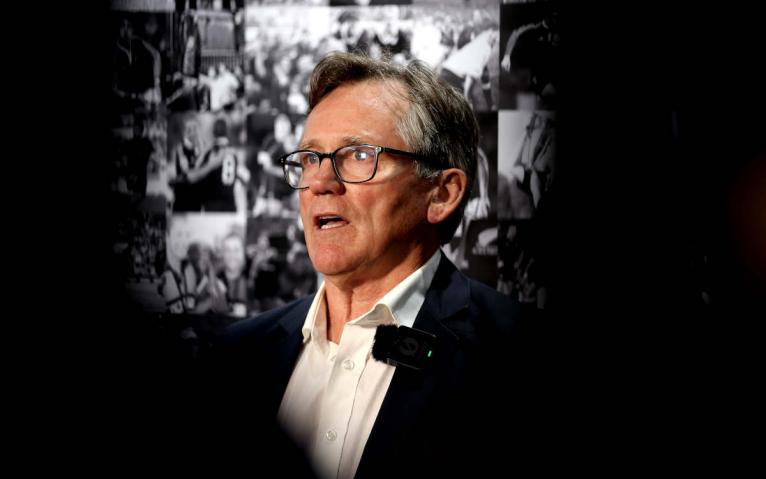
It’s not clear yet if NZR is targeting anyone in particular, but the job description suggests that the likes of Sir Steve Hansen, Joe Schmidt and Ian Foster are the sorts of candidates that are likely under consideration.
A set-up that has, say, the World Cup-winning Hansen working closely with Rennie and the All Blacks, overseen by a functional board, presiding over an organisation that is expected to show in April that it is in better financial health, feels a million miles away from the situation in the Robertson era.
This is all about NZR recognising that the All Blacks drive about 80% of the game’s total revenue and their success is paramount to the commercial ambition being achieved.
It’s that simple – the All Blacks have to not just win, but play a brand of rugby that makes everyone think they can continue to win, if NZR is going to be able to find and retain global sponsors.
The only unknown that Rennie faces, is that NZR still hasn’t found a permanent chief executive to replace Robertson – long-term community rugby manager Steve Lancaster has been promoted in the interim.
But that one loose thread doesn’t feel like it could unravel the All Blacks and a team that few people in New Zealand could see winning the World Cup next year, is now, suddenly, a significantly better proposition.
The increased optimism about the All Blacks’ future prospects is not driven purely by the vastly different set-up of the organisation, but also by the capability of Rennie.
Rennie himself was asked whether the All Blacks can win the 2027 World Cup, and he said: “The answer is yes and it will take a hell of a lot of work. It will take a lot of alignment. Rest assured, we’ll be working together.
“When you look at the game model, we’ve got to make sure our players and staff… are all aligned so we’re in the best possible position to execute and play well.
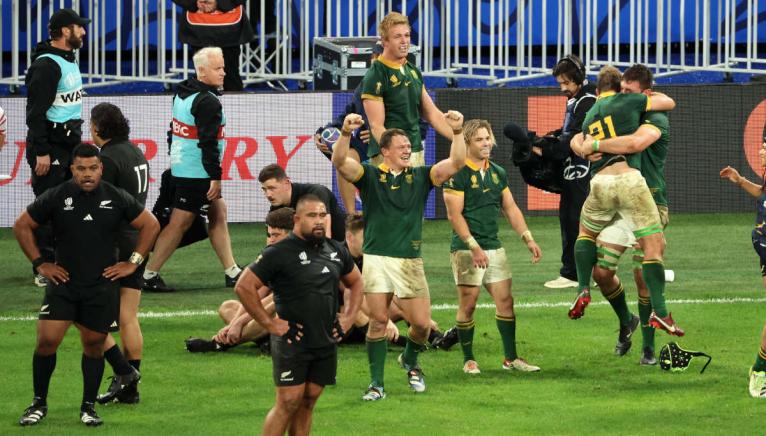
“It’s a sprint from here… I’m well aware that with the way the draw works out, as is typical fashion at World Cups we’re likely to meet South Africa in a quarter-final. We’ll get a bit of practice against them this year.”
The increased optimism about the All Blacks’ future prospects is not driven purely by the vastly different set-up of the organisation, but also by the capability of Rennie.
Yes, NZR is better set-up now, but it would be remiss not to recognise what Rennie brings to the role through his experience, clarity and ability to build unifying and inclusive team cultures.
As Kirk said of Rennie: “The game is changing a lot and the Northern Hemisphere, in some cases, we don’t like to say it, but it’s true, are leading. So people who’ve been in that environment were valuable.
“Even more important than that was it was very obvious to us that he had an understanding of the game that was fit for purpose for us, for New Zealand, for our skills, for our natural ability and where we come from, this little island in the, islands in the bottom of the world. And he was able to articulate what it would take to win in world rugby.”
Rennie himself isn’t yet ready to share his vision, only saying: “I’m really clear on the game we want to play and the detail within that – the type of athlete we need and how we’re going to make shifts.
“I won’t go into detail about that and I won’t throw the previous regime under the bus but I can assure you that I’ve watched a lot of footy already and I have some firm ideas about the shifts we need to make us better.”

Create your ticketing account and unlock presale access for Rugby World Cup 2027 now!


Finally it looks like some common sense is coming back into the game in NZ. Will always demand the ABs win every game, but I also realise in the professional era it has become harder to do. It was always expected that if the ABs did lose it was done by going to the wall and fighting to the bitter end, not capitulating like they have under S Robertson. David Rennie will bring back the mongrel and heads up counter attacking rugby that's been missing for a few years now.