




1
England star makes wild claim about Rugby World Cup chances 'under Steve'
33

The 2026 Guinness Six Nations is being widely heralded as the greatest instalment of the competition since it expanded in 2000.
Even as the ball left Thomas Ramos’ boot after 82 minutes and 47 seconds of the final match and drifted through the Parisian night sky, no one knew who would be lifting the trophy aloft a few minutes later.
But with the plethora of moments and records that will be etched into Six Nations folklore, there are some things that teams and certain personnel will want to forget. So here are the winners and losers from the Six Nations.
Louis Bielle-Biarrey
France’s Bielle-Biarrey entered the Championship as one of the premier players on the planet, but he managed to raise his level to even newer heights.
The 22-year-old’s four tries against England at the Stade de France took his tally to nine in a single Championship, breaking the previous record of eight that he had equalled in 2025.
He now stands fifth in the standings for most tries in the Championship’s history, with 18 tries in 14 matches, and should he replicate the same haul in 2027, he will break Brian O’Driscoll’s record of 26 at the age of 23.
This was a Championship where Bielle-Biarrey staked a claim to be the best player on the planet, something his head coach Fabien Galthie acknowledged after the match. But it’s not just his ‘cheat code’ pace that stands him out; he also finished the Championship with the joint-most attacking catch success. He’s a modern winger with no discernible holes in his game, and when allied with pace that looks unmatched, it puts him up there with the very best in the game.
There is a huge amount of rugby to be played, but the Frenchman is the frontrunner for the World Rugby player of the year.
The Six Nations
Any Championship that comes down to the very final play of the final match must be deemed a rip-roaring success.
But it wasn’t just the final standings that made this Championship so compelling, as, after all, it could have still come down to the wire after six weeks of turgid rugby. But the denouement – a 48-46 thriller in Paris – typified the rugby that was on show throughout the Championship.
This was a tournament where a record 111 tries were scored, and the old cliche that ‘anyone can beat anyone’ never felt truer in the Six Nations.
France beat Ireland, who beat Scotland, who beat France, who beat Italy, who beat Scotland and so on. The only way that loop could have become any more complex is if England had just snuck past France at the end, which they proved they were more than capable of doing. But it was nevertheless the most competitive Championship in a while, which truly came alive in the final two rounds.
South Africa
This Championship did prove that everyone is beatable, which must have only brought great delight to the only team that currently appear insuperable – South Africa.
While the northern hemisphere have luxuriated in a feast of high-scoring matches and one of the most memorable tournaments in a long time, it is hard to make a case that anyone has proven to be a bona fide threat to the Boks.
France were looking like a genuine threat in the first three rounds, but had the wind taken out of their sails against Scotland and only just snuck past England.
Regardless of who won the Six Nations, France or Ireland, Rassie Erasmus knows that his Boks comfortably beat both sides in November. South Africa were even down to 14 players for half the match against France, who were admittedly without Antoine Dupont.
The other side of the coin is that every side showed that they are capable of winning when at the top of their game, which the Boks will be wary of. But no genuine contender emerged to unsettle the Boks at the top of the table.


England
Had England managed to get over the line at the death against France, the victory would have been nothing more than a heartening footnote at the end of a catastrophic campaign. A party popper at the end of a funeral.
Steve Borthwick’s side entered the Championship on an 11-match winning run and sitting third in the world. They are now sixth, having only managed to muster one win for the first time in Six Nations history.
Borthwick lamented after the loss at the Stade de France: “Ultimately, we’re gutted that we went into the tournament with such high expectations and aspirations, and we’ve not been able to meet those targets.”
England were tipped as Grand Slam contenders; they didn’t just fail to meet their targets, they actually made their initial targets the subject of ridicule, reaching depths that seemed inconceivable just a matter of weeks ago. They were comfortably beaten in two defeats – to Scotland and Ireland – and their loss to Italy was the first in their history. At the same time, they shipped more points than any other English side in Six Nations history.
Many players underperformed this year, and it was only really the final match that allowed a handful of players to save face. It is unfair to start a witch-hunt and list the underperformers as ‘losers’; it’s far easier to list the entire squad.
The fallout will be significant. It is not being overdramatic to assert that several players have blown their chance of playing at the 2027 World Cup, and it is still up in the air as to which coach will be leading them in Australia.
Every other side can view this Championship as a step in the right direction. Easily. England didn’t just take a step backwards, it was a quantum leap in the wrong direction with only a glimmer of hope at the end. Where was that performance all Championship?
Defence coaches
Everyone loves tries and high scores. Everyone except defence coaches.
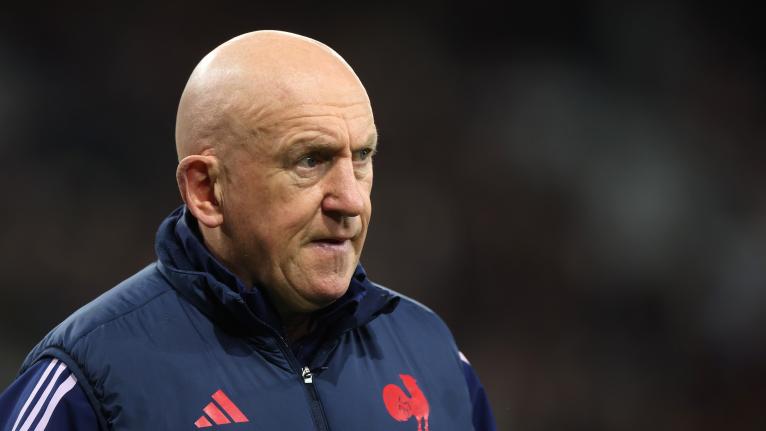
It is absurd to think that France won the Championship despite being breached for a combined 96 points in their final two matches. That was under the aegis of probably the greatest defence coach the game has ever seen, Shaun Edwards. That was just par for the course this year, though.
Edwards summed up the state of play perfectly when talking to ITV after the Championship win: “It’s just changed so much in the last 15 years. I remember coaching a team in Wales that went the equivalent of five games without conceding one try. It’s absolutely impossible these days. I think it’s for the better of the game really. I just hope we don’t get to a stage in the game at club level where people are scoring tries and the fans are not applauding, because that’s when it’s gone too far. It’s very, very difficult for defence coaches, you just have to do your best really.”
Richard Wigglesworth has come under scrutiny for England, Wales even felt the need to appoint a defence coach midway through the Championship, Peter Murchie, who will join at the end of the season. Even Scotland, whose defence looked strong under Lee Radford, conceded almost a bonus-point per match on average, 3.6 tries. Ireland were 2.8 tries. This was not a Championship for defences.
Fly-halves
Finn Russell and Paolo Garbisi can sleep well knowing the No.10 jersey for their respective countries is safe. Wales’ Dan Edwards can now feel comfortable, too, after his showing against Italy. The rest, who knows?
Even Matthieu Jalibert, who was at his swashbuckling best this year, knows Romain Ntamack held France’s No.10 shirt last year and may have had it at the start of the Championship had it not been for an injury to the Toulouse fly-half. Jalibert was superb, undoubtedly, but he is just one poor run of form or one disconcertingly common contretemps with Galthie away from being out in the cold again.
As for England and Ireland, they entered the Championship with George Ford and Sam Prendergast as their incumbent fly-halves, but the pair hurtled down their pecking orders with every match.
Prendergast was out of the picture by round three, Ford by round four, and neither look like working their way back in any time soon.
England have lost four games in the Six Nations for the first time but their brilliant display in Paris provides a route forward
Read NowJoin free and tell us what you really think!
Sign up for freeEngland have lost four games in the Six Nations for the first time but their brilliant display in Paris provides a route forward
The backrow has come in for heavy criticism for his on-field behaviour but is he showing rugby is far less open-minded than it thinks it is?
Jack Crowley has shown fight and perseverance to reclaim the 10 jersey, but doubts over his goalkicking remain.
The main Photo is Jean Luc not Dan!
I'm saying what I've always said - he's not starting at sarries next week
V SA 3/5
...


 Clear
Clear 


