




1
Six Nations 2026 Awards - and our Team of the Tournament
9

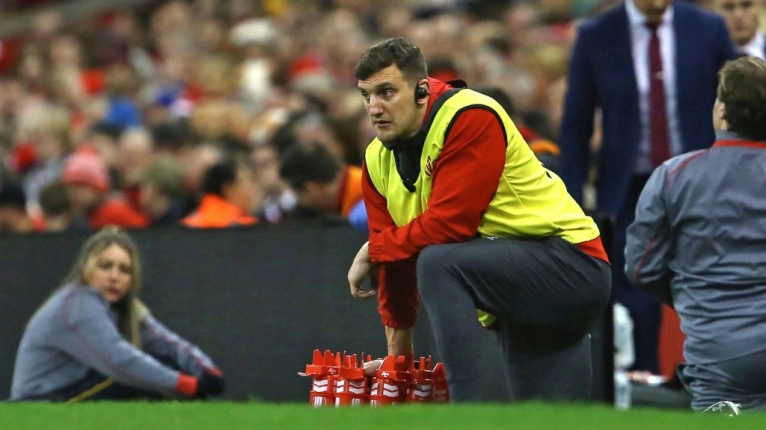
Sam Warburton has said he would support the controversial move to cut Welsh professional rugby from four regions to two, arguing that the country’s player base and finances cannot sustain the current model.
Speaking on The Big Jim Show podcast with former Scotland lock Jim Hamilton, the ex-Wales and Lions captain admitted it was not the outcome he ideally wanted but said the WRU’s proposal represents the most realistic path forward for the game in Wales.
“I’d say there’s a lot of people, right, we don’t know, but I reckon there’s a lot of people who would be in support of going down to two. Which seems to be the frontrunner proposition from the Welsh union. There’s a lot of people against it, but I bet there’s a lot of people quietly for it who just don’t feel the need to verbalise it. One, because they don’t want to have s*** thrown at them, because they support the idea.
“Now, credit to them for making a call. If I had to answer this really quickly – yes or no, do I agree with it? I’d say yes. And I’ll say why,” the former Cardiff captain explained.
“Is it optimal right now? Yes, in my opinion. Is it what I want? No. What I want would be the four current teams pulling up trees in the domestic league and we have a fifth team up north. That would be optimal, that would mean all of Wales is represented. But we’re nowhere near having that. We cannot keep and sustain that financially. We don’t have the player base to do that unless we bring in a load of foreigners, which defeats the object.
“What I would love is five teams. I’d love the four entities that still exist, and I’d love a northern RGC side, a big commercial and playing-wise successful entity up there, like Wrexham football have done. But can we do that now? No. What’s best for us right now is probably to condense it into two teams – from a financial perspective and from a player-base perspective.
“The reason people struggle to imagine it is because the tier below right now is miles off it. But I’ve always taken inspiration from New Zealand. Their NPC – your Taranakis against North Harbour, Wellington, Auckland – that’s an exceptional breeding ground for guys stepping up into Super Rugby. The two-team thing could work, but you’ve got to supercharge what is called the Super Rugby Cymru, the teams underneath.
“You’d have to bring back Neath, bring back Pontypridd. These are big, in a Welsh context, big brands in rugby, really passionate communities. You need to get a ten-team league there. Anyone not playing for Wales drops down into that league. Coaching goes up, facilities go up, investment comes in. Suddenly those teams are playing in front of three or four thousand people, which is more than some crowds that the regions are getting right now. But then you’re bringing back to life that tribal nature which is a strength of ours in Wales.
“If you can get it to that standard then it’ll work. I remember going to New Zealand, completely different, but we played a team from their NPC which would be our Super Rugby Cymru, and I could not believe the standard. That’s got to be the inspiration. If we can get our Super Rugby Cymru – Newports, Pontys, Cardiffs, Neaths, Llanellis, Bridgends, a team up north, the biggest rugby cities and towns historically – up to that standard, then the two-team model works.
“As for who those two teams would be, I don’t know. East and west? Mergers? I don’t know. I’ll be honest, I don’t know. But all I can say is if one of those teams is playing in a Champions Cup semi-final against Toulouse, and Dupont is coming to town, people will watch. Success on the field will breed success off it.
“So is it optimal now? Yes. Is it what anybody wants? No. The WRU would love the four teams thriving and maybe even adding another. But unfortunately we’re not in that situation, which is why a tough decision has to be made. You don’t need to be a businessman to see that.”
Hamilton, who hosted the discussion, agreed the status quo was not working and that difficult decisions were inevitable.
“No, we can sit here and discuss it because it’s obvious,” Hamilton said. “The stadiums are empty. You look at the pathway of the players coming through, it’s a struggle. So, I think it is positive.
“And the irony is three English people who are making the decision. I say that tongue-in-cheek but it must be so uncomfortable for them. They are walking through the fire at the minute, but there doesn’t seem to be another option.”
Warburton also suggested that Wales simply don’t have the rugby-playing population to support the current number of teams.
“I was shown some data – I won’t remember exactly what the numbers were – but the gist was: when you look at the amount of registered rugby players in England and France and South Africa compared to Wales, proportionately Wales should have like one team. Wales have got way more teams per proportion of registered players than any of the top nations in the world.
“If Wales had a bigger playing base, they could support four. But they don’t. It’s diluting that. Scotland were in a similar position and had to go down to two. Wales don’t have the same playing base as France, South Africa or England. Economically too, Wales isn’t the most affluent country in the world, so to make those entities commercially viable is more difficult again.
“That’s why hard decisions are being made. Communities will lose out, but that’s why I think then whoever suffers at the top two level, every community could benefit from really enhancing the Super Rugby Cymru, which is what they deserve as well.”
Hamilton said the roots of the community game in Wales had been allowed to wither.
“The community aspect is where the ball has been dropped. The heartbeat of your game lived in Neath and Bridgend. I said Pontypridd too – when I was younger you’d go there, you’re like that is the identity of Welsh rugby,” said the 63-cap Scotland international.
“Scotland went down to two teams. I was in Melrose the other week—there’s a heartbeat there. How they do that, I don’t know, but there was a semi-pro league in place there. You have to go all-in to that semi-pro bit because that is where the masses are, that’s the numbers, that’s the tribalism.
“There needs to be a cup competition that galvanises the community, sparks that interest in rugby. That’s going to be the hard bit, because when you lose people – and now you’ve got Wrexham and the football that’s taking over – that’s going to be the hard bit to bring them back. But I think you can. I think there’s still a flame that’s lit.”
England second-row George Martin will miss the autumn series and potentially more Tests next year due to uncertainty over his recovery from shoulder surgery.
Read NowJoin free and tell us what you really think!
Sign up for freeThe in-demand coach will be pushed to reject overtures from England and Saracens when his contract is up after the World Cup
After the Super Saturday epic, Fabien Galthie was left with more questions than Steve Borthwick, despite their sides' contrasting Six Nations form.
So many great tries, matches and individual displays in a championship for the ages, but which were the best?
Cian was a 7. Great lineout option and a lot of hard work around the park.
The Prendergast brothers with the lowest ratings.


 Clear
Clear 


