




1
Australia XV player ratings vs USA | International Rugby 2026
5


 Share
Share 
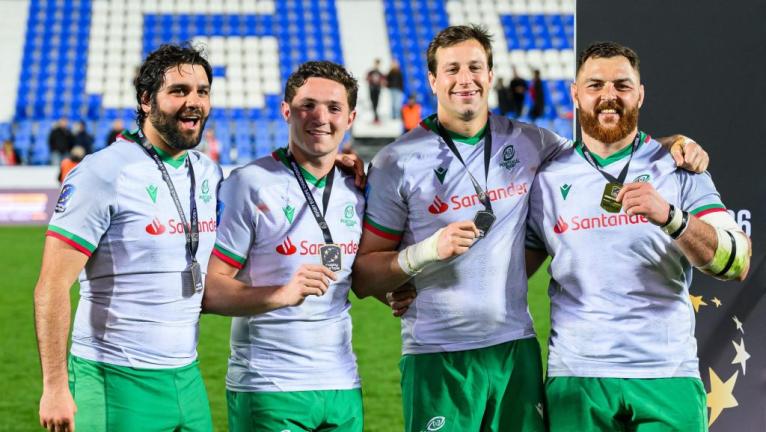
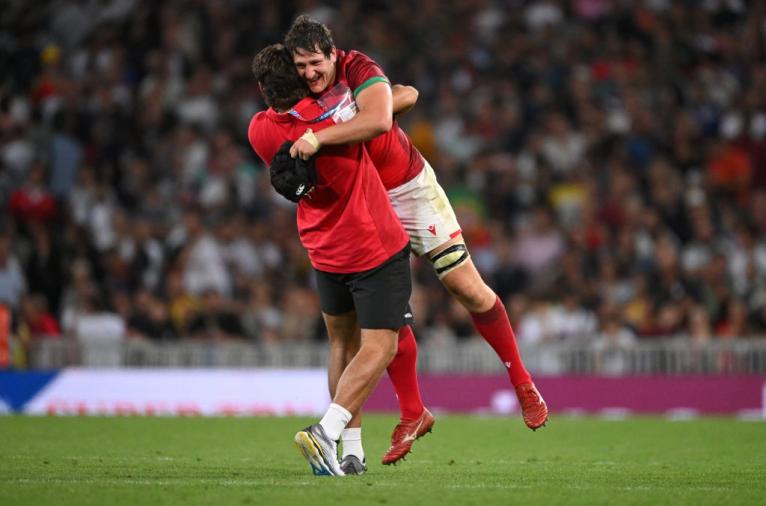
The word ‘maul’ has never been celebrated as much as it was on 15th March at 9pm, when Vincent Pinto, Rodrigo Marta and Cody Lee Thomas embraced a Georgian player to end the game and clinch Portugal their first Rugby Europe Championship in 22 years.
For over a decade, Georgia bestrode Europe’s second tier tournament. They had won eight titles in a row, and 13 of the past 14. They swept Portugal aside in the 2023 and 2024 finals but at last, the Lobos had claimed the throne, a fitting end to their exceptional campaign.
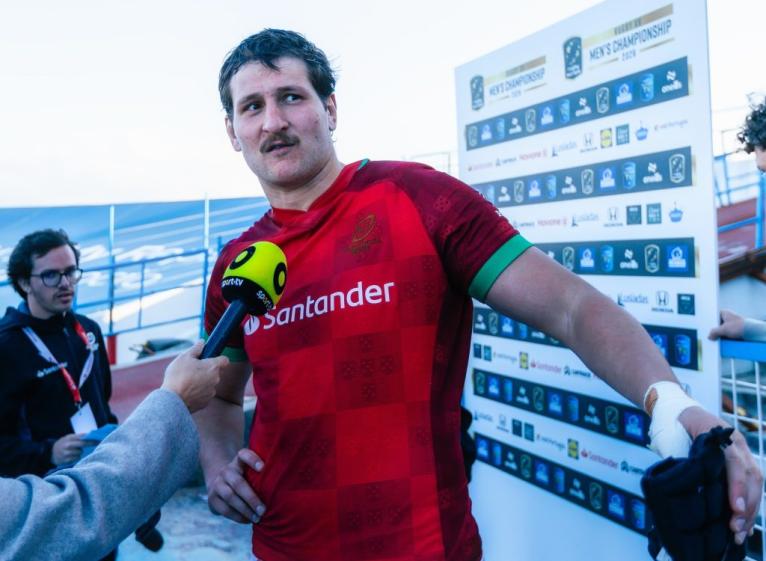
Amongst the smiles and cheers, the celebrations and tears, José Madeira stood tall, having captained his country to glory. The soon-to-be USA Perpignan lock made six tackles in those final three minutes, piledriving Georgians to the floor on the occasion of his 50th cap, revealing now how he felt when Jérémy Rozier whistled for full-time.
“Relief, to be pretty honest. I was done. Yeah, if I had to make another 10 tackles, I would be ready for it, but I kept thinking, ‘Can this be over already?’ Our defence was brutal. We kept working for each other and were inspired to carry on, even if they kept trying to find a break. Having that chance to play my 50th game in a final against Georgia was beyond special.”
Portugal ran a pitch-perfect championship from start to finish, convincingly defeating Romania and Spain on the way to the final, with Madeira explaining the team had a sense something big was going to happen in the showpiece match.
We want to show our pride in being part of the Lobos pack, inspire future generations of young boys and girls, and honour the Portuguese rugby communities.
“We were feeling it. We were playing good rugby, and the team felt in high spirits. At the same time, Georgia’s campaign wasn’t as strong as it had been in the past. Spain gave them a good fight, and even Romania narrowed down the gap. Their defence was conceding too many points, and we understood that we had a massive shot. We just needed to take advantage of it.”
Twelve months before, Portugal had suffered a string of losses against the Romanians and Spaniards, and after the historic high of the 2023 Rugby World Cup, were slowly dropping down the World Rugby rankings. Simon Mannix, head coach since 2024, was still looking for a way to bring the 2023 Lobos back to life.
“Unfortunately, post-2023 World Cup was complicated for us, not only due to a few big retirements, but as well because of the continuous change of staff,” Madeira reflects. “We lacked stability between 2024 and 2025, but now, we are back on track.
“Simon Mannix’s message to us was clear: be the best version of yourselves to play. If you don’t train well, then he will pick someone who has. He isn’t afraid to pick the new kids, as his focus is on the team keeping up and improving.”
With the Nations Cup and World Cup on the horizon, Portugal might be looking to clinch a few more remarkable results. During July, they will face a rematch of the REC final against Georgia, while renewing rivalries with Spain and Romania, as well as taking on less familiar opposition in Zimbabwe and Hong Kong China.
“Our goal doesn’t change, because it is a World Cup, a Rugby Europe Championship or Nations Cup. We want to show our pride in being part of the Lobos pack, inspire future generations of young boys and girls, and honour the Portuguese rugby communities. It will be a challenge, but the team is focused on nailing good results.
“I’m certain we can go a level higher. I don’t think we performed at our best in the final, as our attack didn’t click as it did against Spain, for example. We are improving and strengthening our game. We are climbing up the mountain, but we haven’t reached its peak.”
Having celebrated the title to the fullest, Madeira expects his team’s conquest will inspire future generations of athletes to join the ranks of the Portuguese rugby community, as it did for him in 2007 when the Lobos graced a World Cup for the first time.#
It was a sport that treated me like a friend from the beginning, while challenging me to be better.
Back then, Madeira was a hyperactive six-year-old who found himself falling under rugby’s spell.
“I only discovered rugby in 2007. If I’m honest, I don’t remember what teams were involved in the match, but I found it exciting and challenging. So, my parents went on a search to find the nearest club to where we lived, which was ‘Os Belenenses’.
“The love and passion I had for rugby grew bigger each day and session. It was a sport that treated me like a friend from the beginning, while challenging me to be better. At the same time, the staff at ‘Os Belenenses’ were pivotal in that passion, as they nurtured it in us.
“They sought to teach us the right lessons, especially in what comes down to the process of evolving as a player and athlete and the passion you have to have for your club and sport. If I’m here right now, enjoying these great moments, it was in part because of those who taught me from the beginning.”
Madeira recalls every single coach he met in his 13 years as an ‘Os Belenenses’ player, from his first-ever mentor, Maria Vasquez, to the U18s duo of Diogo Hernâni and João Nabais.
Each taught valuable lessons, especially in how to deal with the sweet taste of victory and the bitter flavour of defeat.
“Any athlete will say sports are like a rollercoaster. You will experience glory and disappointment, and it is what exists in between that will help you to succeed. You need to put everything into perspective. Don’t allow yourself to get blinded by the lights when you reach the top, and don’t allow yourself to fall into a never-ending hole when things turn sour. Find the right balance!”
Patrice Lagisquet’s arrival as Portugal coach in 2019 opened Madeira’s horizons. Four years later, Lagisquet would steer Portugal to that stunning first World Cup victory over Fiji. In 2019, he gave Madeira his first cap in a defeat by Brazil. It was then, too, Madeira realised he could make a living from the game, and fulfil his childhood dreams.
“I only started to think about going to France in 2019 after I played my first cap for Portugal. At the time, Diogo Hasse Ferreira, who was playing in Spain, said the Burgos head coach was keen to sign me. While I never did join the Spanish league, it was like a wake-up call. I thought, ‘maybe I can make a career out of rugby’.
“Due to us being back in the Rugby Europe Championship, young players like me were exposed to French clubs. For a long time, it seemed like a distant dream, as Pedro Bettencourt was the last Portuguese-born player to go to France, and that was in 2014! So when Grenoble showed interest, I was a bit stunned as it wasn’t a common thing to have happened.”
This has been my mindset since I was a child. For me, there are no minor areas in our sport, as everything is vital to a team scoring a try or denying the opposition from reaching the in-goal area.
Madeira arrived in Grenoble in 2020 as an espoir, was quickly added to the senior team roster, and has since amassed more than 100 games for the Pro D2 side. The lock is credited with being a hard-working operator who’s always looking to give his team an edge in the ‘unseen’ areas of the game.
“I don’t think it is a very coachable thing. I was always like this. This has been my mindset since I was a child. For me, there are no minor areas in our sport, as everything is vital to a team scoring a try or denying the opposition from reaching the in-goal area. I’ll do everything I can for my team.”
His pride in playing for the Lobos can be felt in every word. It is part of what kept driving him forward and facing the unknown. To don that scarlet jersey is an insurmountable feeling that will never fade into mundanity.
“It is almost impossible to put into words what it means to me to play for Portugal and to be a Lobos. We don’t sing the national anthem, we shout it! For us, it defines who we are as athletes, rugby players, and humans. Players are just a minor part of it all, with our fans and community being larger than life. That’s why we are passionate about representing Portugal.”
Wonderful article, fantastic player and captain. The rise of Portuguese rugby has been great to watch, now it’s up to the more established nations to end the closed shops, to open up the sport and give them and others - Georgia, Spain etc., opportunities to regularly play the best teams so they can improve further.
In a normal sport, there would be a playoff between Wales and Portugal to be part of the Six Nations in 2026.
The consistent inability/refusal to develop Tier 2’s and beyond will come back on them
Munster v Leinster drew less than 5,000 to Donnybrook in the late 90’s/early 00’s
By 2009 they filled an 82,000 national stadium for a club knockout game. In less than a decade
Plenty of the developing nations have already high standards that would only improve by going fully professional
So much potential for this sport to be more than a closed shop
Fantastic interview! An amazing player! All the best!
Join free and tell us what you really think!
Sign up for freeAfter a long injury absence, the Harlequins loosehead has been missed by club and country and is determined to make up for lost time
The Leicester wing endured losing his father at 18 and the death of his brother last year but has found strength in adversity for club and country.
Canada snapped England's incredible winning run and there are signs the all-conquering Red Roses at last have meaningful and regular competition.
Seriously. Why do you hate Ireland and anything Irish so much. What is your issue?
Oops, that was careless and fixed now.
Brace is Munster affiliated. You can tell by his accent even
Can’t deny Chiefs are chokers though so the headline rings true.
Sounds like the club has hit an ‘interval’ where a definite bump forward will be needed then P…
Would love to know what Mitchell said


 Clear
Clear 


 Copy link
  Facebook
  X/Twitter
  WhatsApp
  Messenger