
France’s political class can’t agree on anything these days, which explains why the country has gone through five Prime Ministers in under two years. Now it seems the squabbling has spread to the rugby field. The cause of the contretemps is an innovation introduced this season into the Top 14 that obliges teams to form a guard of honour and clap the referee and his assistants onto the field.
“Ridicule et Too Much” was the headline in the sports daily L’Equipe earlier this month. The newspaper quoted Laurent Cardona, a former Top 14 referee who is now part of the Soyaux-Angoulême staff in Pro D2. He said the initiative was OTT, adding: “It’s just a marketing ploy by the League,” he said. “It’s not at all about highlighting the referees.”
It’s rumoured that some officials are uncomfortable with the new protocol. “We prefer not to be the centre of attention,” one referee told Le Parisien newspaper.
Nicolas Datas-Tapie, the officials’ representative in the French Rugby Federation (FFR) is on record as saying: “The less fuss there is around us, the better. “We don’t like it.”
The guard of honour was a topic of discussion last week on a French sports radio show, and it divided the panel. They heard the case for the prosecution from Joan Caudullo, the manager of Montpellier. “I believe in the saying that when a referee is good we don’t notice him,” said Caudullo. “The less we see a referee the better for rugby.”
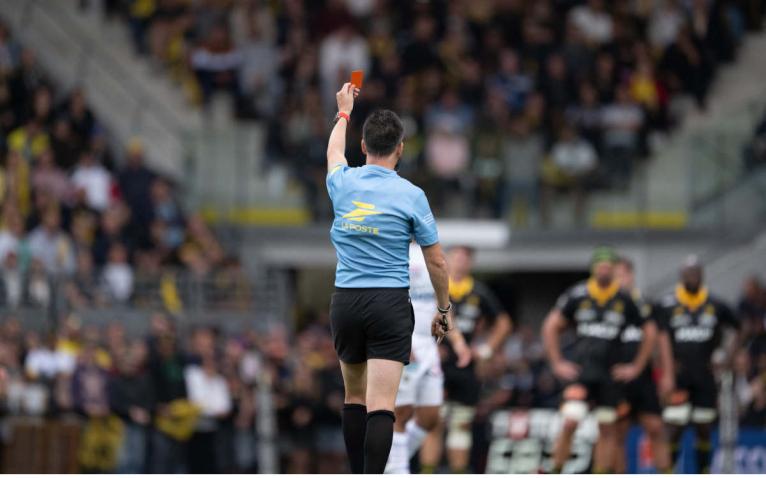
Defending the innovation was France and La Rochelle loose forward Oscar Jegou, who said: “I think it’s great. It shows respect for the referees…it helps the 30 players and the referees connect, and perhaps creates a better atmosphere on the pitch afterwards.”
The LNR have brushed off criticism, saying that “anything new inevitably creates a little imbalance and uncertainty. But we are fairly confident that it will seem natural to everyone fairly quickly.” Nonetheless, the guard of honour will be reviewed at the end of a month and a decision made as to whether it will be continued or quietly shelved.
Instead of petty grumbling, people should focus on why the LNR felt compelled to introduce an innovation that, hopefully, will spread across the rugby world.
It would be a shame if it was abandoned. Jegou is right when he says that the guard of honour sets the tone for the next 80 minutes. It’s not thrusting the officials under the spotlight or making them the centre of attention; it’s a brief but dignified mark of respect for their status. It’s like addressing a schoolteacher by their title and not their first name, or a court rising when the judge enters.
Instead of petty grumbling, people should focus on why the LNR felt compelled to introduce an innovation that, hopefully, will spread across the rugby world. Let’s face it, respect for the referees – once sacrosanct – has been diminishing for years. Fortunately there hasn’t been a repeat of the disgraceful incident in 2002 when a South Africa lout ran onto the Durban pitch and assaulted David McHugh, the Irish referee, as he refereed the match between the Springboks and the All Blacks. McHugh suffered a dislocated shoulder in the assault.
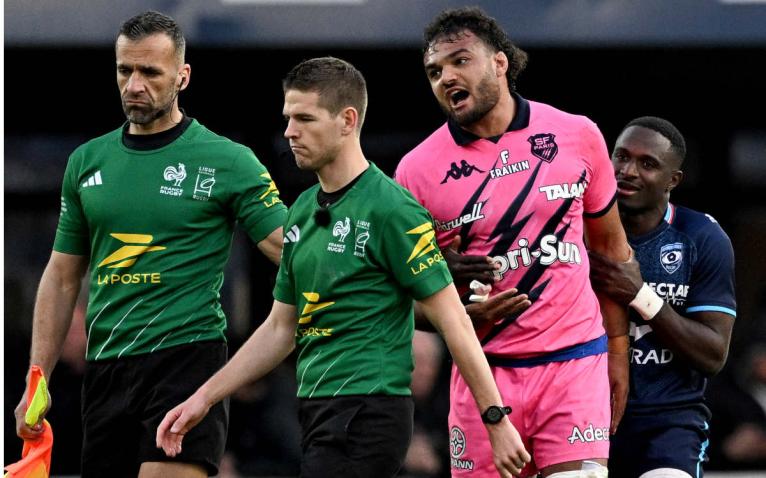
Nonetheless, a growing number of spectators abuse officials; sometimes in person, like the man who threatened a New Zealand referee with a knife in 2016, or sometimes online. One of the world’s most experienced referees, Wayne Barnes, retired two years ago with a warning about the ‘vile’ abuse routinely directed the way of officials. In his case it included threats made against him and his family.
At this summer’s FFR congress, president Florian Grill revealed that in all forms of French rugby in the 2024-25 season there had been 30,000 matches ; in 600 there were “problems with violence towards the referee”. As Grill told his audience this is unacceptable, and “tarnishing the image of rugby”, particularly when footage of the violence is uploaded onto social media.
It starts at the top. Even in the red-hot atmosphere of an Ashes Test match you won’t find an Aussies or an English cricketer whining or angrily waving their hands at the men in white coats.
Grill wants a mobile app to record cases of violence and then “firm sanctions” against those responsible for abusing match officials.
This behaviour has become a blight on the game. In football and tennis the respect shown by players towards the officials has improved in recent years. In cricket it is impeccable as ever.
It starts at the top. Even in the red-hot atmosphere of an Ashes Test match you won’t find an Aussies or an English cricketer whining or angrily waving their hands at the men in white coats.
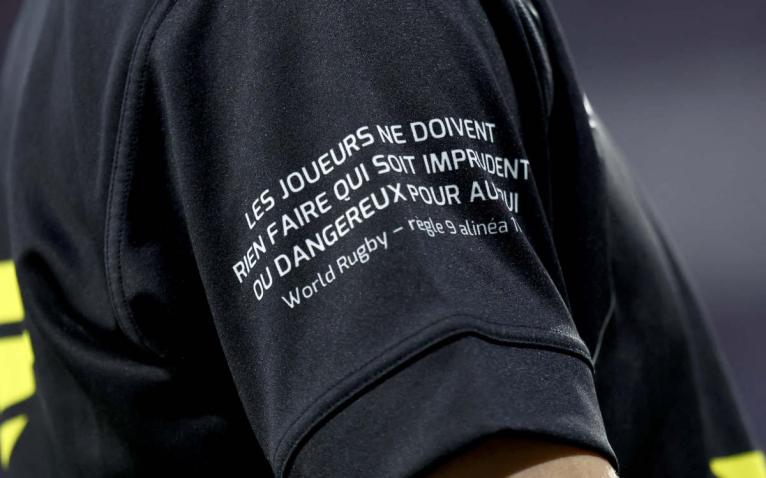
For too long rugby has been turning a blind eye to the bolshy and disrespectful behaviour of a minority of top-level players towards referees. This seeps down to the amateur game and schools rugby where they imitate the insubordination of their idols.
The Top 14’s guard of honour is a small but hopefully symbolic gesture in reversing this unwanted trend. It’s not about making officials the centre of attention; it’s about grabbing the attention of the players and public, and reminding them that referees must be respected.

News, stats, live rugby and more! Download the new RugbyPass app on the App Store (iOS) and Google Play (Android) now!
Whether you’re looking for somewhere to track upcoming fixtures, a place to watch live rugby or an app that shows you all of the latest news and analysis, the RugbyPass rugby app is perfect.


Comments
Join free and tell us what you really think!
Sign up for free