
The All Blacks are never a side that likes to follow or be reactive, but they would be hard-pressed to deny they are now in the process of seeing if they can redefine how they utilise their scrum-halves and discover their own version of Antoine Dupont.
The big clue in reaching this conclusion came with the news that the All Blacks have made a significant change to their Rugby Championship squad by dropping the established Finlay Christie, and have brought in Noah Hotham, the 21-year-old Crusader, who made his test debut against Fiji after being called in as injury cover.
The other big clue is that veteran TJ Perenara has announced he’s leaving for Japan at the end of the year – a decision that signals he knew his All Blacks days are numbered and the time is right for him to step aside and let the new generation take over.
It was a big call by head coach Scott Robertson, just three games into his coaching tenure, to dump Christie.
The 29-year-old who was a regular pick under former All Blacks coach Ian Foster between 2021 and 2023 and was on the bench throughout the knock-out rounds of last year’s World Cup.
Bigger still, was the decision to drop Christie for Hotham – the youngster who started this year as the third choice No 9 at the Crusaders and wasn’t initially picked for the July tests.
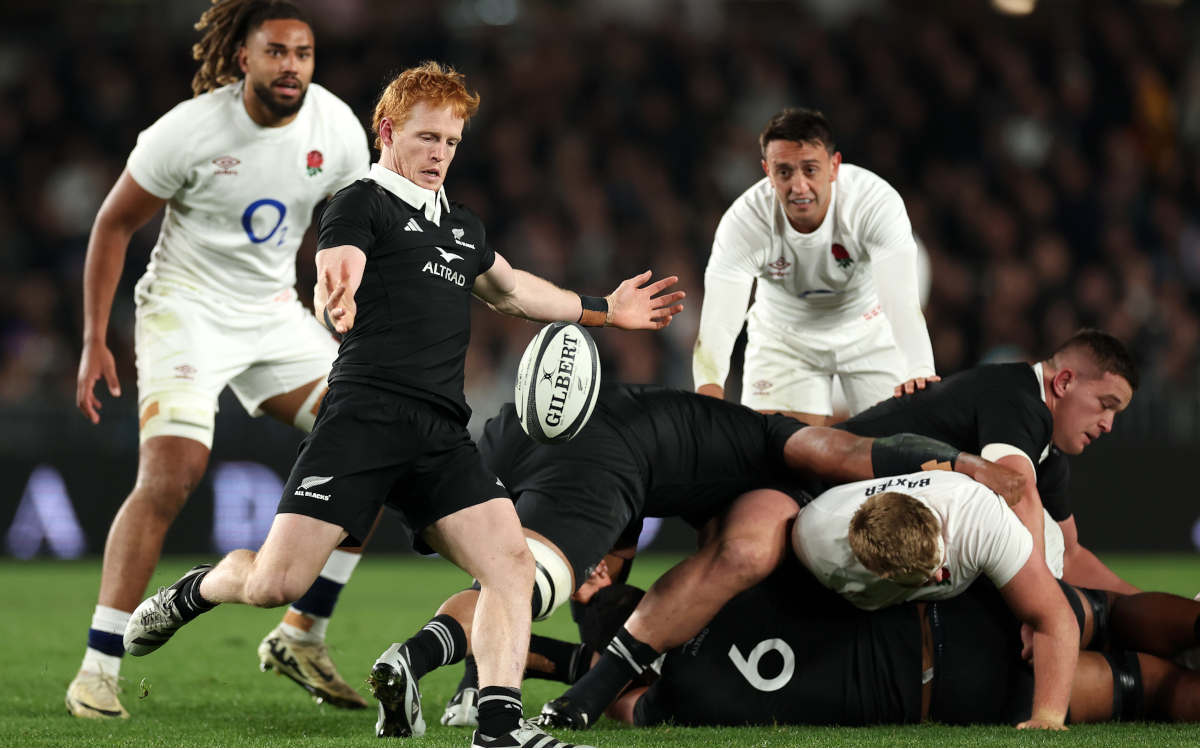
But the evidence was writ large throughout July that the All Blacks needed to not only rethink their scrum-half pecking order, but also what role they want their No 9 to play in driving their attack.
This change in selection was not a simple case of the coaches backing the form player. There was more to it than that – a bigger transition at play.
What Robertson seems ready to do is borrow from the French and develop a new generation of scrum-halves who present more of a direct running threat and who take on more of the playmaking responsibilities.
England knew that they could push their defence up hard and fast from the outside because the All Blacks weren’t going to attack around the fringes through their scrum-half.
It works for France, who use Dupont as their tactical general and orchestrator of their attack. But in New Zealand, it has long been the case that all the responsibility to steer the team tactically sits with the No 10, with the fullback in more recent times being seen as the secondary play-maker.
What the first three tests of the year showed, however, is that trying to play everything through the No 10 has made the All Blacks too easy to shut down.
England knew that they could push their defence up hard and fast from the outside because the All Blacks weren’t going to attack around the fringes through their scrum-half.
The English midfield flew hard and fast at their opposites because the ball was always going to be heading to No 10 Damian McKenzie – who carried nearly all the pressure of trying to make something happen.
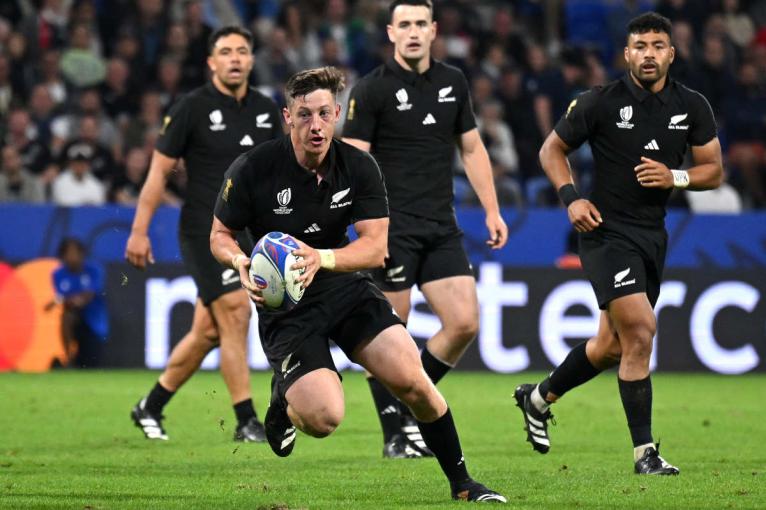
The All Blacks’ thinking around is not flawed as such, but given how little time and space there is in the modern game, if their attack is to be effective, they need not only lightning quick recycling at the ruck, but for the scrumhalf to shift the ball with equal pace and precision.
And against England, this was something that didn’t happen enough, and both tests highlighted the limitations of the All Blacks two most senior scrum-halves.
The All Blacks started the first test with Perenara at No 9 – a decision that reflected both his Super Rugby form and vast experience.
Perenara has been around since 2013 and Robertson wanted to start his tenure with an old head in a key decision-making role.
That’s essentially why Christie was on the bench in that opening game – he was the only other capped halfback in the squad.
When Perenara and Christie were on the field, they didn’t do enough to challenge defenders to stay close to the ruck or operate with such clarity of decision-making as to facilitate the generation of a higher-tempo attack.
But Perenara limped off after 40 minutes of rugby that confirmed his tenacity, his passion and competitiveness, but also his relatively chaotic decision-making and his often ponderous need to consider his options.
Christie, when he came on for Perenara and then started the following week in Auckland, also did little to advance his case.
He too was a little bogged down around the ruck area, slow to decide what he wanted to do, a little erratic with his passing and didn’t provide a swift and accurate transition point between the forwards and backs.
When Perenara and Christie were on the field, they didn’t do enough to challenge defenders to stay close to the ruck or operate with such clarity of decision-making as to facilitate the generation of a higher-tempo attack.
WHAT A BOUNCE 🤯 Noah Hotham gets his hands to it and the Crusaders increase their margin!
? Super Rugby Pacific. Crusaders v Moana Pasifika, live now. Every Match. Ad-free. Live & On Demand on the Home of Rugby, Stan Sport.#StanSportAU #SuperRugbyPacific #CRUvMOA pic.twitter.com/XPKPdgLlDT
— Stan Sport Rugby (@StanSportRugby) May 31, 2024
Their relatively cumbersome work denied the backline time and space in which to operate and England were able to mostly subdue and suffocate much of the All Blacks attacking intentions.
Cortez Ratima, on the other hand, the uncapped Chiefs No 9, came off the bench at Eden Park and in his 25 minutes, he shifted the dynamic of the game.
He was quicker around the field, got his hands on the ball early and passed accurately and crisply, and the All Blacks attack flowed.
It was much the same the following week when he started against Fiji – he mixed his game up between pass, run, kick and it created more time and space for his backline.
When Hotham was unexpectedly thrown into the Fiji game after 30 minutes due to an injury to Ratima, he made one of the more accomplished and influential debuts of the last few years.
His game is built on his instinctive running and surprising upper body strength which enabled him to find space around the edge of the Fijian ruck and bring the All Blacks heavier ball carriers into play through the middle of the field.
Hotham’s a halfback who finds it through instinct and they’re the un-coachable bits he’s got in his game. He’s earned the opportunity. Against Fiji, he changed the point of attack.
Steve Hansen
Ratima and Hotham may only have three caps between them – but the fact they have both been retained for the Rugby Championship is a clear indication that the All Blacks want their scrum-halves to pose more of an individual attacking threat, a point confirmed by Hansen.
He said that Hotham gave the All Blacks a real point of difference, and that: “He’s not a halfback you need to tell to run.
“He’s a halfback who finds it through instinct and they’re the un-coachable bits he’s got in his game. He’s earned the opportunity. Against Fiji, he changed the point of attack.
“All 10s in world rugby love nines … [when] they look at the nine and they think they’re about to receive the pass and all of a sudden the nine runs.
“What that does to the defence is totally different around the need to acknowledge threats. It’s instinctive in Noah’s game. You’ve got Cortez who can do it, also.
“What that does for your attack is we’ve got new spaces to look at.”
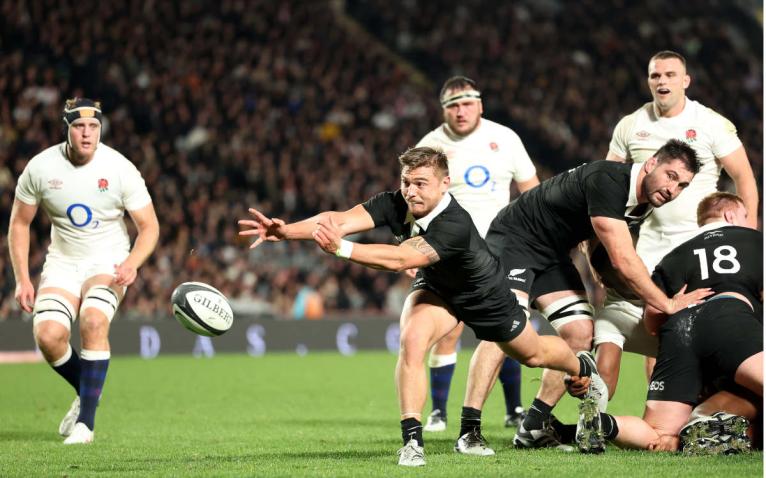
Perenara has been retained for the Rugby Championship, and will likely play a mentoring role to the two young N0 9s, but may not feature much because his game doesn’t quite suit the way the All Blacks want to play now.
Whether Perenara makes it to Europe with the All Blacks later in the year will depend on how long it takes the currently injured Cam Roigard to get himself match fit.
Roigard, who enjoyed a stunning rookie Super Rugby season last year and forced his way into the All Blacks World Cup squad, is the country’s premier No 9.
He’s the most devastating running nine, famously scoring an unbelievably brilliant solo try against South Africa last year at Twickenham and was continuing to develop in Super Rugby this year until he damaged his knee.
The only unknown is when Roigard will return as Hansen said: “Cam’s got a lot of rugby in front of him so we’ve got to manage this really well for him.
“We know his influence on Super Rugby [for the Hurricanes] in the early rounds was phenomenal so we’ve got to look after the kid to make sure when he comes back he’s comfortable and confident.”
The All Blacks are going to invest fully in Roigard, Ratima and Hotham in this World Cup cycle, because they can bring a whole new dimension to the All Blacks attack.
Robertson is changing the skills profile and core role of his No 9s as he searches for ways in which to increase the attacking threat his team poses against all opposition.


Comments
Join free and tell us what you really think!
Sign up for free