
Perhaps he was playing dumb for affect, but Scott Robertson said he was unaware the All Blacks had returned to the No 1 World Ranking after beating Argentina in Cordoba until he was told by the media.
Even if he was aware before that, the fact he wanted to play down the achievement was a major tell that the All Blacks were not going to feel they deserved to be the top ranked team unless or until they posted at least one, but ideally two victories against South Africa in September.
Prior to this year’s Rugby Championship, Robrtson’s All Blacks had beaten France, Ireland, England, Australia and Argentina, but not South Africa.
To the All Blacks’ way of thinking, there was something not right about sitting at No 1 without having managed to defeat, at least once, every top tier nation they had played in the last 12 months.
But there was something much deeper at stake for the All Blacks in that two-Test series against the Springboks than giving credibility to the world rankings.

South Africa are the true benchmark for the All Blacks these days – the team they feel has the capacity to put them under pressure like no other and stress test all parts of their game.
Too often in the last seven years, the All Blacks have looked robust, organised and multi-faceted, only for things to fall apart when they meet the Boks.
Since professionalism, the All Blacks have been the dominant partner in what both parties bill as the game’s greatest rivalry.
When Steve Hansen was coach between 2012 and 2019, the All Blacks only lost twice to the Boks. But things started to swing a little in 2018 when Rassie Erasmus took over as head coach.
Prior to this year, the Boks had played the All Blacks 13 times with Erasmus at the helm, winning seven, losing five and drawing once.
One of those wins was a record defeat before the World Cup (35-7 at Twickenham) and then of course the tournament final, nine weeks later.
The Boks have become a kind of kryptonite for the All Blacks – able to use their power game and aerial prowess to subdue New Zealand, demoralise them and expose all sorts of previously unrealised cracks in their game.
The Boks have become a kind of kryptonite for the All Blacks – able to use their power game and aerial prowess to subdue New Zealand, demoralise them and expose all sorts of previously unrealised cracks in their game.
That was certainly the case last year when the All Blacks found in South Africa that their scrum wasn’t as strong as they thought, and it started to buckle a little in the final quarter of both tests.
They also found their bench lacked impact, that their defence needed to be tighter and more aggressive and that they weren’t as adept under the high ball as they needed to be.
The upshot was that the All Blacks came home from South Africa winless having suffered consecutive defeats (which made it four losses in a row to the Springboks).
This is why, last month, former Wallabies and Pumas coach Michael Cheika said on a prominent New Zealand radio show with veteran sports broadcaster Marty Devlin: “I feel like it’s a really pivotal series for New Zealand against South Africa, those two matches in the championship.
“They’re at home, South Africa have had the domination on everyone over these last few years. I think it’s a real opportunity for New Zealand, on home soil, to take them on; take them on in two ways.
“Not just in the New Zealand way of playing footy, because that’s a very different style to the South African way, but also a little bit in their own way, take them on in the physicality stakes.

“Because that platform, that will give them the confidence, perhaps then to go on and say right, off the back of this – and I think there’s a longer series next year, and then you’ll come back around them in the 2027 World Cup – to say ‘we’ve got their number’.
“So, I think it’s going to be an important series for them both. The two matches this year, and also the bigger series they’ll be playing next year.”
Cheika was spot on with his assessment about the importance of the series to the All Blacks, because New Zealand has gambled on upping its exposure to South Africa, believing this is the best way to prepare for the next two World Cups.
NZR has locked the All Blacks into a massive commitment of playing the Boks 10 times in this cycle – six of the encounters being played within 15 months of the 2027 tournament kicking off.
It’s an incredible gamble by NZR which is driven partly by its conviction that by marketing the encounters as The Greatest Rivalry it can make serious cash, and partly because the high-performance feedback is clear that the All Blacks need more exposure to the Boks now that Super Rugby is a Pacific-only competition.
This sense that South Africa holds the key to New Zealand’s future is why next August and September, the All Blacks will head to the Republic for a six-week tour, that will see them play four games and four Tests.
New Zealand, strangely perhaps given how quickly it unilaterally broke up Super Rugby in 2020 when the pandemic hit, has seemingly regretted the decision ever since.
It was underestimated at the time just how much the elite playing fraternity would be impacted by not playing so regularly against the South Africa sides who typically come with athletes of different (bigger) body shapes, kick more and put a heavier emphasis on set-piece.
And so too have the players missed the rite of passage experience of travelling to South Africa in Super Rugby, where schedules were such that Kiwi teams would spend at least two, if not three weeks there.
This sense that South Africa holds the key to New Zealand’s future is why next August and September, the All Blacks will head to the Republic for a six-week tour, that will see them play four games and four Tests (although one of those will be in a neutral European venue).
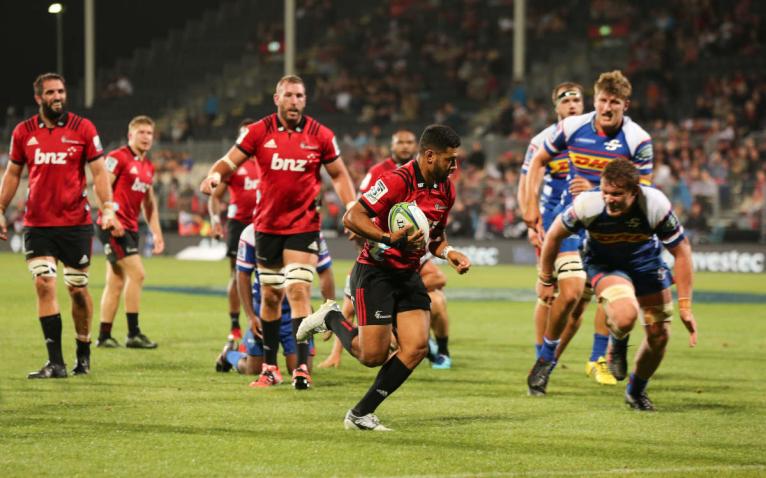
South Africa will come to New Zealand in August 2027 and play two more tests and then in 2030, they will be back, reciprocating the six-week, four-Test format of 2026.
This plan is the ultimate risk-reward scenario for New Zealand. Leaving aside the risk they have taken in alienating Sanzaar partners Australia and Argentina by effectively cancelling the Rugby Championship in 2026 and 2030 to do their own thing, the bigger concern is that so much of their confidence, psychological belief, strategy and selection is going to be shaped by how they perform against South Africa.
And that’s a concern because the Boks have the potential to inflict some serious mental damage on the All Blacks between now and the World Cup.
The last 20 minutes of their most recent encounter were arguably the worst in All Blacks history. They conceded four tries in that final quarter, three of them coming in the last 12 and the final scoreline of 43-10, meant that it replaced the All Blacks’ 35-7 loss to the Boks in 2023 as their worst defeat in history.
That the All Blacks scrum was crushed hurt their pride, but what stung the most was that South Africa looked the better attacking team – more adventurous, creative and precise.
The recent stats make horrid reading for the All Blacks. They have lost five of their last six Tests to the Boks, and two of those have been record margins.
The last five home tests against them have only yielded two wins and a draw, in the just finished two Test series, the All Blacks scored a total of four tries, the Springboks nine, and in the same series, the Boks won six scrum penalties, the All Blacks three.
That the All Blacks scrum was crushed hurt their pride, but what stung the most was that South Africa looked the better attacking team – more adventurous, creative and precise.
Inventive attacking rugby has always been the All Blacks’ domain – the thing they can do that the Springboks can’t, but in Wellington it was Damian Whillemse, Cheslin Kolbe and Ethan Hooker dazzling the crowd.
And in a stunning admission of vulnerability, that alluded to the degree of desperation and hopelessness that is infiltrating the All Blacks, Robertson effectively conceded that he can’t find the answers to combatting South Africa’s kicking strategy and aerial prowess.

“I’ve just got to say, South Africa have been criticised for their aerial game and their kicking over the years, but they put so much value and so much time into that, and the way they play, they get return on it. They’re just so good at it.
“We’ve done a lot of prep on it but they just owned that area and ended up putting so much pressure on us. Well done to them, they know their DNA.”
For the period between 2010 and 2019, it was South African conceding that New Zealand had a masterful kicking strategy and the aerial skills they couldn’t match.
It’s perhaps no wonder then that Robertson had no interest in the rankings when he was in Argentina as he knows that the only measure that counts for his side now is how they fare against South Africa.
His mission between now and the World Cup is to develop the coaching pedigree to outsmart Erasmus, and to find the right players and produce the right gameplan to not only beat South Africa but also reverse this idea that the All Blacks have lost the art of innovation.

News, stats, live rugby and more! Download the new RugbyPass app on the App Store (iOS) and Google Play (Android) now!
Whether you’re looking for somewhere to track upcoming fixtures, a place to watch live rugby or an app that shows you all of the latest news and analysis, the RugbyPass rugby app is perfect.


Comments
Join free and tell us what you really think!
Sign up for free