
Lewis ‘Mad Dog’ Moody, the hardest of men with the warmest of hearts. Just like Doddie. And Ed. And Rob. You have to wonder quite what’s going on when the best of us have been picked out and laid low by the most unforgiving of conditions, Motor Neurone Disease. We all know that life isn’t some sort of pie chart where one lot is given the tastiest bits and the rest have to make do with crumbs but the news revealed in a moving BBC broadcast on Monday morning that the most relentless of figures on a rugby field was consigned to a future of pain and restriction somehow felt out of sync with the natural order of things. What? Mad Dog ? The man with no fear, no physical weakness, indomitable, full of zest and energy? Say it ain’t so?
But it was and it is, rugby’s Sundance Kid taken down. If ever there were a moment to take stock and resolve never to moan about one’s lot ever again, then this was it. Seize that bloody day for all it’s worth.
‘Mad Dog’ captures Lewis’ essence, part spaniel, part retriever, with a relish for life, a reliance on instinct, intent only on chasing that stick, running around in circles, panting and crazy for fun and freedom. That’s why he clattered into tackles, that’s why he chased forlorn causes, soaring high, and, yes, recklessly at times, to gather a kick-off or to put the fear of God into the opposition when even the most focused of them had an awareness of the ‘Mad Dog’ mayhem headed their way.
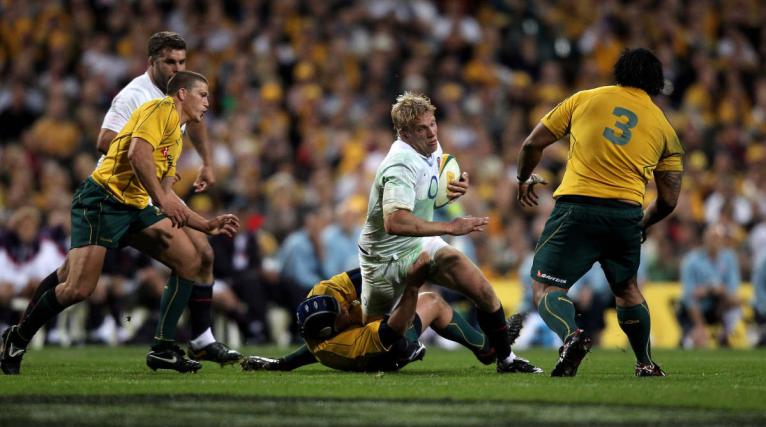
There was never anything dirty or untoward in Moody’s play. Even when he suffered the ignominy of becoming the first Englishman to be sent off at Twickenham after several haymakers landed on Alesana Tuilagi, there was something pure and reactive about it. Of course Moody himself didn’t make light of it and was fully aware of the dishonour of the incident. Yet Tuilagi wouldn’t have seen it that way and as a teammate of Moody’s at Leicester fully realised that he deserved to cop a few. You can imagine that there was tears shed among the widespread Tuilagi clan at this week’s news. One of their own.
Moody made no excuse for the way he played the game. How could he? It was him to his very core. As was the selflessness of his play, the way that he always put everyone else first, a musketeer with studs on. His ever-supportive wife, Annie, pointed out this very trait on the BBC Breakfast item as Moody spoke of how difficult it was for his sons, Dylan and Ethan, to hear the news. Always others first. Dylan, in fact, is a very promising goalkeeper in the Southampton FC ranks. In the mind’s eye you can see him diving at an onrushing striker’s feet without hesitation.
Moody played a serious style of rugby, knuckle-hard. Yet he never took himself too seriously. There was a simplicity in the way he saw rugby – do it, enjoy it, appreciate it.
It’s often the case when putting together a tribute article that you come across this or that slightly less favourable aspect of their careers, some sort of corrective to the fulsomeness, more rounded, more honest. Not with Moody. Not a syllable of complaint or muttered aside. Not even a sniff. Nothing but warmth and admiration, England’s very own Jean-Pierre Rives with the blond shock of hair, invariably blood-spattered, hands on hips, ready for more.
Moody played a serious style of rugby, knuckle-hard. Yet he never took himself too seriously. There was a simplicity in the way he saw rugby – do it, enjoy it, appreciate it. His body was busted to bits as a result. He occasionally played touch rugby with other kids’ dads in Bath. There’s touch rugby and then there is Moody touch rugby.
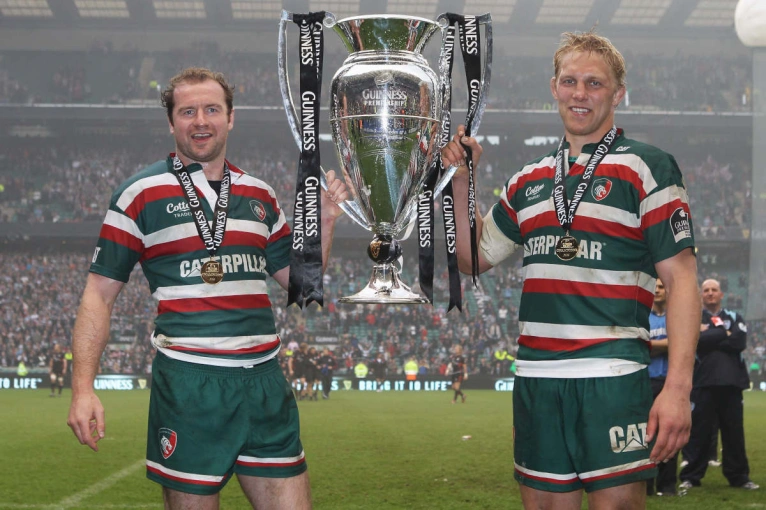
For all the bangs and knocks, Moody never had complaint even though one of his closest pals, fellow 2003 World Cup winner, Steve Thompson, is suffering grievously with early onset dementia.
Moody was an integral part of that 2003 group, not as a starter for he was vying with some of the true greats of the game in Neil Back and Richard Hill, but it was he who rose to the heights to take the extra-time lineout that teed up the position from where Jonny’s boot swung so gloriously. Moody won 71 caps and was Martin Johnson’s choice as captain in 2011. That’s a body of work to be proud of.
Yet it’s the bloke as much as the player that makes Moody such a popular figure, a generous, giving one. He set up the Lewis Moody Foundation years ago to help good causes and raised millions through his various endeavours.
Yet it’s the bloke as much as the player that makes Moody such a popular figure, a generous, giving one. He set up the Lewis Moody Foundation years ago to help good causes and raised millions through his various endeavours. He was one of the regular entertainment officers on the England beat, choosing Friday night films, organising trips to Gold Coast Theme Parks on that 2003 adventure, last off the rides, craving spaniel-like for one final frolic. Strolling round Manly, one of Sydney’s famed northern beaches, he’d always stop for a chat or a coffee. That open, self-effacing attitude remains true today.
Given the high-profile nature of rugby’s MND’s sufferers, it would be so easy to think that there must be a link between the sport and the disease. There isn’t. Or not proven. For sure, though, Moody’s news will cause parents to consider what might be appropriate for their children. That is only natural. The game has become more vigilant and safeguarded, but more needs to be done.
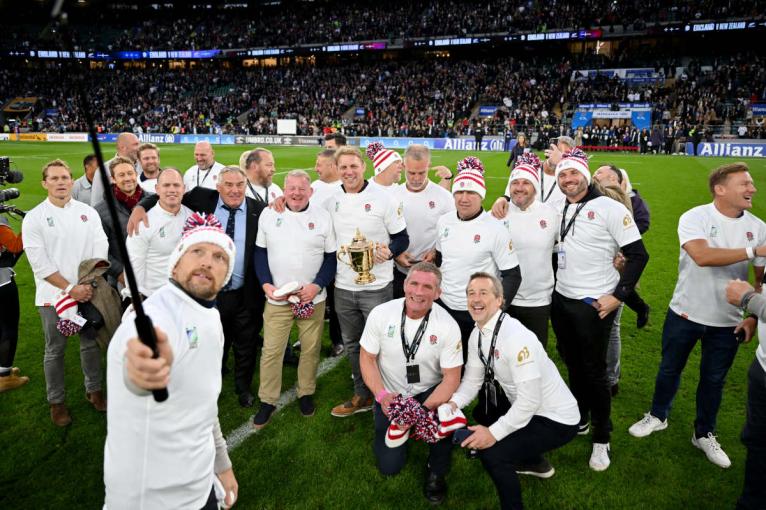
Yet if the recent women’s World Cup has shown the benefits of being involved in rugby – the sense of camaraderie, the shared toughness and togetherness experienced – than it is also to be found in figures such as Lewis Moody. He’s forever the kid with mud on his knees and a smile on his face at Bracknell minis, having a grand old time with his mates, forever young.
Moody gave of himself not only because he loved the physical contest but primarily to help out those mates. It’s time to repay that faith with our enduring love and support.

News, stats, live rugby and more! Download the new RugbyPass app on the App Store (iOS) and Google Play (Android) now!
Whether you’re looking for somewhere to track upcoming fixtures, a place to watch live rugby or an app that shows you all of the latest news and analysis, the RugbyPass rugby app is perfect.


Comments
Join free and tell us what you really think!
Sign up for free