
It’s almost that time of year again. Time to prepare the mince pie and a glass of cognac and await a visit from Father Christmas. Leave the refreshments strategically near the chimney breast and surrender to sleep.
If you’re lucky, you may hear that telltale ‘whoomph!’ and wheeze as Santa Claus lands in your hearth with his bag of goodies; if you’re doubly fortunate, he may leave a cracking rugby read at the foot of your tree.
You could do a lot, lot worse than wake up on a snowy Christmas morning to find Brendan Fanning’s new book Touching Distance: Irish rugby’s great battle with expectations in that fabled spot. It will of course, warm your heart, tapping the blarney stone to tell those golden anecdotes that leave you impatient to turn the page.
Hidden away in the terms and conditions but never highlighted in red, there is a caveat. The book is written in the knowledge of what could have been, but never was. It will leave you with a feeling of queasiness, a persistent ache in the pit of your stomach, especially if you are a supporter of Irish rugby. No amount of bisodol will be enough to cure that sensation.
‘Touching distance’ means just that. It means arriving at a World Cup quarter-final as the world’s number one team, having beaten the reigning world champions at the pool stage and facing a New Zealand side you beat the year before in their own backyard. And it means losing again, at the same stage of the tournament where you always make your exit. Despite all the improvements at Test level and all the streamlining and realignment of the feeder system underneath it – they win, and you lose.
This is the tale of Irish rugby over the past decade: a plot with heaps of charm and character but a darker lining. The yearning for what might have been, the thirst that can never be slaked is a footnote at the bottom of every page. Fanning’s book reads like an elegant elegy. If the last rites have not been read, the priest still carries them crumpled in pocket, like a constant reminder or a cruel joke.
At the start, the book begins to gather pace when it discusses the man who propelled Ireland into the first rank of rugby powers in the 2010s. In all, six chapters are devoted to the Joe Schmidt years, the meat of the book. He had first arrived, unknown and unheralded, in Mullingar in the county of Westmeath in 1991, as a player from Manawatu ‘seeking experience and wanting to see the world’ outside his native New Zealand.
His return to this country, 17 years later, would likely be scripted by Hollywood as a modern remake of the mission to drive the snakes out of Ireland and to convert the pagan peasantry.
By the time he finished his first stint in the country he was coaching Wilson’s Hospital School and doubling up as a player-coach for Mullingar RFC and it was a glimpse of his future with Leinster.
As Fanning observes: “His return to this country, 17 years later, would likely be scripted by Hollywood as a modern remake of the mission to drive the snakes out of Ireland and to convert the pagan peasantry. It would involve a name change, of course, to Patrick. The second coming was an altogether higher-profile affair. It kicked off a spin cycle of success that started in season one, 2010/11 [with Leinster], and continued almost uninterrupted through to 2017/18 [with Ireland]. Nothing would be the same in Irish rugby again.”
Where Schmidt’s predecessor Michael Cheika was a culture-builder, Joe was the man with a relentless eye for detail and driving playing standards on from that point. It was like the Baptist, preparing the way for the Saviour.
As Leinster flanker Kevin McLaughlin recalls ruefully, “we thought we were good at rugby and it turned out we actually weren’t. I remember being quite shocked by the detail [of it]
“[Schmidt] used to give us a little two-page document before every game highlighting what the opposition team was going to do and what our core plays were, and the principles were on every page. You couldn’t ignore them. They were everywhere. I can remember what most of them are: dominate the air; ball-carrier use feet, fight and finish; it’s two barrels plus one at every ruck; it’s run square – we never run laterally; he had a no offloads policy for everyone except ‘Drico’ [Brian O’Driscoll] and a few others because at that point we knew if we kept the ball we scored; there was “killer” in the 22, which meant that as soon as we got into the opposition 22 we upped our intensity 10 per cent, and we always came away with points. That’s 15 years ago and those principles are still baked into my brain. It’s unbelievable.”
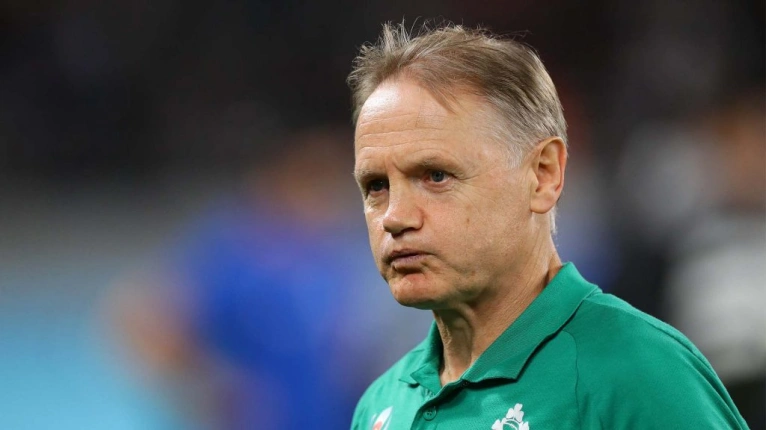
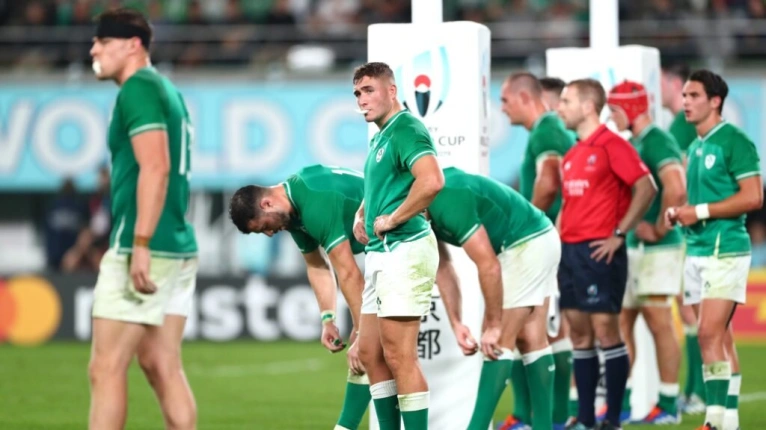
It was Schmidt who drove Leinster on to two Champions Cup victories in three seasons and Ireland to an historic first win over the All Blacks at Soldier Field in Chicago in 2016. He won three Six Nations titles during his six years in charge of the national team, and by 2019 Ireland had reached the number one spot in the World Rugby rankings for the first time in their history after defeating Wales on 7th September. They were still number one on the eve of the World Cup a couple of months later, only to be shattered by the All Blacks at the quarter-final stage, losing 46-14.
The flipside to Schmidt’s exceptional eye for detail was the need to exert absolute control of everything, little or large, within his purview. It was management which knew no boundaries. As Leinster CEO Mick Dawson notes, “you’d have to say [Joe] was a great appointment, but as time went on you got to realise that Mother Theresa wasn’t really Mother Theresa. He was ruthless.”
One of the most fascinating passages in the true centre of the book begins when Fanning takes an audible deep breath, and approaches the heart of darkness in the Schmidt era, pen and torch in hand. Reporters who leaked injuries or selections in advance tended to find themselves in a frozen media wasteland: “It bothered him the media were not all card-carrying supporters… Joe never came around to the idea that he couldn’t control everything written about his team. At the time, most of it was gushing. But later he would become fixated on the reporting of injuries and team selections.”
That tune will sound all too familiar to Wallaby supporters over the past couple of years. When Schmidt sounded out Fanning about the possibility of writing a book together, the same music was playing in the background.
The prospect of cajoling him at every turn to invest something of himself in a story he didn’t want to write was painful. More likely, this was Joe’s idea of a soft landing for me.
“We had discussed the possibility of me ghost-writing it over coffee one Saturday morning in Wilde & Green, a busy restaurant in Milltown near where he lived. It was like pushing a heavy door that hadn’t been opened in years… When we met again, a few months later at the same venue, he said he was thinking about writing the book himself and maybe I could have an input in some way. Jaysus. I kicked to touch rather than run a mile; the prospect of cajoling him at every turn to invest something of himself in a story he didn’t want to write was painful. More likely, this was Joe’s idea of a soft landing for me.”
Coaching is about relationships – with the players and the backroom staff for sure, but also with the media which translates coach-think for public consumption. As the media drifted away on the tide, so the players began to have their doubts. Johnny Sexton wanted more sessions on unstructured attack as the 2023 World Cup loomed, but Schmidt already had his micro-calendar planned out: the younger players pleaded with senior ‘Sexto’: “Are we going to play any rugby?”
There is a limit to the number of times the message about doing the same thing but doing it better can be repeated. When the teacher stops learning, so do the kids. The final straw came when Schmidt’s departure from the head coaching role was announced at the end of the 2018 autumn series, so the IRFU could secure the services of his outstanding defensive assistant Andy Farrell, who was coveted by England. Suddenly Joe had one foot out of the door marked ‘exit’ and he had lost control of the runway.
Fanning reports a significant moment in the changing power dynamic behind the scenes.
“According to my colleague Rúaidhrí O’Connor on the Irish Independent: ‘After a couple of beers [with the pressmen], Joe got up to go, like he was expecting the other coaches to follow. But they stayed put. It was an awkward moment and felt like there was a bit of a power shift – or at least that they weren’t all hanging on his every word, which I think would have been the case previously.’”
The quarter-final shellacking by the All Blacks had already been anticipated by a loss at the pool stage to Japan. When Schmidt openly criticised referee Angus Gardner for some of his decisions in that game, the back-channels of communication to officials were blocked thereafter. The portion of his environment Schmidt could control was ever-diminishing throughout the course of 2019, and the outcome at the World Cup was the public showing of a countrywide loss of faith in ‘the shrinking man’.
As legendary Chicago Bears coach George Halas once said, ‘What they praise you for at the start, they will criticize you for at the end.’ As Eddie Jones added in conversation with the author of the book, ‘Joe brought detail, he brought precision, he brought a hard work ethic with players working above and beyond what they would normally do. And like everything, it runs its race’.
Amen to that. Schmidt brought unprecedented success to rugby in the emerald isle, but rightly or wrongly, the manner of his departure has tarnished his reputation. It also distils Ireland’s love-hate relationship with foreign coaches. Rassie Erasmus landed in Munster and left after only 17 months with a 78% win ratio. He was succeeded by Johann van Graan, who has gone on great success with Bath in the English Prem.
“Van Graan didn’t have the personality to fill the gap [left by Erasmus]. By the end of his second season, the coaching team was breaking up, with the decision of Jerry Flannery and Felix Jones to leave. There was a huge reaction to that news when it broke… The two of them were disciples of Rassie and were uncomfortable in the new church. Flannery went to Harlequins, while for Jones his next stop was South Africa, where he proved a big hit with the Springboks.”
Erasmus now heads up the strongest group of coaches in the international game in his native South Africa, one that now includes Flannery and Jones. Will that exclusive rugby IP ever make its way back home for the benefit of the men in green?
The same doubts currently circle like vultures around some of the modernisations of the Irish system Australian performance director David Nucifora looked to introduce during his time in the country [2014-2024]. Nucifora had overseen the creation of a pathway for a generation of IQPs [overseas players qualified to play for Ireland] and a revival of the under 20s at age-group level.
Lancaster parachuted into Leinster’s UCD base wearing a superman costume at a peak moment for overseas coaches in Ireland.
He also wanted to manage a healthy men’s sevens programme and promote a big development of the women’s game. In 2021, 62 current or former female players signed a letter to the Irish government expressing a loss of ‘all trust and confidence in the IRFU’. In May 2025, after ‘Nussi’ left for Scotland, the union announced it would be culling the men’s sevens setup too.
According to Fanning, a high-ranking Leinster official had commented anonymously: “’You know what’s going to happen, don’t you?’ he asked me. ‘Eh, no?’ ‘He’s going to change this, that and the other and as soon as he f***s off back to Australia everything will go back to the way it was!’”
Nucifora’s response to the author insisted Ireland has reached another crossroads. Will it keep pushing the envelope or will it sit on its hands?
“’Irish rugby needs to continue to get better at squeezing every little opportunity to find high-performing talent to bring them through. And that’s either by putting kids into sevens, by looking at IQ [Ireland-qualified], by looking at club rugby, by looking at whatever means you’ve got. You’ve got to use all of them. And traditionally the game would fall back on just using the traditional bloody mechanisms, and if they go back to doing that, they will suffer. They’ve got to keep trying to expand, not contract.’”
One of Fanning’s most interesting and praiseworthy decisions as an author is to give Stuart Lancaster a chapter all to himself, and pay him his dues in the development of Irish rugby over the last decade. The Cumbrian will also be a litmus test of Irish rugby’s ability to expand rather than contract in the future.
In 2016, Lancaster became part of the mass migration of England’s 2015 World Cup coaching panel across the Irish Sea. Farrell was already in place as part of Schmidt’s staff, while Graham Rowntree joined Munster in 2019 and Mike Catt followed in the footsteps of ‘Faz’ as Schmidt’s new attacking assistant one year later.
Of the quartet, it was Lancaster’s phoenix-like rise from the ashes of England’s World campaign which was the most remarkable. “He parachuted into Leinster’s UCD base wearing a superman costume” at a peak moment for overseas coaches in Ireland, with Rassie ensconced at Thomond Park, Pat Lam in Galway Bay, and Les Kiss up north in Ulster. All of the others have now left, but Lancaster returned for a second bite at the cherry with Connacht.

As Fanning observes: “Gradually, it dawned on us Lancaster wasn’t just good for Leinster, but his methods would have a huge influence on the quality of Ireland and the quest to be at the top of the international tree. This was fortuitous and timely. If by then it was obvious that Leinster was the ATM and the other provinces were withdrawing cash increasingly, then there needed to be funds available. The bank depended on it.”
Only two years after Lancaster started work as part of a well-oiled double act with Leo Cullen, Leinster were back where they belonged as double Pro14 and European Cup champions. Lancaster not only coached the players at his disposal, he educated the educators and spread the gospel.
“He ran any number of sessions in Donnybrook where he was mic’d up, using academy or youths and schools players to demonstrate for the coaches seated in the stand. It worked on a couple of levels, with the public relations almost as good as the content, which coaches are always keen to devour.”
At one stage it appeared Lancaster was odds-on to reprise his role as senior coach with the national team. Fanning quotes one Leinster player as saying, “A lot of lads were thinking it would be Stuart to go up [to Ireland] when Joe was leaving. Stuart came in on pretty much the first day and…he was like: ‘Look, I’m never taking another coaching job where I’m not on the pitch every single day’. I’d say we were thinking he’ll go up and get a job being a senior coach, which is essentially the role that was created for him in Leinster.”
It didn’t happen then but it might in future. Ireland’s new crossroads moment has arrived after another quarter-final exit at the 2023 World Cup, and they cannot afford to waste any of the coaching resources at their disposal. Fanning quotes Matthew Syed’s distinction between a ‘growth’ and a ‘fixed’ mindset earlier in the tome, as the Schmidt era drew to an unhappy close.
When Syed spoke back then, the players silently nodded their agreement. They may be doing much the same now after traumatic losses to France at the Six Nations, and in the end-of-year series to the world champion Springboks.
Things never stand still, what worked six months ago does not work now. The river keeps moving. It is never enough. As Fanning’s account concludes, “not making the last four of a World Cup is no more than a reminder there is a lot done, but more to do. That’s the difference between touching distance and taking hold. It’s the gap between being very good and being the best.” And there is no better time to stand up and fight for your future than right here, right now.


Morning NB - Having watched these latest rounds of Investec games, it struck me how far off Leinster have become, which is also cascading into the Ireland camp (they are possibly playing fractionally better).
Gone are the quick pick and goes, with precision execution and the lethal playing style that has shaped both Leinster & Ireland and whilst everyone is saying “Father time” has caught up with once great players, I am actually starting to question if Stuart Lancasters move to France is the heart of the issue and why we have gradually seen the decline set in since his move.
Interesting overlap when you look at the dates and it’s usually a season before the old DNA (and habits) unravels.
Wtih another season of self-belief under their belts, Ulster had that game won P.
Nienaber is an excellent coach but he’s trying to get Leinster to use the Springbok formula and it does not suit them.
Lancaster understood that the soul of Leinster is ball in hand attack and that is not the same quality as it was. Nowhere near.
Morning all - Merry Christmas and Happy New Year. 👍
Just finished watching the Leinster/Ulster match. Lowe has definitely lost his sharpness - still as strong as an ox with a great boot and that may keep him in the emerald green jersey, but the really quick wingers around these day will show him up. Generally Leinster seem lacklustre. Prendergast is all over the place. In a word he seems unsettled. Flashes of brilliance punctuated by clangers - twice missed touch from penalties and his out of hand kicking with one or two exceptions was really poor. His demeanour is not one of calmness needed at international fly half level.
I was close to the Leinster lads warm up. Prendergast missed nothing in the warmup. Once the whistle blew, as you say, unsettled. Harry Byrne is a different story however. Calm and authorative. Even at 12 yesterday he was able to move Leinster around and into scoring positions.
There are clear signs of decline GVF. The squad depth is still top shelf and they are churning out young talent - look at JJ Kenny on the wing - but the top crust is deteriorating…
Fascinating stuff Nick. It feels like when Joe Schmidt’s end date as an international coach looms, performance levels drop. It happened with Ireland in 2019 and it’s happening now with Australia.
I don't have access to Leinster matches at the moment but I've read enough of your columns about them to know that the emphasis has changed from attack to dominating games on defence under Jacques Nienaber.
Nothing wrong with that per se but when the team which provides a very healthy portion of Ireland's team now plays in a different manner, there are bound to be issues. Surely the IRFU would have been aware of that when Leinster brought Nienaber in as ‘Senior Coach’, and could have worked with Leinster to bring in a more attack minded coach after Stuart Lancaster?
Interesting observation Mitch. And it feels more like a rupture than a smooth handover doesn’t it?
The Leinster question is different - I think they wanted someone who could apply a winning gloss to what was already a very high level team. But it never works out as straightforwardly as that, and they lost plenty into the bargain when Nienanber replaced Lancaster. Far more than they ever thought they would.
Excellent read Nick,
I was posting on another site, regarding our lack of talent and our ability to sweep Australia looking for talent. Most claimed this was already being done. I wonder how many people are looking at AFL talent that doesn’t make the grade, but are big and well co-ordinated. Ditto the NRL juniors, also our club players.
As we all agree, there is a shortage of talent. I just assumed we would be turning every stone looking for talent.
Is there a lesson to learn from Ireland here?
Thanks Ardy.
I do think Aussie has to look at itself as another Ireland who also compete with the likes of GAA for talent at a younger age. One idea might be to work more in concert with NRL and AFL so that players can have dual contracts and play more than one sport at a time? Maybe pie in the sky, but could you have some form of ‘open contract’ which allow youngsters to develop towards the sport which suits them best?
Sounds like a great read. And plenty of lessons for Australia too as we have some similarities with our rugby landscape. Is there any inkling of how the current group feel towards Farrell? He seems well liked. I didn't know a lot of the history with Joe as head coach and the falling out at the end
Yes I’d expect the players and coaches to be well onside with Andy, but he’s always been good at the relationship side of coaching!
It sounds like Ireland are turning their back on everything that got them the talent pool they have now in the pursuit of some non-existent Utopia, which means significantly decreasing their surface area for finding and developing talent.
There is so much luck involved in World Cups that it would be hard to write them off, but with a likely QF against Argentina who are trending in the opposite direction of Ireland, they could find themselves completely out-classed by a younger, better team.
Yes there is that danger for sure N.
For the time being they still have that hard core group of veterans to rely on, but that will not be the case at the RWC. In most cases the best young option to replace those is not at all obvious.l