
The first coach of standing in the professional game who uttered the phrase was Wales head honcho Warren Gatland. “You have to earn the right to go wide,” he claimed in the early years of his tenure. Since then, it has passed into common currency and become the mantra of collision-based footy.
NEW: Follow Your favourites in the App 📱
You can now follow their favourite teams, tournaments and players in the RugbyPass App!
Very few stopped to argue the toss because of the outstanding stream of results in Gatland’s first spell: a Six Nations title at his first tilt in 2008; then five more, including three Grand Slams in the course of his 12-year period in charge. Wales reached the semi-final of the World Cup twice, in 2011 and 2019, and even briefly held the number one ranking in the world.
This was rich fare indeed for Welsh supporters who had been starved of success since the halcyon years of the 1970s. During the 27-year drought which followed, the rugby gods all too rarely heeded the advice of Neath Valley folk singer Max Boyce to peel back the sliding roof of the magnificent Principality Stadium “when Wales attack – so they can watch us play”. Instead, they kept their own counsel and averted their eyes.
Gatland brought Craig White with him from Wasps, alongside an army of strength and conditioning coaches. The Welsh youth academies he helped establish started pumping out a factory-fitted line of huge, gym-built athletes. Gatland did the unthinkable: he changed the character of rugby in Wales at the top level from the Olympian nectar of the Carwyn James-inspired, 15-man game to an attritional, collision-based warfare straight from Hades.
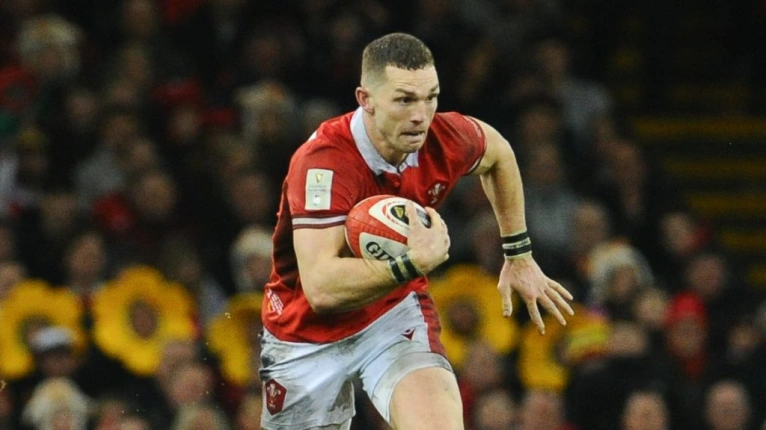
Suddenly Welsh supporters found themselves worshipping at the shrine of power; taking pride in winning what ex-Wales and Lions skipper Sam Warburton still calls fondly, “the alpha contest”. Wales fielded the biggest set of three-quarters ever seen on planet rugby, including Jamie Roberts, Jonathan Davies, George North and Alex Cuthbert: all four of them somewhere between 6ft 2ins and 6ft 6ins tall, and none of the quartet weighed a biscuit below 105kg. Roberts, North and the forwards punched holes on the ‘exhaust’ across one side of the field, the rest of the big backs and Taulupe Faletau or Justin Tipuric finished them on the ‘stretch’ down the other.
The formula even worked, at least for a while, against the power-mad Springboks. Between November 2014 and November 2018, the sun shone, the roof was fully retracted and the men in red won five of the six matches they played against South Africa. There was one caveat. The Gatland plan never worked against his alma mater New Zealand. Over a 12-year span on the Waikato man’s watch, New Zealand won 12 games and Wales didn’t win any at all.
The All Blacks of the Graham Henry/Steve Hansen era did not rely primarily on power to win. The emphasis in New Zealand was based on offsetting the tackler before contact rather than trying to bulldoze him; footwork and passing at the line; varying the length of the pass from nine to target specific defenders near the ruck, especially when Aaron Smith took the reins at scrum-half; and a finer, more interdependent sense of connection between the forwards and backs in the two lines of attack.
Those ‘Invincibles’ followed Australian World Cup winner Bob Dwyer’s maxim: all you needed to do was earn the right to target the space you wanted to attack, wherever that space happened to be. And you could do it with your feet, with your hands, or even a ball-placement at the ruck.

For the South African supporters out there who are still scratching their heads at how the All Blacks managed to outscore the Springboks by 17 tries to 14 in a series in which they lost almost all the physical contests that mattered, there is your answer. Dave Rennie’s men earned the right to target the spaces they wanted to attack.
The WXV Global Series encounter between the two finalists from the last World Cup final, England and Canada, at Sandy Park in Exeter testified expertly to the truth of Dwyer’s axiom. Canada had lost the previous encounter decisively, 33-13, as their helter-skelter ruck-and-run game foundered against the solid ramparts of Red Rose physicality.
On that fateful afternoon at Allianz Stadium, Kévin Rouet’s team collided with supremely well-conditioned power athletes plying their trade in the best domestic competition in the world by far, and they came off second best.
Since that harsh lesson in West London, Rouet has been looking to infiltrate the PWR by stealth. He joined Saracens as attack coach and helped the club to its first PWR title since 2022, then he persuaded Sarries’ director of rugby Alex Austerberry to cross the Atlantic and coach the Canada defence. When Austerberry asked, “Do you think I could come in for a couple of weeks?”, Rouet seized the moment: “you can come for a full year if you want!”
Like Jonah in the belly of the whale, the Canadian supremo was learning the nature of the beast from the inside, and not all at the RFU were happy about it. When he took up his role in Barnet, the union initially withheld England Women’s training data because it might afford Canada an on-pitch advantage at international level. Nathan Smith joined his staff from Loughborough Lightning. Ahead of Canada’s WXV opener against Scotland, Trailfinders Women coach Barney Maddison appeared in Canadian camp.
Since the World Cup final, the number of Canadian women contracted at PWR clubs has risen from 16 to 25, and Rouet himself has made no bones about the concerted effort to learn the inner workings of the best league in the world.

“For me, the goal is very simple and it is not a secret: the girls spend 80% of their time in a PWR environment. I think it’s important we have this relationship to make sure both environments profit from each other. It’s a win-win situation.
“It’s about relationships and helping the girls to be in a great set-up when they spend 80% of their time [at PWR clubs]. That is my goal.”
As his captain Sophie de Goede added significantly: “It’s not like we’re coming in to try and spy by any means. It’s very much a selfish pursuit of trying to get better for the national team.
“PWR makes the most sense. I think that’s the same for a number of Canadians, so we go there and we learn lots and hopefully impart something upon the clubs we are at [back home].”
De Goede may need to upgrade her view of Canada as dark horses [pre-World Cup] and underdogs [pre-WWC final] to front-runners, or joint favourites after Saturday’s 26-26 draw.
Canada gave the Red Roses an object lesson in how to target the spaces you want to attack, even when you do not possess as much power as your opponents. The England women won the battle for post-contact metres decisively, with 68% of their go-forward deriving from effort after first contact has been made by the tackler, compared to 28% by Canada.
The visitors won the battles they wanted to win when attacking play progressed into the wider 15-5m channels. In the back three and at 13, via standouts like Flo Symonds and Asia Hogan-Rochester, they ‘earned’ 232m to England’s 74m, and four clean breaks to England’s two. When the two sides moved the ball from midfield into either of the 15-5m channels on attack, England had two positives outcomes (scoring two tries) and seven negative ones, being turned over on six occasions. Canada had seven positive outcomes (including two tries and four line-breaks) and a solitary negative outcome in the form of a turnover.
One of the problems with a collision-winning focus is it depletes peripheral awareness out wide, and the litmus test for England arrived off a turnover won in the 67th minute, as the game was reaching its climax.
— William Bishop (@RPvids1994) September 20, 2026
There is a five-on-two overlap down the short-side with only 20m to run, but the women in white can find nothing better to do than trot the ball tamely into touch.
By way of contrast, the Canadians were dialled in on early opportunities in the 15-5m corridor.
— William Bishop (@RPvids1994) September 20, 2026
— William Bishop (@RPvids1994) September 20, 2026
Canada only gain 11m on five midfield carries in these two clips, with the best DaLeaka Menin’s sneaky pick & go up the middle in the first example. But the real target space is the right 15-5m zone, with the aim of getting wing Hogan-Rochester one-on-one with any England defender. It is the same attitude the All Blacks of the golden era espoused with such talent as Julian Savea, Sitiveni Sivivatu and Joe Rokocoko in their ranks. One-on-one was more than good enough.
The same pattern was repeated during a longer second-half passage of play.
— William Bishop (@RPvids1994) September 20, 2026
Out of the seven phases the sequence lasts, all three midfield collision phases are neutral or negative, interrupted only by another short ground-gainer near the ruck by Menin. But the three wide entries are all positive and take play all the way from the edge of the Canadian last third to a position deep inside the England 22.
The cherry on the cake was an extraordinary snapshot of forwards-backs interaction down the left 15-5m corridor on the hour mark.
— William Bishop (@RPvids1994) September 20, 2026
No gain on the gainline and the wide play has not been ‘earned’ in the gospel according to Gatland. But give the remarkable athlete and footballer that is De Goede the sniff of a one-on-one on the edge and you will pay the ultimate price.
The embers of the recent Greatest Rivalry series may be cooling, but one question still smoulders: how did the All Blacks beat the Springboks on try count when they lost so many of the physical contests? The answer is you do not have to believe Gatland or Rassie Erasmus, or worship exclusively at the shrine of power. Other religions are not only available, they are bursting with try-scoring life. The Canadian women are catching up with the Red Roses despite coming second best in the power game, and they have fully earned the right to their success.

Your home for rugby. Download the RugbyPass app on the App Store (iOS) and Google Play (Android) now!
Follow your favourite teams, tournaments and players, and get personalised news and Match Centre notifications direct to your device.
From live rugby streams and upcoming fixtures to breaking news, in-depth analysis and live scores, RugbyPass has everything you need to stay connected to the game.


Comments
Join free and tell us what you really think!
Sign up for free