
There are stretches of coastline in North Mayo where time behaves differently, where the wind braids itself around the cliffs and the Atlantic does not so much meet the land as test its resolve. In Lacken, where Caelan Doris grew up, the sea rolls in with an ancient patience and silence. It is not an absence but a presence — a long, deliberate pause between gusts of salt-stung air. It is the kind of silence that teaches you something if you listen long enough. And Doris listened.
In those early years on the edge of the ocean, he learned that strength need not be loud. That true force can live quietly in a person, the way the tide gathers itself long before it rises. You can see it even now, in the way he walks up to a scrum or takes up position in the backfield – not as a man trying to impose himself on the moment, but as one who trusts the moment will come to him.
If Mayo carved his stillness, his parents shaped his inner fluency. Both psychotherapists, they raised him in a home where emotions weren’t locked away in back rooms, where conversations wandered into the difficult places and came back intact. Doris grew up learning to name what he felt, to recognise the internal shifts and shadows that most rugby players only confront late in their careers. “I think everyone has struggles, insecurities, anxieties,” he would say years later. “The more we can talk about them, the better.”
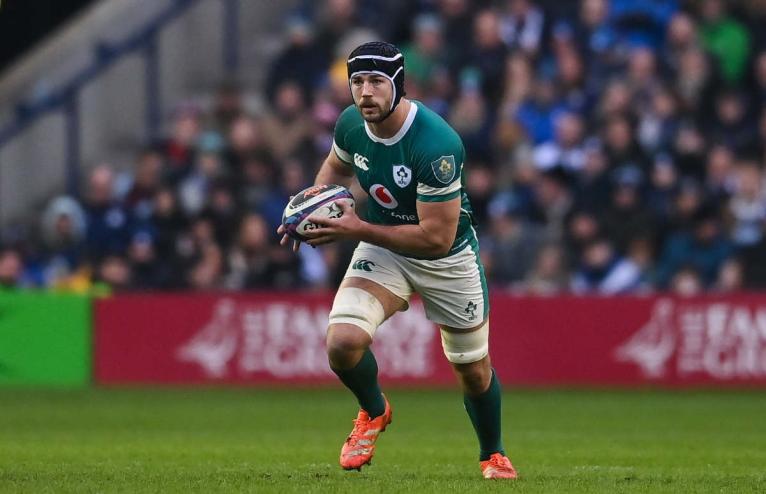
Then came the move east – from the wide skies of Mayo to the narrow corridors and bright ambitions of Blackrock College, the most famous rugby school in Ireland. For many, the shift would be jarring: the sudden immersion in a culture where teenage boys are treated like emerging assets. For Doris, it was simply a different element, like moving from the cliffside to the village square. The geography changed; the instinct remained.
Blackrock demanded noise – demands swagger, even – but he carried a different kind of presence through those years. Where others jostled for attention, Doris seemed to stand slightly outside the glare, absorbing things rather than reacting to them. Coaches spoke about his balance, his poise, the way he never looked hurried even when the match was accelerating around him. If Mayo had taught him to read the quiet before the storm, Blackrock taught him to remain himself inside the storm.
Leinster saw what was coming before most supporters did. Doris entered their system in 2018 not as a raw talent but as an unusually complete one: a hard carrier who somehow had soft hands, a No.8 who could appear in open play like an outside centre. His understanding of the game felt instinctive – not just where to stand, but why to stand there. His rise was quick, almost inevitable, yet he spoke later of the early imposter syndrome he suffered from lining up beside players he had watched for a decade and wondering whether he truly belonged. That honesty is threaded through his career: he rarely pretends confidence he does not feel.
Tadhg Furlong once joked that Doris could calm a room simply by walking into it. Others said that his stillness gave them steadiness.
His international debut for Ireland in 2020 should have been the clean beginning of a long arc. Instead, it brought the concussion that became his first major reckoning. The symptoms lingered. The return took time. For a young player on the cusp, it was a jolt – a reminder that a body is not a machine, and that careers can feel fragile even when they look promising. But it also pushed him deeper into his own self-understanding. He spoke later of how injury forces athletes to confront the uncomfortable truth that much of their identity is tied up in performance. It became a turning point.
By 2022, Doris was no longer a rising star but a central figure – a player around whom systems bent and shifted. He carried ball like a tide gathering force, shifting defenders subtly with footwork and hips, creating the kind of micro-momentums from which teams build attacks. He did not produce fireworks; he supplied oxygen to those who did. Team-mates spoke less about his carries than the way he steadied the pitch around him. Ireland’s series win in New Zealand in that summer of 2022 owed so much to him.
As his leadership role grew, something else developed – an expansion of emotional capacity, as he once put it. Early on, he overthought everything. “I’ve got this done now; what do I need to do next?” he said. But gradually he learned to stop sprinting mentally. He grew into a captain who leads not by decibel but by gravity. Tadhg Furlong once joked that Doris could calm a room simply by walking into it. Others said that his stillness gave them steadiness. Leadership can be theatrical, or it can be gravitational. Doris remained the latter.
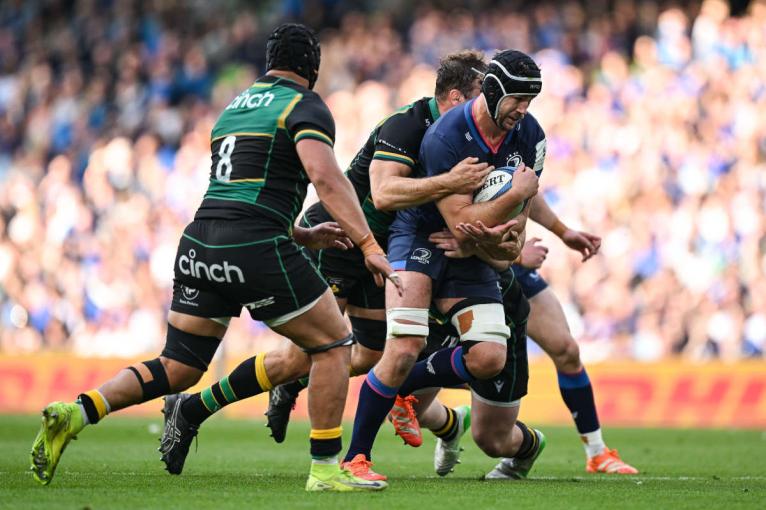
Then came the shoulder injury in 2025, that sickening, unfamiliar sensation in the Champions Cup semi-final when the joint gave way. He realised instantly. “I knew something wasn’t right,” he said later. Surgery followed. Months out. A summer erased. A Lions captaincy – whispered in some corridors – dissolved. Players talk about injuries shaping their seasons; some shape their identities. This one forced Doris to pause in a way he hadn’t since those childhood evenings on the Mayo cliffs.
The first days were heavy. “Gutted,” he said. He let himself feel it – the frustration, the lost rhythm, the interruption to the arc of his career. But then, slowly, the fog cleared. He took time abroad. He stepped off social media. His world became smaller and kinder for a while. “Separating who I am from what I do was an overarching goal,” he said. He rebuilt his shoulder but also his inner architecture – tended to parts of himself that rugby’s schedule rarely allows space for.
The stadium is waking up around him – people shouting, music climbing, players pacing – but he looks almost untouched by the noise.
When he returned, he spoke of feeling “mentally stronger” for the first time in months. His appreciation for the small things returned: the sound of boots on concrete, the smell of wet grass, the way the squad bounces off one another in the first five minutes of a team meeting. Those details – the ones you overlook when you’re running at full pace – became bright again.
On the field, that renewal showed not in spectacular tries but in the way he knit games together. He became the quiet fulcrum of Ireland’s pack – the hinge on which tempo, structure and momentum often turned. His ability to read seams between defenders, to shift lines of contact by inches, made team-mates play better simply by being near him. And now, as Ireland’s captain, he leads with the same mixture of presence and restraint that shaped him long before he became a professional athlete.
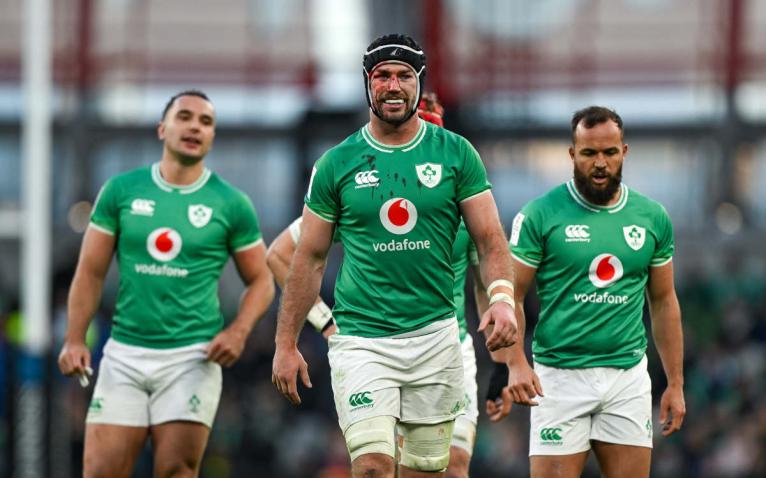
There is always a moment before kick-off when Doris stands very still. The stadium is waking up around him – people shouting, music climbing, players pacing – but he looks almost untouched by the noise. In that moment, if you know where he is from, you can almost see it: the long skies of Lacken, the restless Atlantic, the quiet that teaches you how to wait, how to brace, how to rise.
You can change cities, teams, stages, expectations.
But place lives in a person.
And no matter where rugby takes him, Caelan Doris will always have that Mayo stillness inside him – the thing that shaped him before anything else did.


The vast, wild frontier of Mayo. Blarney.
Mayo is wild and very sparsely populated. There was a big population there up until the 1840s but all quiet now. Whether fishing or farming (like Doris’s grand parents I guess) its a tough life there. No charge for the slice of education.
Great that he has inner strenght and stillness and no doubt the Atlantic coast of Mayo contributed to it.
The ban on Mayo rugby players attempting kicks at goal must remain. The only possible silver lining for breaking this rule might be an Irish throw in.