
New Zealand supremo Dave Rennie summed it all up perfectly after his charges had lowered the boom on Australia for the second time in two weeks. While the Wallabies have shown some stirrings of life in their first seven games under new head coach Les Kiss, right now they look like a poor man’s edition of the All Blacks.
“There’s no point playing this way and then going to a World Cup and trying to play risk-free footy,” Rennie said.
“We’re well aware you can put yourself under pressure the way that we’re trying to play, but we’ll also back ourselves that we’ll profit more than we’ll suffer in those situations.
“I don’t think you want all the teams in the world playing the same game.
“If you look at the Wallabies, they’re pretty similar to us. They’ll want to play, and it’s a point of difference, part of the DNA of both sides.”
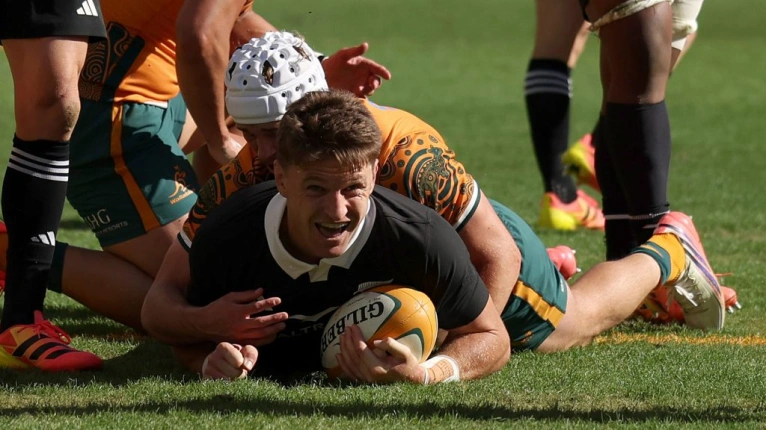
How can the Wallabies ever escape the shadow of their big Super Rugby brother across the Tasman if they are trying to play the game the same way, but with slightly less efficiency and conviction?
New Zealand won 43-21 at the Accor stadium in Sydney, scoring 14 tries and 93 points over two matches, and the double-header confirmed the feeling we’re not in Johannesburg or Cape Town anymore. High-octane attacking rugby has planted its flag deep in the earth of the game, and it is here to stay – but Kiss’ Wallabies will not win too many shootouts against Rennie’s All Blacks.
The answer may be as simple as dusting off Paul ‘Bear’ Bryant’s famous old maxim that ‘offense wins games, but defence wins championships’. Defence coaches can no longer guarantee to staunch the flow of blood at 25, or even 30 points per game, but excellence on the defensive side of the ball still does count. It was, after all, one of the primary planks in the green-and-gold’s two World Cup triumphs in 1991 and 1999.
Kiss first cut his coaching teeth as a defensive assistant to open-minded Durbanite Harry Viljoen with the Springboks back in 2001. He was one of the first coaches to migrate in the great rugby crossover from league, and he forged a high-pressure, blitz-based template which only gave up three tries at the 2001 Tri-Nations. When he was first appointed to succeed Joe Schmidt as head coach of Australia, most observers expected him to bring an extra edge to the team’s defence.
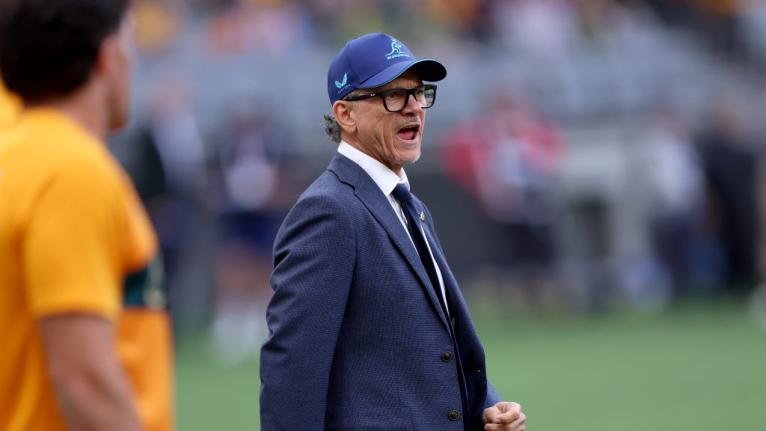
Supporters would have been encouraged by the comments of the man himself upon his arrival in the job.
“We want to make sure we make [defence] a weapon for us, so we can attack with it,” Kiss said. “[If] we can ignite that part of the game even further, and create that type of pressure and turnovers, we’ve got some handy players who can do something with it in those situations.”
So far, so good. In late March, Scott McLeod, the ex-All Blacks defence coach of almost 90 Tests, was announced as Kiss’ new assistant. McLeod’s main claim to fame was devising the scheme which so frustrated Ireland at the 2023 World Cup, a quarter-final where the All Blacks soaked up 276 tackles while conceding a miserly 24 points.
For Rugby Australia director of high performance Peter Horne, this was a positive sign of continuity between the two regimes: “Scott has a great understanding of the environment and standards Joe Schmidt has driven since joining the Wallabies, having coached alongside him with the All Blacks, and will provide great support to Les as he transitions into the head coach position.” With Kiss looking to “have a handle over the attack space”, the new division of responsibilities was clear, and it appeared Wallaby supporters would no longer have to endure the scourge of Christmases past.
https://t.co/Ka1BKKOvdR
— William Bishop (@RPvids1994) March 2, 2026
Throughout Schmidt’s time in charge, the Wallabies clung on to an old-fashioned 12/1/2 defensive system: 12 men in the line, two in the backfield with the scrum-half defending in the zone between the two. The system emphasised connectedness between defenders at the cost of aggression, with two backfield defenders standing deep, and a front line drifting across to link up with them as play tracked towards the far sideline. The scrum-half would fill the space in between, to plug gaps and pick up any short kicks through.
The problems with the triple-layered defence were two-fold: the soft shoulders and big spacings it offered up front, and the risk of the scrum-half getting bypassed in that no-man’s-land in between the two lines of D. It was would be an exaggeration to say McLeod has changed the system very much, if at all, from the Schmidt era. Over the two Bledisloe Cup matches, Australia conceded a massive 24 clean breaks, 23 offloads and 66 defenders beaten, while only winning four turnovers at the breakdown among the 229 rucks built by the All Blacks.
The old 12/1/2 is still in operation, and the defensive number nine is hedging his bets and playing in between the two lines. When aggression occurs, it tends to start on the edge, with isolated tacklers ‘spotting’ attackers off a drift towards the far sideline.
Let’s look at some examples of how the scrum-half is deployed first. Brumby Ryan Lonergan defends from the boot space just behind the ruck, dropping in and out of the front line to an area 10 metres deeper.
https://t.co/8YZTuXuPlB
— William Bishop (@RPvids1994) October 17, 2026
https://t.co/wwvf6LGQuT
— William Bishop (@RPvids1994) October 17, 2026
In both of these clips, Lonergan is defending about 10-15m behind the front line when the two breaks by Damian McKenzie, then Wallace Sititi are made. And in both cases, when subsequent play enters the Wallaby 22, there are still two defenders in a shallow backfield, with Lonergan still shuttling between the two lines at 10:12-10:36 in the first example, and 30:25 in the second. Especially within your own red zone, only 12 men in the line gives every defender an awful lot of real estate to cover, and the All Blacks happily plunder the gaps.
On occasion, Lonergan was caught leaving the line at the very spot where the break was made, the same place he would have been defending had he stayed put.
https://t.co/Rm5r85She4
— William Bishop (@RPvids1994) October 17, 2026
The second issue orbited around Wallaby spot blitzing off the edge.
https://t.co/TChg5gmrwf
— William Bishop (@RPvids1994) October 17, 2026
https://t.co/J3dGVON2la
— William Bishop (@RPvids1994) October 17, 2026
The pitfall in both clips is associated with one defender blitzing when the rest of the line is drifting towards the far touchline. One defender shoots out but the rest of the defence is in no position to adjust if he misses. Even when he sticks his man, the attack can continue with no loss of momentum because everyone else is passive.
https://t.co/RPS5iWUGqN
— William Bishop (@RPvids1994) October 17, 2026
https://t.co/yHEIxJ2gIC
— William Bishop (@RPvids1994) October 17, 2026
In the first clip, Harry Potter shoots out with some vim and vigour to make the stop on Rieko Ioane, but Timoci Tavatanawai is able to regenerate the attack on the next phase of play, before the All Blacks go back to work on Lonergan, treading water between the two lines of defence.
Defensive coaches everywhere are taking a deep breath, looking around the next corner and shooting nervous glances behind them. Collectively, they are wiping their feet at the door and anticipating a tough day at the office, as scorelines inevitably mount with every new change in the law.
McLeod is no exception, and he will be feeling the heat. If there is one aspect of Australian performance which has not improved under Kiss, it is the area where he first started coaching international rugby. The Wallabies are neither well connected, nor do they deliver great line speed. They don’t soak up pressure and they don’t create turnovers. There is blood in the water and the sharks are already circling.

NEW IN THE APP: Official World Rugby Rankings hub! Compare team rankings side-by-side, with data going back 20 years.
Download the RugbyPass app on the App Store (iOS) and Google Play (Android) now!


If they really have such a baked in defensive system that is so frail and susceptible to failure even under the most mediocre of examinations then why do they persist with it?
Now I'm not for one second suggesting that the All Blacks are mediocre. But the Wallabies have similarly struggled against softer teams who didn't produce nearly the degree of pressure that the ABs did yet it made them stutter anyway.
I thought Kiss was in fact going back to what Dwyer had done so effectively between ‘91 and ‘93 which was to have a team that simply ground other teams down because they couldn't break through the Wallabies' ironclad defence.
I guess we were misled. I didn't originally think that the defence had been that poor structurally. I thought it was just because players were getting overwhelmed by the sheer pace and effort of the All Blacks rather than because their own system was letting them down.
But your candid analysis suggests that is precisely what has been happening now for too long. I wonder why they won't abandon it when it's surely been proven now beyond all doubt that it just doesn't work anymore, if it ever did.
England, Scotland and Wales all pose slightly different problems for the Wallabies but the same weaknesses will still be ruthlessly exploited if they don't find some way to play a more proactive and up tempo defensive game.
For instance, the attacking of their Northern hosts isn't going to be quite as relentless as the ABs so the scoreboard pressure is probably not going to be as acute. Though having caught the latest from the Prem they're no slouches either and if the Wallabies give them half a chance they'll take it.
But they'll be especially difficult for the Wallabies to make much headway against when they're defending unless Australia can get that breakdown ascendency that they pride themselves on once again.
The ABs figured them out and then simply never gave the ball back to them. That doesn't mean any other team will. But it also doesn't mean they won't either. And the Wallabies have no laurels to rest on so they'll have to come up with something.
They've got the better part of 3 weeks to fully digest and analyze exactly what went wrong over the last two tests, why the team couldn't employ any of the game plan and couldn't adjust to the pressure.
I still feel that some degree of personal responsibility lies with the players for failing to step up. Whatever system you use is simply a tool to allow you to do something useful.
But if you're not putting in the maximum effort and trying to do your job as best as you are capable of, then the system becomes irrelevant. Your work is going to be poor regardless.
The ABs didn't simply have a superior system or exploit the weak Wallabies one. All 23 players put literally everything into winning every single moment in both games and came up trumps for the majority of the 120 minutes they dominated for.
They inevitably slipped off in the second 40 in Sydney because of course they did. You can't keep playing at such a high level indefinitely. You're going to lapse and if they'd been playing a better team that could've been costly.
The Aussies were cooked by the time the pressure let up and even though they scored two high quality tries in that half it was just such a token reward that it was hard to genuinely celebrate it.
And even getting a two man advantage for like the last 8 or so minutes of the game they just couldn't do anything with it. They were done. And that really shows the difference.
Last week right up until the final whistle the ABs were still playing and scored again right at the death even though they were already so far ahead it didn't really matter. But that's how they are.
Australia could only dream of matching that kind of effort. I will say that Wilson was the one person who delivered above and beyond over the two tests, being one of the few to actually record a dominant tackle and he really put himself in everything.
If the whole team was doing that all the time this kind of result would be a thing of the past. But they don't and so they're only going to be in for a lot more frustration and disappointment.
It was a common system about ten years ago and the ABs used Aaron Smith in the same role as Lonergan back then. But law-making and the skills levels on attack have developed exponentially since then…
The system will only change if someone has the will to change it, and I am not at all sure that will is there…
Thanks Nick
Very helpful to know i might almost understand what’s going on. As an amateur whi simply enjoyed tackling whatever required, must be frustrating to be a top tier pro, told where n when to do just that. Of everyone not on same page, so to speak.
Lools like instinct does not always align with instruction maybe, so nothing easy.
Cheers
KP
Check that All Black backline and loose forwards bursting into gaps, well that wasnt even the best players. The All Blacks in reality played most of that game with a patchwork team yet they smashed them in the first 40. What will it take for a Wallaby defensive revolution to take place? They have no line speed, they crack after one offload, they are constantly overloaded at the line, concede tons of line breaks and miss tackles for fun. JAS and Lonergen were the worst offenders in the first half but increasingly they are being hung out to dry by the system. The Wallabies dont have the talent to out All Black NZ. So they need to find something they are good at, do it over and over again until they are better than everyone else at it and try to win that way while ensuring that everything else is solid. When the world cup draw was released everyone said the Boks were on a collision course with NZ. Some said well what if Australia beat NZ? On the basis of this evidence the question is how on earth can a Wallaby team ever be expected to beat this NZ team just 12 months from now especially when playing in Australia doesnt phase the AB’s in the slightest?
Good question, and the problem was the complete ease with which NZ moved the ball to any point of attack they wanted. A defence has to do something to interrupt that flow, and WB didn’t come close to doing it. By the second half they were well and truly done.
Off topic but how good where Connaught at the weekend? There’s the perfect example of the impact good coaching can have on a side. They were worthy winners against a very strong Sarries side.
Another question, how bad were the English sides on a dour weekend for them? 6 losses, a draw and a win and more than 30 points conceded in every game except for the Saints. Twas a bit rough. Great performance from Connacht though, dont forget Glasgow either. Go URC!
We were good weren’t we? I think Sarries came thinking they were going to overpower us, but it never looked likely to happen….And our attack was several notches better than theirs!
I’m not so down on AUS at this stage. You really need your players together to start changing systems and that wasn’t going to happen in this round of games with key players missing.
I think you will start to see them evolve the defence in the NC games once they have finalised who will be in their squads through to RWC 2027.
The defence problem is a matter of system rather than the individuals tho P, and has been since Joe Schmidt took over. The system they try to run belongs in the 2010s.
Great article NB, although I am slightly torn if this is AUS defending slipping, or the improvement of the AB attack? I think it’s more the latter at the moment but both mean AUS need to do more (as do the other teams).
I think Barrett & Holland are looking like the starting AB lock picks, clearing a huge number of rucks, which is then allowing Lakai & Sititi to be more devastating on the carries (who are playing so well together).
The AB’s have improved their initial carriers, post contact metres and clearing the ruck, whilst DMac is thriving in that new space at 10 with the quick passing movements. This was the best I have seen them in attack this season and the AB’s are still continuing to evolve.
Piece by piece they keep making progress but the red zone efficiency was off the chartsd in the first half. The AB’s are really hitting their straps and I think there is still another level to come before RWC 2027.
Look at the ease and speed with which NZ shift the point of attack P. Too easy.
43 minutes of ball-in-play with NZ owning 20 minutes of time-in-possession. Those are the kind of figures on which they thrive, and which SA never gave them.
Interesting choice between Ardie and Sititi coming up. Peter Lakai a class apart at 7!
The AB attack is roaring again and I bet England must be quaking in their boots, personally I cant wait for that one.
It's a huge job for Lonergan.
It seemed that the ABs playmakers had figured it out pretty quickly and were happy to wait for and absorb that shooting hit.
Actually making that hit really count when you shoot off the line isn’t something many players can do either. Hunter Paisami would have helped there. JAS is just going to get carded doing that but his absorbing tackles are decent.
Bringing on Tizzano and Daugunu early-ish were Kiss’s best decisions during the game. They probably should have come on earlier still.
McReight pretty much on his own at the BD has not been enough to trouble the AB ball control in either Test… As you say the canges were needed tho Daugunu is still indisciplined over the tackle ball and concedes as many pens as he makes pilfers!
Thanks Nick. Great to read this as it explains some of the reasons why Nz were so good on the weekend. Nz looked sharp and the wallabies were putting everything into defending but it wasn’t doing a whole lot. The 12 1 2 breakdown is helpful! Also noted is our lack of breakdown pressure. I almost wonder if Carlo would make more of an impact at 7 for games against nz? England next!!
It’s hard to pilfer consistently off a 12 man line because your defenders are spaced out that bit more, with 13 or 14 up front you get more two-man tackles with the jackal closer to the ball….
I’m not too sure which ENG team will turn up this Autumn - there’s one that can defend well and another that can attack well but they rarely do both at the same time . . . . . and you just don’t know which side will turn up anymore.
I think it will be a close game between the two.