
There have been times in the last six or seven weeks where Australian rugby fans have wondered when – or if – the next Wallabies win might come.
HSBC SVNS returns to Cape Town this December!
Don't miss your chance to see the world’s best rugby teams take centre stage 5-6 December in Cape Town.
The Bledisloe Cup losses weren’t much fun, and there was a more than fair argument that the England and Scotland defeats, to start the November leg of the Nations Championship, were even worse. And knowing the Wallabies’ last two European tours both ended with a run of losses, it’s reasonable to assume that Australian confidence has taken a hit in recent times.
So it was pleasing to see the Wallabies start so well against Wales in Cardiff, adjust to the inevitable reactions, and complete the job at hand. Having spent the week celebrating maybe their greatest ever win, Wales were always going to be a tough prospect; the only unknowns were how much that masterful, but exhausting, win over New Zealand – and the aforementioned celebrations – had taken out of the Welsh players.
The look and feel of the Wallabies on attack had immediate hallmarks back to the first Nations Championship Tests in July, and even the win over South Africa in Perth in early September. Their 12-7 lead at half-time was the first time since that memorable win over the Springboks that Australia had led at the break.
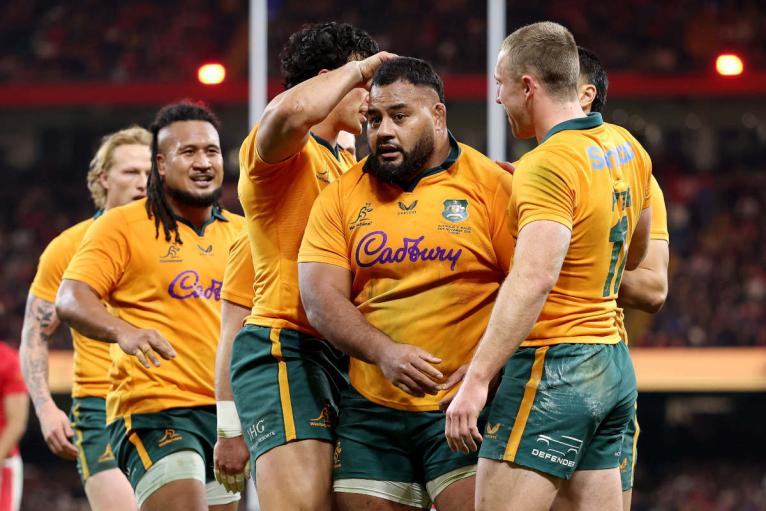
Les Kiss and his players spoke last week again about wanting to dominate the collision area through physicality in their ball carrying, figuring that was a better way of securing faster ruck ball than addressing their lacklustre attacking clean-out.
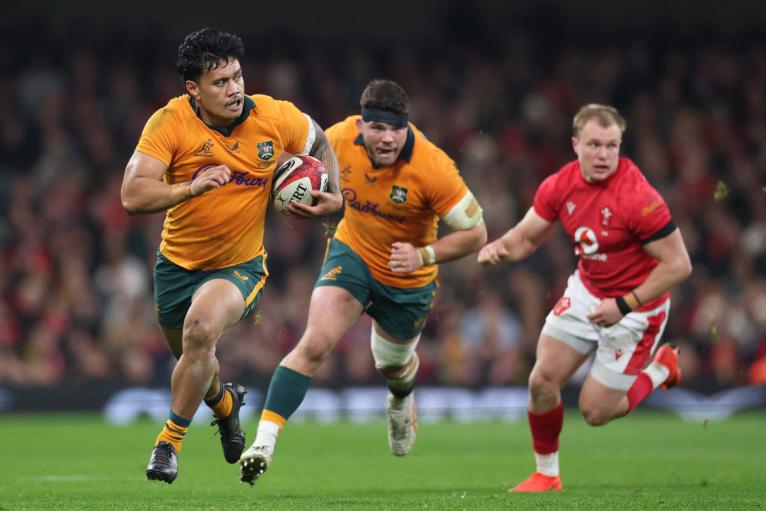
Certainly, they did carry a lot better and it looked like there a was a plan to it. They changed the direction of their attack and forced the Welsh defenders into making decisions around whether to drift or to commit to a tackle.
With 465 metres gained, roughly a quarter of that beyond the point of contact, suggests they did a reasonable job of that. So does nine offloads to four, and 10 clean breaks to seven. Wales made many more entries into the Australian 22 than the Wallabies did into the Welsh red-zone – 20 to 9, in fact – but Australia were able to convert their opportunities into points with much greater efficiency.
As the game went on, the Wallabies’ confidence and ability to hold the ball for long periods increased. After Wales dominated possession for the best part of an hour, Australia finished with so much ball that the possession split for the game essentially evened out. Len Ikitau’s pick-and-drive try on the hour came after 24 phases, whereas against Scotland and England in the weeks prior, turnovers came in half that time.
Considering recent performances, it was just very satisfying on Sunday morning to be thinking and talking about all the things the Wallabies did well, rather than the other way around.
Did the improved physicality equate to faster ruck ball? Well, no, not really.
In the end, the Wallabies’ ball came back at an average of 2.67 seconds and nearly a whole second slower than what Wales enjoyed. The Welsh breakdown work was exceptional against New Zealand the week before and this just carried over to Saturday night in Cardiff.
That 2.67 second average ruck speed was basically the same as against Scotland the week before, which in turn was a shade slower than against England the week before that. Clearly, the Wallabies still have a bit of work to do there, if they really want to play with the speed of recycle they spoke repeatedly about in 2026.
But considering recent performances, it was just very satisfying on Sunday morning (Australian time) to be thinking and talking about all the things the Wallabies did well, rather than the other way around.
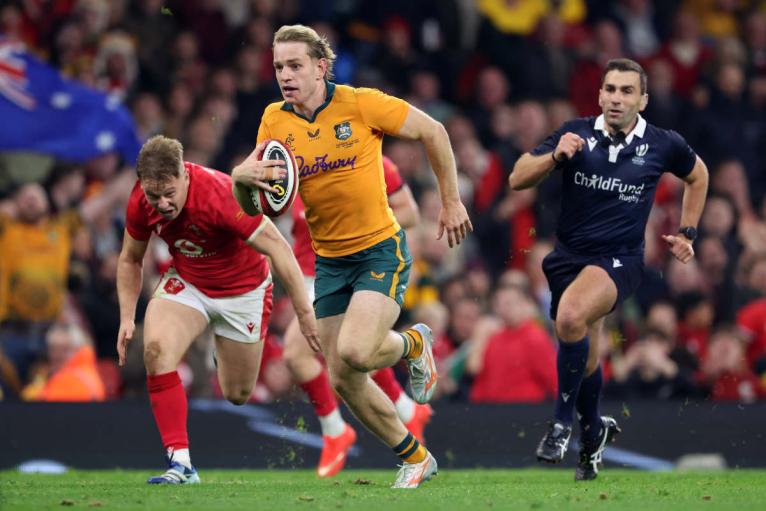
The win over Wales wasn’t perfect; far from it. But it was a lot better than what we’d seen in recent weeks and months, and that’s nothing to sneeze at, especially at this time of the rugby year, when many a Wallabies November northern campaign has come undone spectacularly. Indeed, November tours have cost past coaches their jobs, but that doesn’t feel like anything Kiss will need to worry about for now.
Ireland, in the fifth-sixth play-off at Twickenham on Friday, will present a different set of challenges. The Irish took the physicality and set-piece battle right to South Africa last Friday and came out on top. And Australia’s record against Ireland in recent years runs to four straight losses. Whether this one being on a neutral couple of acres of turf will help remains to be seen, but it’s a challenge the Wallabies will to be up for regardless.
There’s a small piece of history awaiting this current squad, and all it will take is their best performance of the year on a familiar plot of land in south-west London.
There’s further incentive for this playing group too. Not too many of them have enjoyed a winning season at international level, with the vast majority of them debuting after Michael Cheika’s 2019 squad enjoyed six wins from 10 games en route to a quarter-final exit at the Rugby World Cup that year.
There’s a small piece of history awaiting this current squad, and all it will take is their best performance of the year on a familiar plot of land in south-west London.
Nations Championship format a winner
There are probably ways it could run smoother in future iterations, but on the whole, the Nations Championship has done exactly what was promised.
For one thing, lobbing the July and November Tests into a competition structure with a finals weekend certainly did add meaning across the board. The tournament was never going to be won in July, but those teams who enjoyed strong starts in July do now occupy the higher parts of the standings.
With silverware and bragging rights on the line, ‘load management’ and ‘squad rotation’ could only happen on a smaller scale, and nothing like the significantly weaker touring squads often dispatched to the South in previous July windows.
We’ve certainly never seen anything like the genuine jeopardy in play this weekend just gone. The six games played in three time slots over the course of eight hours heightened this.
Suddenly teams and commentators were reaching for the ready reckoner, to establish how high up their respective hemisphere table they could finish, what was required from them in Round 6 in order to achieve that, and whether that would leave them with a six, seven, or eight-day turnaround for a Finals Weekend assignment.
What it’s left us is six really intriguing games this coming weekend, starting on Friday with Italy v Fiji once again, followed by Ireland and the Wallabies.
It doesn’t even really matter that a couple of them are a repeat of what we saw in Round 6. The play-off version presents the dual ability to square ledgers and extend winning streaks. Try telling a team facing consecutive losses to someone twice in a week that the game doesn’t mean anything.
We did get the France v South Africa final we maybe expected, but it was far from certain coming into last weekend’s games. Both teams had a bit of a rocky route to get there, but get there they did.
There’s a trophy on the line, now. And there’s just no way either France or South Africa want to give the other one the satisfaction of being the first to win it.
 Register your interest to receive priority updates on RWC27 ticket releases. Don't miss out, stay in the loop!


Well Brett - A golden sunrise to brighten what has been a bleak Autumn.
From these small humble moments, great things can happen. 👍
Cheers Brett!
Great effort by the forwards of course but turning to the fancy boys, Suallii had one of his better games and I also thought Carter G more assurred this week. He’s starting to hit his straps after a break and there’s a chance we’ll see the whole player this week.
Shame Teddy Wilson remains unseen.
Go the Wallabies!