
The clock is ticking. Loudly. You can hear it under the November applause, beneath the hum of optimism, drowning out the good vibes from that record win over Australia. It’s ticking because Ireland’s core – the real heartbeat of the team – is 33. Not metaphorically. Literally.
Furlong, Beirne, Henderson, Conan, Gibson-Park, Lowe, McCloskey — all 33. If a World Cup quarter-final kicked off tonight, five of them start. That’s not a hunch. That’s the reality of selection.
Now push the slider two years forward. Furlong at 35 anchoring a scrum; Gibson-Park at 35 racing against Antoine Dupont; Lowe at 35 chasing kicks in 35°C heat; Beirne at 35 contesting breakdowns against monsters five years younger.
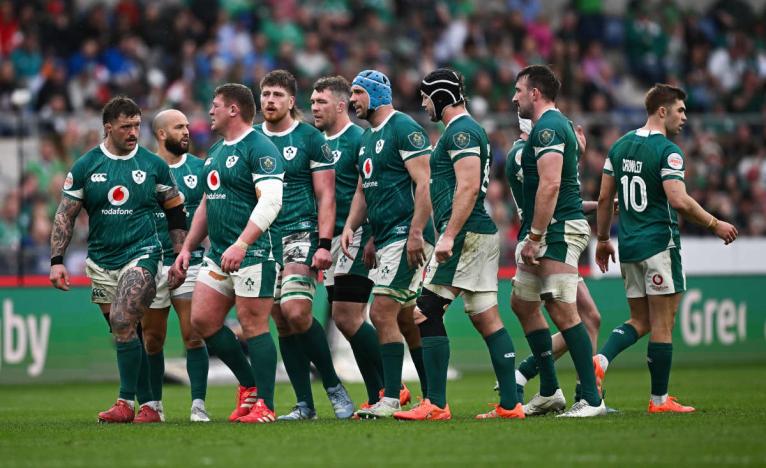
It sounds ominous. And the depth chart doesn’t soothe the nerves either — Bealham will be 36, Aki 37, Blade 33, Henshaw 34, Ringrose 33. A spine that looks less like a succession plan and more like a synchronized sunset.
But here’s the twist in the tale.
Here’s the part of the debate where history barges its way in.
Because Ireland are not the first team to stare at a World Cup with a squad full of 30-somethings and think, “Are we too old?”
EXHIBIT A: DAD’S ARMY, 2003
Clive Woodward’s England were mocked long before they boarded the plane.
“Dad’s Army,” the Australian media sneered, pointing at Johnson, Hill, Back, Leonard.
But here’s the fact almost everyone forgets: their average age was 27.
They felt old because their leaders were old.
Sound familiar?
Yet those leaders delivered a World Cup forged from experience and scars.
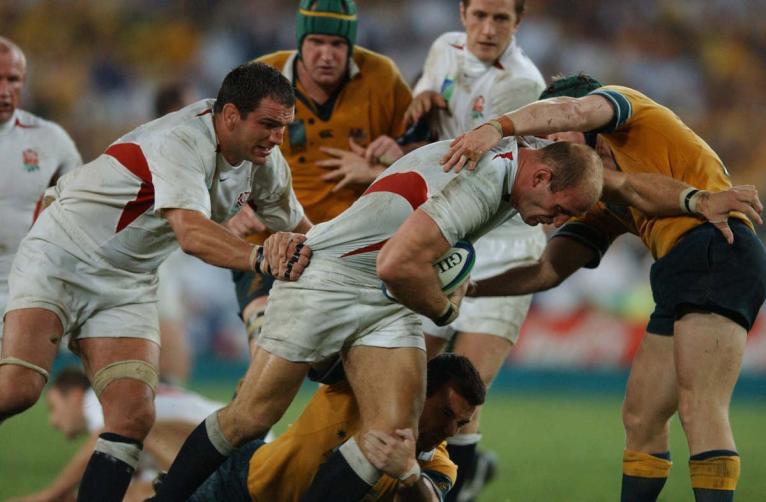
Johnson wasn’t slowing down — he was growing sharper. Wilkinson was in his prime. Robinson, Dawson, Vickery: all peak age. England had wise old heads guiding a team whose engine was youthful power.
EXHIBIT B: SOUTH AFRICA 2023 – THE OLD KINGS OF CHAOS
South Africa didn’t just win the last World Cup – they bullied it into submission with one of the oldest squads ever assembled.
Duane Vermeulen was 37.
De Allende was 32.
Wiese, Etzebeth, Mbonambi, Kitshoff – all hovering in the 30s. Their pack had more mileage than a second-hand Hilux.
And yet… they were magnificent because they had something Ireland fear losing: power, depth, and ruthless replacement quality.
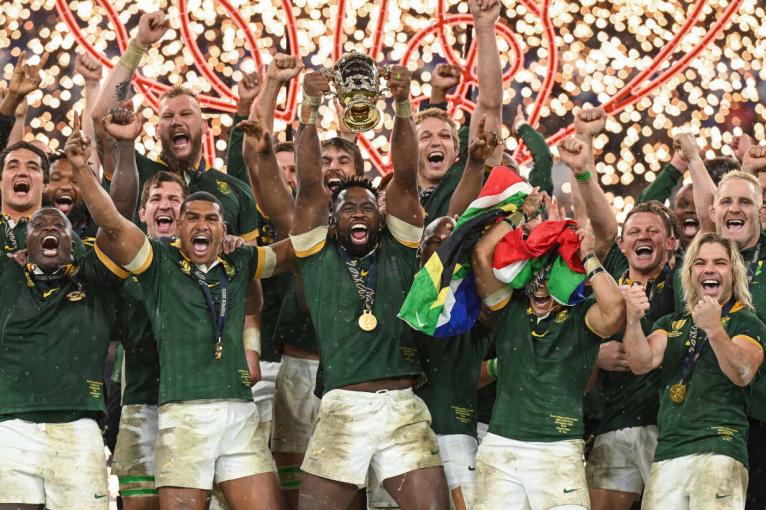
The Boks didn’t rely on tired legs. They rotated them. Weaponised them. They were old – but endlessly renewed.
So which road is Ireland on? That’s the heartbeat of this conversation.
THE CASE FOR WORRY
Ireland’s experience is concentrated. Too many key leaders will be 34–37 in Australia. Worse again, too few emerging talents are in position to take the reins.
England’s 2003 team were old at the top but young underneath; South Africa’s 2023 vintage were old but loaded with explosive depth.
Ireland? Right now, they’re old – and thin.
Look at these birth dates.
The cold numbers tell the same story. Of the Ireland squad selected this month:
- 9 players are aged 20–25
- 13 players are 25–30
- 13 players are 31 or older
That looks balanced on paper. But scratch beneath the surface.
Of those 13 players aged 31 or over, eight would start a quarter-final tomorrow. Only one of the 20-25 bracket would start. Only two would even make the match-day 23.
That isn’t balance. That’s dependence. Dependency on players whose biological clocks are all set to go off at roughly the same time. And this is where history should trouble Ireland most. Because Ireland know this story. They’ve lived it.
2015: Paul O’Connell’s hamstring gives way against France. One of the greatest to wear the shirt, undone by the calendar as much as by contact.
2019: Rory Best, heroic in every sense, but tired in front of our eyes against Japan, and then New Zealand. A giant who ran out of road at exactly the wrong moment.
2023: Johnny Sexton in the last 10 minutes against New Zealand. One more great man weighed down by the mileage on the clock.
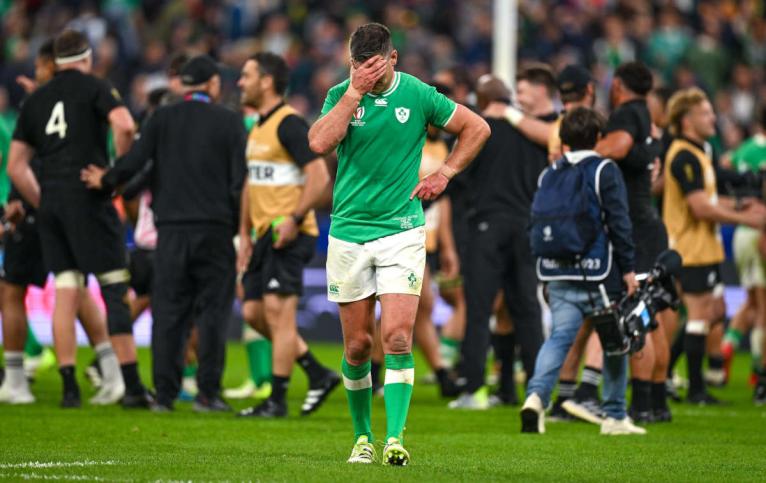
You can go back further: Ireland’s World Cup exits often carry the same theme. Leaders pushed to their physical limits because the team could not function without them.
THE CASE FOR HOPE
Ireland’s system is elite. Their cohesion is unmatched. Their skill level is higher than any England or South Africa side at the same stage. And older players today last longer than they ever did. GPS tracking, workload management, periodisation – Ireland are world-class at all of it.
If anyone can bend the ageing curve, it’s this Ireland.
And crucially: Old teams can absolutely win World Cups. We’ve seen it. Recently.
WHERE THE TRUTH REALLY LIES
This isn’t a forecast of doom or a sermon of sunshine. It’s a race – a straight sprint between renewal and decline.
Even great teams arrive as kings and leave as old men. Right now, Ireland are balanced on that knife-edge.
If Ireland find two new front-row pillars, another starting-class centre, and a second scrum-half who can run the same audacious tempo as Gibson-Park, the 2027 picture brightens dramatically.
If not?
Well… time is undefeated. Even great teams arrive as kings and leave as old men. Right now, Ireland are balanced on that knife-edge. One side is 2003 England. The other is every Irish team that reached October and realised the legs were gone.
Which way they fall depends on the next 24 months. The clock is ticking. But the debate is wide open.


Theyl will suddenly find a few more plastic paddies.
What do we have here! Another Millwall fan by chance?
‘…complexity of Brexit’ - too funny!
I’m going to take a wild guess, here, Diddles and suggest that what you know about the politics and complexity of Brexit could be printed in bold font on the back of a postage stamp.😉
We know you are now a bok fan. You only like sure things.
Are you sticking with them, Ed? Have Eben’s antics changed your views?
Happy to assign a country in my direction for your ignorant political purposes, while simultaneously maintaining that I have no rugby affiliation. You really do operate under whatever flag of convenience suits your (weak and often flawed) arguments at any moment.
That's only because your country, which is presided over by an anglo-german monarchy, don't own their own national resources.
The wee consumers pump their disposable income into foreign multi nationals that don't pay a shred of tax. Of course the government gets so little of it.
All they make now are peerages for sale. No industry left.
If even Ed wasn't thick enough to vote for Brexit, what does that say about others? Wow!
“consumerism being taxed more regularly and to a greater extent”. So what, it’s dwarfed by the revenue levels governments receive from income taxes.
And yes, Brexit was for mugs but that just shows how easily led people are by nonsense headlines. Your bollox above about tax is a decent example!
It doesn’t matter the skillset, the age of the group. It matters how often and how you use them.
Look at the Boks, in 2019, the forwards starting and subbing had played roughly the same amount of game time as each other. Thus they were significantly fresher for the playoffs than Ireland were.
Lets see 2023, we had a game against Ireland, lost it and yet we still won the World Cup. Where were Ireland? Marching out of the Quarter Finals yet again.
Yes there are balances between rest and work. Leinster know all too well about that. They were balancing Investec CC and the URC. For 7 consecutive tournaments, they kept getting knocked out in one tournament or another.
Gamen or player management? Or too much reliance on specific players who are simply getting too old. Duane Vermeulen played at 37 for 2023.
Schalk Britz played at 38 for Boks in 2019. They were fresh because of having trained and played well.
What’s noticeable is the entire squad unless injured trains for each game, sometimes these guys train knowing they won’t be picked for the upcoming match. Yet they help those who will play to get better. With the caveat that if a player who is supposed to play gets injured, a replacement can step in without the team losing a beat.
Ireland? I can’t see them pulling up quickly enough because their game and player management is lacking.
Great précis of irelands case as they sit in the dock surveying the wreckage of last weekends Bokke demolition. You could almost be swayed into thinking the pendulum could genuinely swing either way until the reality of what happened at the weekend sinks in. It was as comprehensive an example of veni, vidi, vici as you will find on a rugby pitch!
Or to put it another way, much like the vikings did in days of yore, the Boks kicked in the front door, gently introduced themselves to the ladies of the house and wiped their weapons with the curtains on the way out. And all the while, Ireland sat in the corner pulling out plums…
Excellent read, Garry.
It does seem that Ireland could be the only team to accommodate the age profile. The core of the team are on central contracts to carry them to the next tournament, I think it’s 8. I think the IRFU are fully aware of this.
Many of those players didn’t get capped until they were pushing their late 20’s so they aren’t typical of 34 or 35 year olds with 10-12 years of test rigours on their bodies. Lowe for example has been nailed on since 2020 and is still a year away from even 50 caps. With the IRFU micro-managing their minutes I don’t think it’s a massive worry.
Henderson, Aki & Furlong may not see the RWC and McCloskey’s body can’t deal with test rugby as he never got a fair, consistent run of games at the right time. The rest have around 16/17 test games before the RWC warm-ups to get the younger players developed and this NOV will have spelt out clearly the areas that need developed.
It seems there are serious rumours that JGP is lined up as a marquee signing for the R360. I wouldn’t hold it against him as it’s crazy he was never locked into a central contract. There is already a seismic drop-off at #9 as it is. The centres and front row need a bit of work too of course but supplementing an experienced core with key younger players is still the way forward I think rather than wholesale changes.
JGP does have a central contract.
How Farrell and the IRU didn't see this coming is beyond me, where are all the up and coming youngsters from the Leinster academy? we saw a glimpse on the weekend but surely they should have been blooded sooner?
“Clive Woodward’s England were mocked long before they boarded the plane. “Dad’s Army,” the Australian media sneered, pointing at Johnson, Hill, Back, Leonard.
But here’s the fact almost everyone forgets: their average age was 27. They felt old because their leaders were old.”
no, that’s not correct. I can’t be bothered calculating the actual average, but the 31 player squad had a median age of 29. There were 12 players aged 24-27; 13 players aged 28-31; 5 players aged 32-35; and a 36 year old. There’s no way the average was lower than 29.
Their squad average was 26.6 years.