
Interviews with sports stars or coaches can often take on a push-pull nature. Reporters are trying to draw good lines and anecdotes out of the big names, many of whom are well aware of that and carefully couch their words.
As a player, Peter O’Mahony was often a tough interview. He never liked to give much away and, in his earlier years, would come across as terse. The only time he ever seemed to light up was when he was asked about his pride at playing for Munster, or what it meant to pull on an Ireland jersey.
As a captain, he could be a scowling, stare-you-down protector of his teammates, and their honour. In 2017, he famously bristled, “You’re questioning my teammates?” to TG4’s Reggie Corrigan, when the former Ireland prop queried Munster’s intensity after a loss to Leinster.
“It’s a skill in itself,” O’Mahony said of handling tricky post-match questions. “It is something you acquire over time, and with your experiences. A lot of the time, the (press officer) lads would use me, particularly if we lost, because I wouldn’t say a huge amount. Sometimes that’s the best thing.”
O’Mahony retired from rugby at the end of last season and has been slow to vault head-long back into that world. This Saturday, though, the former Ireland and British & Irish Lions captain will make his punditry debut, on Virgin Media, when he joins the likes of Conor Murray and Rob Kearney to pore over some Six Nations action.
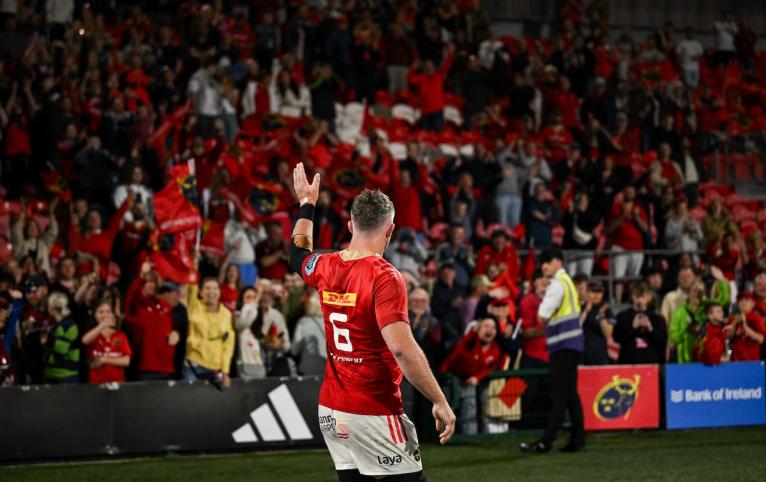
During a chat with O’Mahony ahead of that broadcaster’s coverage of Ireland versus Italy, many questions lingered on the hangover stemming from Andy Farrell’s side getting pulled apart from France in the opening game. There was something else bugging the Cork native, though. Something he wanted to get off his chest.
“One of the reasons I want to do (punditry) is that I want to get across how difficult it is, and how tough it is, at times, when you lose,” he commented. O’Mahony was nudging the door open, and inviting a follow-up. He had plenty to say. He is not the only one to recognise the rising heat in online debates around Leinster duo Sam Prendergast, and Harry Byrne, Munster’s Jack Crowley and Ireland’s No.10 jersey.
“You take the outhalf thing, for example,” he continued. “It’s a bit of a circus at the moment.
“People love sport in Ireland, people love the game, but some of the opinions cross the line on social media. People get hysterical about it. People who don’t know what they’re talking about. People are firing stuff off online that, these days, goes direct to a fella’s phone. I don’t think they understand some of the consequences it might have. I’d like to talk about some of that stuff.”
O’Mahony was only warming up. He made his Munster debut in 2010 but, in his opinion, the prevalence of social media, in the ensuing years, has only ramped up the pressure on young sports stars.
“You need time. You need time in the jersey. You need experience. You need to fail. You need to make mistakes. Fortunately, back in my day, you could do that without having every delinquent in the parish sending you a letter through the post-box, but now you can do it instantly to a fella’s phone.
Peter O’Mahony
“You have two very young men (Sam and Jack), who are inexperienced,” O’Mahony said.“You put Harry into that boat now, as well. You have three guys who have lots and lots of talent, who are trying to figure out their careers. People think that one of these guys was going to turn into Johnny Sexton overnight.
“I’m not saying Jack and Harry and Sam are reading all this stuff but, when there’s that much of it, it can get through and it’s hard not to hear some of it.
“It’s tough. You have pressure. The game itself is pressured enough without having all the outside stuff. I think people need to have a little bit more cop-on or respect, at times.”
Strong words from a guy that does not have these players under his protective wing any more. His words are valid, too, in light of the social media pile-on that followed Ireland’s disappointing loss to France. Joe McCarthy, Tommy O’Brien, Caelan Doris and Jacob Stockdale have all come in for grief across the various social platforms. Not for the first time, Sam Prendergast has received a disproportionate amount of criticism and personal jibes.
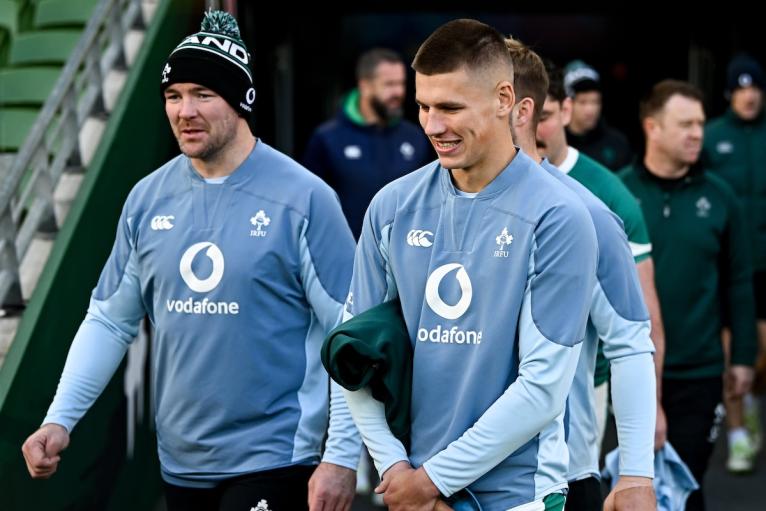
It was something Johnny Sexton alluded to, when I spoke with him after the Autumn Nations Series. Sexton is well versed on arguments over the 10 jersey getting tribal, and not feeling – certainly in his early years of international rugby – fully embraced by all corners of the island, when he pulled on a green jersey.
“We’re very lucky to have both of them, Sam and Jack,” the Ireland assistant coach told me. “I know it’s harder with social media, and media, but I hope that we can get behind whoever is picked, rather than, I suppose, one half of the country thinking the other guy should be playing and only supporting them when that person is starting. We’re need to get behind both of them, because we’re going to need both, and probably more, for the next World Cup.”
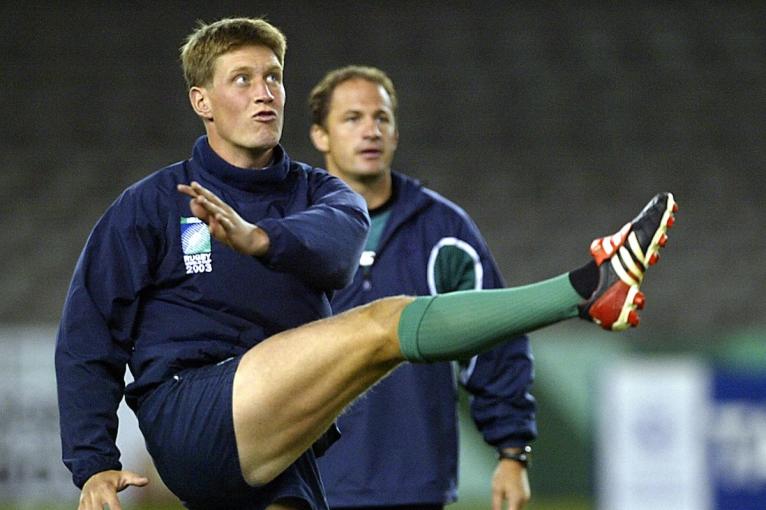
Ronan O’Gara was on the other side of that tug-of-war for Ireland’s 10 jersey, between 2009 and his retirement in 2013. Before that, it was O’Gara vs. David Humphreys, although those arguments were confined to pub stools, radio phone-ins and the pages of national newspapers.The Munster legend is now the centre of much online discourse around role as head coach at Stade Rochelais.
In cold, hard reality nothing could entirely insulate him [Prendergast] from the torrent of opinions that were soon flying around, regarding his temperament, gait, tacking technique, big-game mentality, and so much more.
Speaking to me from France, O’Gara reflected, “My reality is, I’m in the firing line, over here. That’s par for the course, and it’s what you sign up for. It’s never plain sailing. When it comes to coping with it, you never have all the solutions. When you think you’ve the game cracked, you come crashing down to earth. And when you are on your knees, something breaks for you. I truly believe that. You have to keep a level of consistency that best represents you; not anyone else. That’s not always easy, and everyone is different, but you can never get too high, or too low, or the game will eat you up.”
Sam Prendergast was eased into the life of a rugby professional by having an older brother and role model, Cian, breaking into the Ireland team at 22. The Kildare native may have felt he was prepared for all that would be thrown at him, good and bad. In cold, hard reality nothing could entirely insulate him from the torrent of opinions that were soon flying around, regarding his temperament, gait, tacking technique, big-game mentality, and so much more.
“You want to avoid it,” he told me, at the start of this season, “but you can’t avoid it. Even if you’re not on social media, you are seeing different articles or you have people coming up to you. As I’ve learned, people are not afraid to tell you what they think, whether it is good or bad.
“It’s brilliant when it is going well but can all change, when things are not. That’s why you can’t get angry at it. You’ve just got to stay as level-headed as possible. That’s probably what I’ve learned. That first (full) season was a huge experience. Before last season, it would have been the odd sprinkle and a lot of it was positive. Nothing, really, to write home about.”
“Over the course of last season,” Prendergast added, “there were some obviously brilliant parts and huge highs, but some really, really tough lows… You quickly realise that you can’t get as high when it is all going well, as you can get just as low when it is not going well. And it’s all about who you listen to, as well.
“It’s the people you are friends with, and the ones you trust. As someone said to me, if you wouldn’t look for advice off them, then don’t listen to their criticism.”
Peter O’Mahony
That line of thinking tallies with how Dan Biggar viewed outside criticism and constant debates, and headlines. The former Wales and Lions outhalf said; “I made what I think was a smart decision that I was going to stay off social media, for the whole of my career, because I didn’t want that.
“What made it really a decision that I felt was vindicated was getting on the team bus, in Cardiff, after we played Ireland in 2013. I got on the bus and looked down the bus, and all the boys were on their phones. Not checking messages or watching a football match, or anything. They were all scrolling, and looking for comments about them. And the problem is, nobody is looking for the good stuff. There could be 50 good messages but one bad message, and that is the one people often singled out.”
“It’s a different age now,” he conceded. “Everybody has got an opinion and, as a sports star, nearly everything you do is picked up by millions of people. The only people I used to care about was my teammates, coaches and my family and friends. If anybody else has opinion, that’s for them. It’s like me, I’ve got my opinions on Man United but it doesn’t mean I know anything about football.
“People should be asking themselves, ‘Am I helping the problem or becoming more of a problem by posting these messages?’”
Plot your team's route to the Six Nations title with our Six Nations score predictor game!


I loathed POM when he played against England - but I would have loved him on our team! He comes across now as intelligent and thoughtful, Ireland need to get him in the coaching set up in some capacity
POM, the lawn mowing bully!
“People love sport in Ireland, people love the game, but some of the opinions cross the line on social media. People get hysterical about it. People who don’t know what they’re talking about. People are firing stuff off online that, these days, goes direct to a fella’s phone. I don’t think they understand some of the consequences it might have. I’d like to talk about some of that stuff.”
I think players pundits and coaches and media in general need to have a quick course in social media. Social media gives more amplification to divisive posts. They are the most likely to get looked at and responded to. During the “race riots” in England derogatory comments against specific groups (I wont elaborate) amounted to 80% of online noise on the topic. A study with a sample size of communication found < 15% held those views in the real world. A massive distortion.
This holds through in politics, sport and many areas on social media. People haven’t suddenly turned into extremists, its social media that manufactures those trending outputs.
The advice for players should be not to read social media, and not to read click bait articles (many on this site). Just don’t. They don’t represent views of supporters, they are views where divisive comments are amplified way beyond representation.
If you want better online debate and media then force the billionaires to cut the toxic algorithms or support other efforts to have fair regulated online media.
Could you imagine for example if people judged all SA supporters to be like some of the “commentators” on this site? They would be banned from rugby again!
Peter O’Mahony is not a working class player from Limerick. He is a priviliged fee paying school player from a wealthy family in Cork. A warrior but always too quick to speak and without the greatest judgement. He was always quick to defend his teams players. Perhaps a little more loyalty to the fans is called for. The lack of comment on the nature of social media points to a cluelessness there.