




1
'I know how': Jake White eyes Test return and plots Springboks' downfall
14

When the All Blacks and Munster are mentioned in the same sentence it is usually in deference to the Irish province’s famous Thomond Park victory against the 1978 tourists from New Zealand. But a connection can also now be found in the rise of Portugal, where former All Blacks fly-half and one-time man of Munster, Simon Mannix, is threatening to take Os Lobos to new heights.
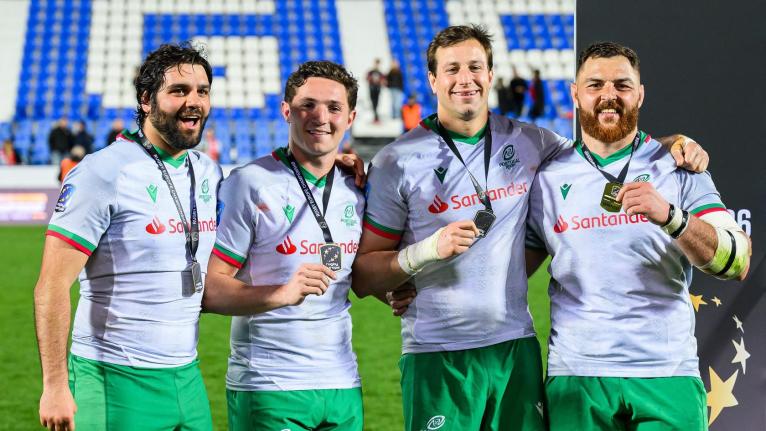
On Sunday, in Madrid, Portugal beat Georgia 19-17 in the final of the Rugby Europe Championship, their first title at that level since 2003/04, and in doing so, ended the Lelos’ eight-year grip on the trophy. The shock win (Georgia were 15-point favourites in the eyes of the bookmakers), lifted them up two places to 14th in the World Rugby rankings, one off their all-time best position, and extended their winning run to a record seven matches.
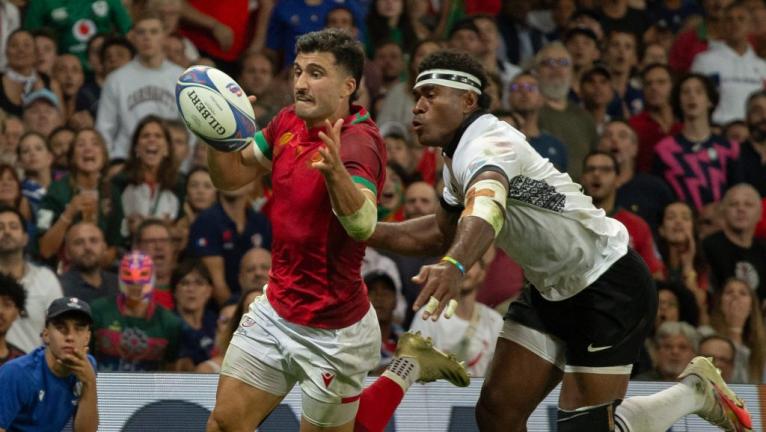
Mannix took over as head coach of Os Lobos when they were going through a difficult time. All of Portugal’s energy had gone into making a success of their participation at Rugby World Cup 2023. And whilst they played their way into the hearts of every neutral at the tournament because of their swashbuckling style, and picked up a win against Fiji and drew with Georgia, what followed next was a real comedown.
Playing with Daniel Hourcade as temporary head coach, following Patrice Lagisquet’s decision to stand down, Portugal were on the receiving end of a shock even bigger, statistically at least, than their one over Fiji, losing 10-6 to a Belgium side ranked 16 places lower than them.
Portugal still made the final in 2024 but were well beaten by Georgia, and when Mannix took over midway through the year, he didn’t like what he saw.
“Portugal when I arrived was an absolute black hole, there was nothing there. There was no data, there was no succession planning being done in terms of player identification, and I was just pitching from one thing to another, and I had a staff that I’d say was pretty dysfunctional.
“I probably didn’t get my message across as clearly as I should have done so I take my responsibility in that as well.
“It was really tough. There was no culture within the team. You had to re-establish everything. I was looking at it and thinking how the hell did they get to the 2023 World Cup in such great shape, there must be something there.
“In the last eight months we’ve had a total reset, and I’ve had the support of the Union to do that. But we’re still by no means where we want to be.
“This is part of the whole process of changing it. The whole attitude, the whole culture, how we worked, how we interacted, relationships on and off the field, I felt we needed to have a really good look at ourselves.
“I still consider we’re in a development phase,” he continues. “The last eight months has been about developing talent, changing the way we work – introducing more contact into training and being more accurate in what we are trying to deliver, and we are getting results. But we are nowhere near where we want to be. For me, one result is not going to define the work we’ve done.”
Mannix admits getting the right people around him has been crucial to turning things around. Portugal only finished fourth in their first REC under Mannix in 2025, and his win/loss ratio was roughly 50:50. A nadir was reached when Portugal were on the receiving end of a record 100-point hammering at the hands of Ireland in July last year, a mismatch that, he says, people above him have since recognised shouldn’t have occurred.
“The first thing for me was I have to get the staff right, I’ve got to get my people in, people who buy into the way I want to play rugby, buy into my messaging, treat people the way we want them to be treated and not accept anything else, and that’s where we got to,” he adds.
“Even though there was very little support for me, I stuck to it, and I had a staff that was remained extremely loyal; there was the belief and the trust that we developed, which is massively important for me, that I certainly hadn’t felt before, and in rugby you can’t put a price on that.
“We got alignment pretty quickly and we are up to 14th in the world.”
Mannix’s first appointment was respected analyst, Elliot Corcoran, who he’d worked with twice before, at Munster, when he was Rob Penney’s assistant, 2012-14, and then as head coach of Pau.
Through a recommendation from Corcoran, Andi Kyriacou (defence) was brought on board once he lost his job with Munster, while former Top 14 half-back, Anthony Tesquet, specialises in attack. Tesquet was an assistant coach to Mannix at French lower league club, Arcachon, and is the only member of the frontline coaching team without Munster on their CV.
That connection was been strengthened further earlier this year with the World Rugby-supported appointment of Ged McMillan as Head of Athletic Performance.
“Everyone who has been through Munster – there are four of us – has brought Munster principles with them, myself included.
“Munster is a unique environment and it leaves a mark on you, good and bad,” he says.
“The Munster principles underline a lot of what we do. There is nothing you can take away from Munster in terms of the years of hard work and excellence they have shown. It might have always been mirrored in results but certainly in preparation and other things.”
Mannix believes the genesis for Portugal’s revival was in the 2025/26 Rugby Europe Super Cup and Lusitanos’ march to the final. Portugal’s representative team were well beaten by their Spanish equivalents, Iberians, 42-17, but the competition as a whole was viewed positively.
“Through the Lusitanos group we got massive traction with getting the environment right, a lot of belief from an extremely young team,” he says.
“We had 19-year-olds playing and guys who hadn’t been exposed to the Portuguese national team at all, and guys from up north of the country and the centre; we used over 50 Portugal-based players and a few French guys, and we made the final.
“In that final, we had no access to players who play for Super 6 clubs because they were playing a club championship game that day. I had players I didn’t know, who played for various espoirs teams in France, flying in the day before the game. It was absolutely crazy.
“We played three-quarters of the Spanish national team, if not more, and we got well beaten. But it gave great exposure to the whole programme.”
The Rugby Europe Men’s Championship started a fortnight later, and Mannix was conscious that Belgium away, their opening game, was being viewed as a potential banana skin. Expectations, and media interest, in the team had fallen considerably from the 2023 World Cup.
“People were anticipating we were going to go to Belgium in the first game and lose, because Mons is a really tough place to go and play; they lost there in 2024; Belgium drew 13-13 with Samoa in the play-off game; it was a farewell game for all their players. But we beat them 47-17, a bonus-point win, yet no one says anything, no press interview requests that week.
“Second week, we go to play Germany, who have just smashed Romania, and we beat them 68-12; again, no press interviews, no requests.
“Then we are play Romania at home. Romania are Romania, a team with a World Cup pedigree for years and years, and we put 44 points on them and it could have been 70. We had three tries disallowed and we didn’t play as well as we could have. After the game, the one journalist who interviewed me, said, ‘you must be disappointed not to score more points in the last 15 minutes’. This is the level we are at.
“And then we go to the semi-finals to play Spain, and you physically dominate Spain and we win 26-7. Spain are all bells and whistles with what they are doing, and good luck to them, they are good, they have benefitted from having 27 full-time players, which is great for their development, and yet there is still nothing. We have been playing really good rugby. We had the best defence and the best attack in the round-robin play and yet still no one wants to talk to us.
“Then we go and beat Georgia in the final. Did we deserve to win? Yes, we deserved to win. Okay, you have got a scrum that is always going to be under massive pressure, which we were, but the absolute trust was there amongst the players, and there was no give up whatsoever, and we went and won the game.
“What frustrated me, and what sort of helped us, is we can use the fact that no one has had any interest in what we are doing outside of our playing group, apart from their families, as fuel to drive us.
“But we are just going to keep on going and draw strength from each other. That’s what I think we have done.
“I commented after the game that if you want to see the heart of a rugby team, you look at the defence and how they are without the ball. I knew they (Georgia) were never going to trouble our try line; everyone was solid. The ability to sacrifice for one another is something we have developed.”
Like all coaches looking to make their mark, Mannix has had to make some tough decisions. He praises the way the ever-classy Tomas Appleton has handled passing the captain’s armband on to lock Jose Madeira and insists Raffaele Storti is still very much part of his plans.
Storti was the superstar of Portugal’s World Cup campaign and is probably the equivalent of Georgia’s Davit Niniashvili and Italy’s Ange Capuozzo in terms of standout players. However, the Grenoble winger, with 22 tries in 36 Tests, didn’t feature in the REC after starting in the opening round win over Belgium.
“He hasn’t been performing to the level of the other players, and I can’t pick on reputation,” the Kiwi says, giving it to us straight.
“He’s been doing some really good stuff with Grenoble, scoring tries and the like, but the things we were looking for, the things we felt we needed to be solid in, in certain areas of the game, I felt we had other players that had performed better.
“This is not at all a criticism of Storti at all, he has been a massive part of Portugal’s success and will continue to be, I have absolutely no doubt in that.
“What we have is competition for places in a few areas and we have to develop that.
“It has been really healthy and what it does is it creates a positive environment where you know if you’re working well, and at every training session if you are performing and investing in what’s going on, you have an opportunity to play. And it’s not just a case of ‘he scored tries at a World Cup, we have got to pick him’. This is about showing up every day.
“When you get it right you feel pretty comfortable with your decisions at the end of the day.”
Mannix is under contract until the end of the 2027 World Cup, and whether he lasts that long or not, “I know there are people that have wanted me gone for a long time”, he is determined to leave Portuguese rugby in a better place than when he first arrived.
“I know no one is going to pat me on the back, and I am not looking for it,” he says.
“I know my work has been very good and I am not alone in that work. I have total confidence in what I do, I always have done, and it will be what it will be.
“I am sure people in Portugal are saying maybe it’s better to bring back Lagisquet, and maybe it is, but what I know what we have done so far is pretty cool.
“We have a long way to go and I expect us to keep improving. Portugal can’t just be a tournament team, a one-off – ‘oh, we won a game at the World Cup in 2023, that’s success’. No, success is turning up every day, getting better and putting in consistent performances, and that’s what we have shown in the last eight months, and we still have 18 months to the next World Cup.
“What’s exciting, and it’s probably not something people are talking about, is that this group is going to the 2031 World Cup, and you’d be pretty excited about that because I think we only had one player over 30 on the field.”
After winning the last eight titles, Georgia's grip on the Rugby Europe Championship trophy is now over after the Lelos lost 19-17 to Portugal in a thrilling final in Madrid.
Read Now
Create your ticketing account and unlock presale access for Rugby World Cup 2027 now!
Join free and tell us what you really think!
Sign up for freeTeams destined for finals will set their season up over the next phase of the competition. What do the four Aussie sides need?
Once named sevens world player of the year and a darling of the Stoop, the Argentine flyer has never forgotten his roots.
Widely written off as ageing and in decline, Andy Farrell's men came within inches of the title as their transition phase continues.
Been a rugby fan since the 1960s. Pollock is a breath of fresh air. Leave him alone.
Vamos Los Pumas! This would be amazing…hope it happens.
CCS played but he was only on the field for 5 minutes P!


 Clear
Clear 


