
This time next year it will be the highest-profile, most experienced players making their career announcements, and New Zealand will see a host of long-serving All Blacks reveal plans to head offshore after the World Cup.
Most likely Beauden Barrett, Ardie Savea, Codie Taylor and Scott Barrett – possibly others – will confirm they are not staying in New Zealand after 2027. But it will be relatively predictable and NZR’s contracting team, the All Blacks and respective Super Rugby clubs will all have planned for it.
Since the dawn of the professional age, New Zealand’s most experienced players have built their careers around World Cups and it will be no surprise if Beauden Barrett and Savea announce they are heading to Japan, and that Taylor may be retiring.
Scott Barrett could stay in New Zealand for a crack at the British Lions in 2029, but the point is New Zealand Rugby is prepared for an exodus next year.
It will be time for these veterans to move on. They will have given their best years to New Zealand and having reached their mid-30s, there won’t be enough left in the tank to make it through another cycle.
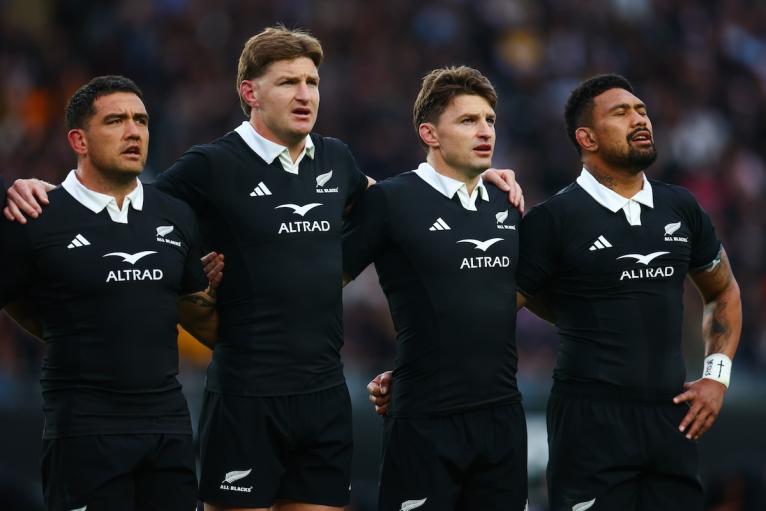
Everyone knows the drill: about 700 Test caps moved on after the 2023 World Cup, a relatively light figure in comparison with what was lost after the 2015 tournament when Richie McCaw, Dan Carter, Keven Mealamu, Tony Woodcock, Conrad Smith and Ma’a Nonu left New Zealand or retired.
But a new trend is emerging that NZR is not so well-equipped to deal with – and that is a flow of mid-tier talent leaving the country a year before the World Cup.
Already in 2026, it has been announced that Dalton Papali’i, Hoskins Sotutu, AJ Lam, Dallas McLeod, Braydon Ennor, Sevu Reece and Fehi Fineanganafo are heading offshore after Super Rugby. These players are the backbone of Super Rugby – seasoned professionals that deliver on demand.
The sort of players that Super Rugby coaches love because they lift training standards, drive their peers harder through preseason, deliver quality performances week after week and front at crucial times.
They also don’t fall under All Blacks protocol of having to sit out at last two games and make a graduated start to the season. All of them are either capped, on the verge of being capped, or in the case of Fineanganafo, have played sevens for New Zealand.
But for various reasons, none have been able to achieve all they wanted at the highest level. Ennor missed out on the 2023 World Cup when he seriously injured a knee on the eve of the tournament, while Papali’i, went from being a sometimes starter but regular matchday 23 pick for the All Blacks between 202-2024, to not being in the squad at all last year.
Both of them, though, make massive respective contributions to the Crusaders and Blues and have been and will be critical players this season as both clubs mount title bids.
Reece was a regular starter for the All Blacks last year but lost his place when it became apparent his skill-set was no longer right for the international game. But at Super Rugby – where he is the all-time highest try scorer – he remains an electric presence capable of magical moments.
McLeod won a single cap in 2023 but hasn’t been able to force is way back into the picture, and a year out from the World Cup players on the fringes of the All Blacks tend to be targeted by offshore clubs with compelling offers.
Foreign clubs come hard and players and agents in New Zealand know that next year, the offers will dry up because budgets will be set aside to sign the Saveas and Beauden Barretts of the world.
It becomes a relatively simple equation for this second tier of players – they weigh up the likelihood of making the World Cup squad against the money on offer offshore and they typically decide its time to move on even if their Super Rugby club is desperate for them to stay.
And this is an increasing problem for New Zealand, that large swathes of the playing base have their futures shaped for them by the likelihood or otherwise of them making the All Blacks.
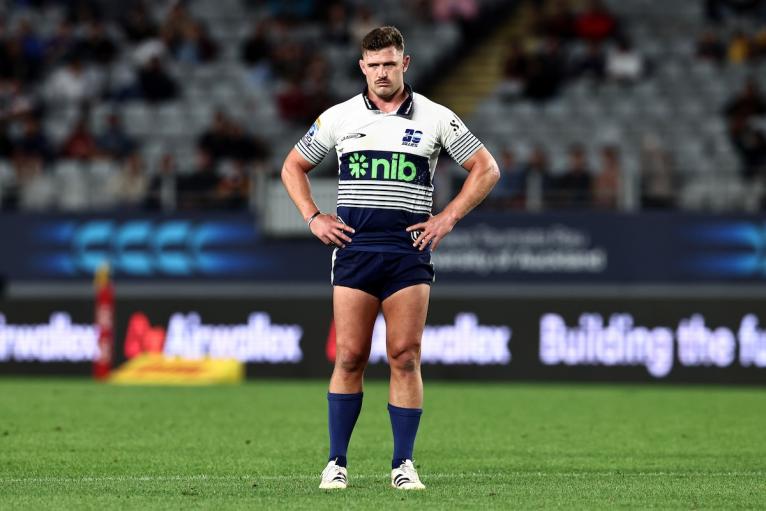
“I think we should be [worried] and need to have better alignment, better conversations and earlier conversations with players such as Dalton,” Blues coach Vern Cotter lamented the day it was announced Papali’i was leaving.
“He felt he had more to contribute but wasn’t invited, so he made a decision to move. He’s captain material and he could have been an All Blacks captain. Losing him from New Zealand rugby hurts a bit but he’s got a family and a lot of other things to take into consideration.”
The problem for Super Rugby clubs is that they have little to no leverage or money to throw at players they want to keep, because payment systems are centralised and determined entirely through a collective employment negotiated by the Players’ Association.
But in a quirk of timing, the collective employment agreement was extended for another three years a few days after Papali’i announced he was leaving and the big hope with the updated agreement is that it proves more effective at keeping experienced players in New Zealand for longer.
Rob Nichol, who heads the Players’ Association, says that finding ways to incentivise experienced Super Rugby players to stay for a year or two longer was a focal point of the agreement.
The way things work are that Super Rugby clubs can pay players a maximum of $195,000, with anything between 40-45 players – those agreed to be in the All Blacks frame – qualifying for an NZR top-up that can be anything from $100,000 a year to $800,000 a year. The All Blacks also pay weekly assembly fees of $7,500, so the country’s top players earn anything between $350,000 to $1.1m a year.
But for that group of around 15-20 players who have maybe won a cap previously but sit outside the national team conversation, they typically earn between $140,000-$170,000 from their Super Rugby contract, and between $30,000-$40,000 from playing in the NPC.
Under the new agreement, however, there is an annual loyalty payment of $50,000 available to those who have been in Super Rugby for seven seasons ($35,000 for 5-6 years; $12,500 for 3-4 years and $5,000 for 1-2).
There is also a new fund of $750,000 available to top up contracts of players such as Papali’i and Ennor that the Blues and Crusaders (and NZR) would like to keep for another year or two.
Whether this improved suite of incentives proves enough in future to persuade experienced players to stay in New Zealand for longer remains to be seen, but the impact of losing seasoned campaigners is undeniable.
The average age of Super Rugby squads in New Zealand is just 24 – a figure which suggests overseas clubs continue to be the beneficiaries of the development system.
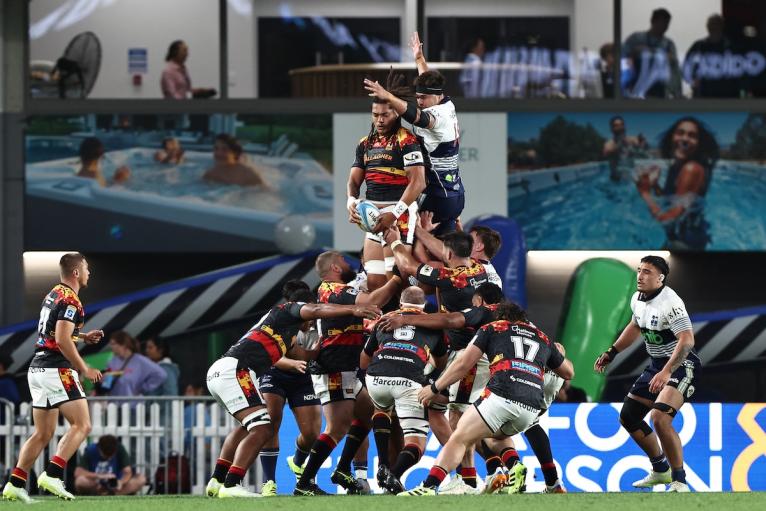
New Zealand identifies, develops and invests in a wide playing base, but typically, once a player has five to six years Super Rugby experience, they leave. It’s more problematic than it may seem, particularly if there is an exodus at one club, which has been the case at the Blues.
Not only are Papali’i and Lam leaving, but so too is Hoskins Sotutu, and last year they saw Mark Telea, Harry Plummer, Akira Ioane and Ricci Riccitelli move on.
All these players were instrumental in the Blues’ title win in 2024 and by 2027, all of them will have gone. How is a club supposed to build a dynasty when so many players have left, all, primarily because they couldn’t fulfil or didn’t think they would fulfil their international ambitions.
As Papali’i said: “It was probably one of the hardest decisions of my life. My blood is blue and it runs deep – my loyalty is to this team. I’ve had nine or 10 years here and they’re the best memories of my life.”
Much has been made about the relative demise of the All Blacks in the last five years or so and their inability to hold standards around basic skill execution the way they used to.
It’s likely that this loss of experienced players in Super Rugby arguably is hurting them more than anyone realises.

Watch Super Rugby Pacific live and free on RugbyPassTV in the USA!


Je crois que le SR est le meilleur championnat du Monde, avec les meilleurs joueurs du Monde, non?
Alors, pourquoi avez-vous peur que des joueurs de niveau intermédiaire aillent faire les beaux jours des piètres clubs de NH?
Bizarre…
I think we might be getting this backwards.
How about, let the northern clubs develop the talent first. We send guys over 18-21 sort of thing.
Then, we dangle an All Black jersey in front of them if they sign for a Super Rugby side. A bit of governmental tax intervention, personal brand sponsorship like what rugby 365 were proposing.
NZ style offers a different style that they will be familiar with but need more time with to be become a better player etc etc all that bollocks.
Josh Morby has gotten better. Peter Ahki a bit long in the tooth but he turned out just fine.
JGP/Lowe/Bundee would have never been regular ABs with how they they played in Super rugby; Ireland finished their development.
It’ll weed out the posers, too. Young, cash rich comfortable lifestyle… only the players who truely want that jersey and are hardcore driven enough to succeed will come back.
The cream of the crop. (And the odd guy escaping a DV or driving charge.)
All paid for with northern chequebooks.
Pick your overseas based players
So simple isn’t it.