
In the warm and picturesque streets of San Isidro, two hearts beat to the sound of the same drum. For 89 years, near Argentina’s capital city, Club Atlético de San Isidro (CASI) and San Isidro Club (SIC) have contested one of rugby’s fiercest derbies you’ve probably never heard of.
When researching this article, RugbyPass expected to be told of a venom between the clubs and their people, the kind of hatred passed down through the generations. But at every encounter with players, supporters and historians, new and remarkable tales were told. Myth and legend surround this fixture, a duel which has defined not only San Isidro, but Argentinean rugby itself.
The town of San Isidro lies on the outskirts of Buenos Aires, but when the rivalry began back in the early 20th century, the place was mainly farmland. Ground to raise crops and animals, or a dormitory settlement for those working in the nation’s capital. In 1902, CASI were formed as a sports club. Football was the only game in town then, though there were some abortive attempts to introduce rugby to San Isidro.
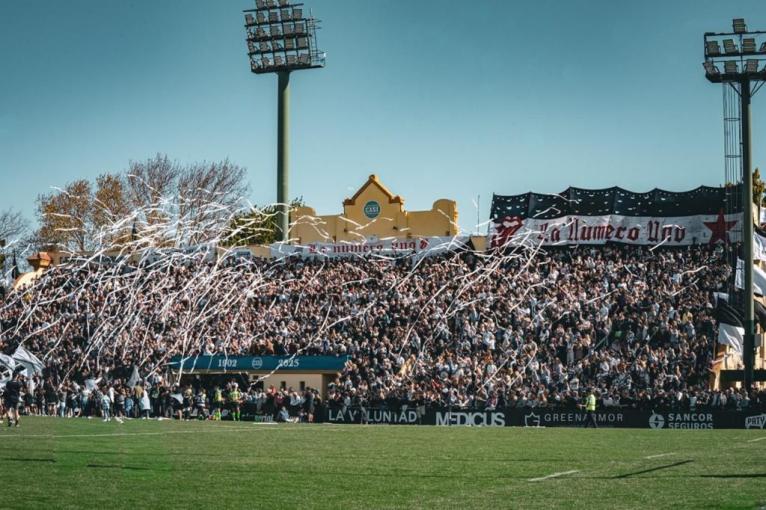
That all changed in 1917 when Rafael Cullen was elected as the club’s president, enacting a revolution that would change the future of Argentinean rugby.
“Cullen made an offer to the players from Gimnasia y Esgrima [another rugby club in Buenos Aires] to join CASI,” explains CASI supporter and historian Santiago Roccetti.
“They said yes and joined the club in 1917. Those players weren’t inexperienced; they were full-fledged players who had helped Gimnasia win in the past. They would conquer the local competition 13 times in a row, allowing CASI to enjoy their greatest era.”
A second wave of Gimnasia’s players would enlist in 1923, helping CASI hold a tight grip in the early days of Argentinean rugby. Amongst their more renowned players was the Olympic boxer, Arturo Rodriguez Jurado. However, his time with CASI would end in 1935 as Roccetti reveals.
CASI on one side, SIC on the other. Families were divided. People who normally would greet in the streets stopped doing that if you had been one of those who had opted to go to SIC.
“In 1927, Julio Urien was elected as CASI’s new president, and things got into motion. While there’s no precise date of when things started to turn sour, the biggest issue was that players wanted to choose their own coach, a right that belonged to the club’s board. So, a conflict ensued.”
With each year, the conflict grew, until the wheels – or rather the trousers – fell off.
“Between 1927 and 1935, more than a few issues happened between the two sides, but the main one happened on a 14th July, 1935,” says Roccetti.
“In the ‘Tercera Parte’, which was and still is the after-game proceedings, the CASI players were having fun, and one of the players said ‘we are the sans culottes’ and proceeded to lower their pants and climb on to some tables.”
While no one other than the athletes and a few fans were enjoying the party, a senior member of the club witnessed the act and reported it to the board. The outcome? Suspension for the Sans-Culottes club!
The unsuspended players, feeling Urien was taking revenge for how the squad kept contesting his leadership, made a stand and chose not to show up for the team’s next game. The outcome 2.0? Bans for all of them.
With CASI’s captain, Roberto de Abelleyra, taking the lead, the players left and established a new team, the ‘Abelleyra XV’, prompting Urien to call for elections to give the players a fighting chance to address the ongoing issues.
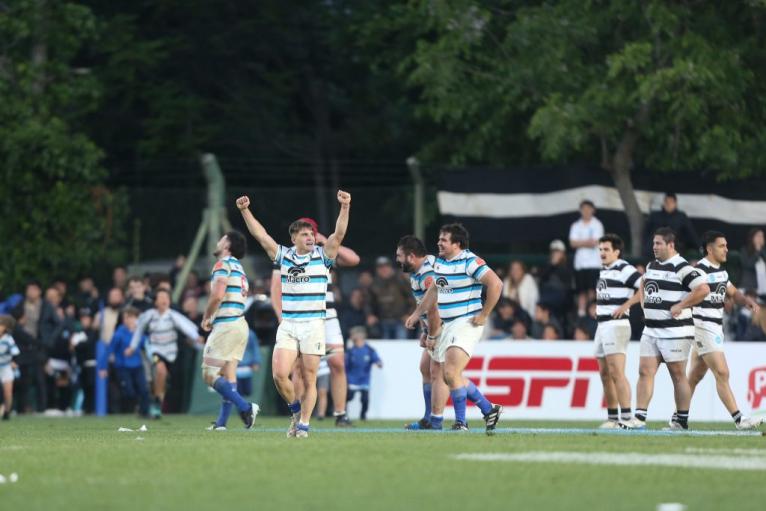
However, in the end he was re-elected, meaning a defeat for the players, who decided to leave the club and set up their own team.
“SIC was founded in December 1935 with 400 members,” Roccetti says. “From the suspended players, to women hockey players, to family members who were not practising any sports, 400 people were involved with the club’s foundation. The club would play their first ever game in 1936.”
That schism wasn’t just sports-wide; it transcended the growing town population. Families were split in two.
“San Isidro was a small town by then, so you can imagine how big an issue that split was,” recounts Roccetti.
“CASI on one side, SIC on the other. Families were divided. People who normally would greet in the streets stopped doing that if you had been one of those who had opted to go to SIC. There are documented stories of grandmothers refusing to wash and clean their grandsons SIC shirts, because they were from CASI!”
While SIC won the first El Clásico in 1937, CASI quickly regained control of the rivalry and became the dominant side. Some 140 games have been played in the URBA (Buenos Aires’ main senior club competition) since that first fixture, with CASI leading by 72 wins to 58, plus 10 draws.
I am here in Spain right now, and when it’s derby week, I’m on edge, sending messages to my friends who are going to be playing for CASI.
“In derby weeks, the clubs, the neighbourhoods and their people are completely focused on it,” Roccetti goes on. “You don’t talk about anything else; you don’t make any big decisions that week; and you don’t make any plans at all. Big critical meetings? No, no chance. Big life-altering decisions? Impossible. It is El Clásico week, and there’s nothing else beyond it.”
Vicente Boronat, who was born and raised in Argentina but is currently playing for Spain, has appeared in a few Clásicos for CASI.
“In the week before the derby, you feel a change in the atmosphere,” the back-row says. “People from both teams’ neighbourhoods will come to you, asking about the game and how you’re feeling, and wishing you luck. I am here in Spain right now, and when it’s derby week, I’m on edge, sending messages to my friends who are going to be playing for CASI.”
The frenzy of the San Isidro clash isn’t something that leaves you the day you retire or depart from Buenos Aires. It lingers in the blood forever.
“Be it me or Pumas like Gerónimo Prisciantelli and Justo Piccardo, we will be thinking about the game when it happens,” Boronat adds.
“Look, I might be playing in a Rugby Europe Championship final, but when the game ends, if there’s a CASI vs SIC derby going on, the first thing I do after the game is to check my phone to know the score.
“Why? Because my people are there, playing for and supporting CASI. It is an extension of our soul; of our being. You don’t get to detach from the rivalry and from CASI or SIC when you retire or go to Europe to play rugby. It stays with you forever.”
The enormity of the clash has survived the ages and has deeply influenced the careers of Pumas legends, such as front-rower Diego Cash, who quickly breaks down why El Clásico matters so much for the people of San Isidro.
“I started playing rugby when I was 11, and the thing I relished the most was to play in an El Clásico. That was my goal, and for people from my generation. Playing for the Pumas was also marvellous, but SIC changed my life. El Clásico changed my life.”
The hooker debuted in El Clásico as a prop, coming from the bench to replace his injured loosehead. Nonetheless, he scored a try and helped SIC secure a brilliant win over CASI, a staggering and memorable bow.
“I was an architecture student at the same time I was playing. However, in the week before El Clásico, there was nothing else but the derby. I would skip classes. I would say to my girlfriend, ‘I’ll see you in seven days.’ Derby week was derby week and there was nothing else beyond that.
“I remember waiting for the bus to go to practice, and someone inside saying, ‘Next Saturday you are going to take a beating!’. I laughed as I got on the bus but there was no violence involved; it was just fun.
“We are the same family, like cousins. The folklore surrounding the derby is unique. It is a party, a party that belongs to San Isidro and to its people, and we enjoy it to the fullest.”
In the day before the big match, teams dine together and non-playing squad members throw a banderazo, effectively a pre-game pep rally with colour, songs and pyrotechnics.
View this post on Instagram
The rivalry extends down the age-grades, with matches on derby day from dawn til dusk, before the senior men’s sides go toe to toe.
“It is the only sport in Argentina that does this,” says Roccetti. “It isn’t just one game; it is a fiesta, it is a celebration of our way of life. It is about our San Isidro. It is about our history.
“The derby is for us as important as the Pumas. It is a matter of passion. It is immovable. It will dictate if you go to bed with a smile or fuming.”
The post-match festivities play out in time honoured rugby tradition.
“That third half of the game is a communion of not only both clubs, but also of the whole town,” says 64-year-old Cash, one of the best front-rowers in the game during the 1980s and early 1990s. “It lasts until the wee hours of the next day, as we trade jokes and drinks, talk about the game that happened that weekend or 20 years ago.”
Boronat remembers the 2005 Clasico which decided the URBA title. There were 15,000 in the stands and a late penalty for CASI ended their 20-year wait to be crowned kings of Buenos Aires. Roccetti cites 2013 as his most cherished memory.
I don’t know what would’ve become of Diego Cash without rugby in my life, without the San Isidro Club. It made me a far better person.
“I witnessed CASI’s biggest-ever score on SIC’s turf by 50 points. Fifty points. It is like Atlético Madrid going to the Bernabéu and winning 10-0. And I was seated in SIC’s cancha (venue). You never forget a game like that.”
As for Cash, his two favourite games of all time, at club and national level, were as a SIC player. One was the draw against the Wallabies A team in 1987 and the other was in 1994, a special day that ended in tears – for both sides.
“I made my club retirement in 1994, and I had to go out with a bang. In that year, we faced a CASI team fending off relegation while we were fighting to retain the title. CASI had in their ranks Agustín Pichot, but it wasn’t enough to deny us the win. They went down, and we were celebrating the champion’s title. Double the fun!”
When Cash talks of these games, and how the San Isidro affair has shaped him, he talks from the heart.
“I grew up in a good household, with two good parents who were always worried about me and who cared for my education. However, I don’t know what would’ve become of Diego Cash without rugby in my life, without the San Isidro Club. It made me a far better person, and I can only say thank you for that.
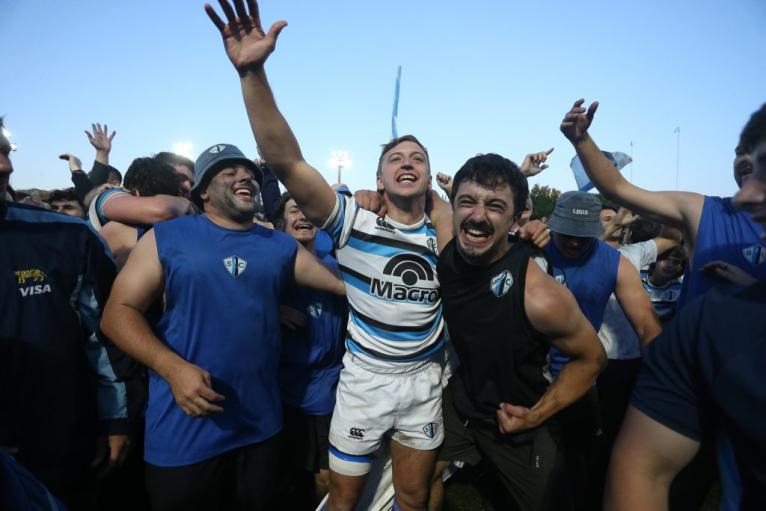
“The San Isidro Club jersey is passion. One day, when my time in this world comes to an end, I hope to depart wearing that jersey.”
Boronat was raised on the lore of the Clásico.
“They say that when they were measuring the size of the fields, someone said, ‘So, CASI’s pitch goes from this point to that cow and not one single meter more.’ However, later in the night, some kids shooed the cow a bit further, and that’s how they explain why CASI has the bigger pitch!”
Roccetti, in just a few words, argues El Clásico deserves to be seen as one of rugby’s finest and most significant fixtures.
“It is the oldest derby in Argentinian rugby, and it is much more than just a game between two senior men’s sides. It’s living history. It’s our living history!”
The derby has endured nearly a century, with hundreds, if not thousands, of players touched by the pulsating vibration of El Clásico. One-hundred-and-forty times, CASI and SIC have contested a battle which started with a family being broken in two but has come together to share something greater than sport.
“The rivalry between us goes from the mothers of newborns to the old man or woman who has lived in San Isidro forever,” says Roccetti. “This rivalry, this derby, and this history we share are timeless. We commune after the game, joke around, and share our love for SIC and CASI.
“We are rivals, not enemies. Two clubs, but one heart that beats to the sound of two things: San Isidro and rugby.”

News, stats, live rugby and more! Download the new RugbyPass app on the App Store (iOS) and Google Play (Android) now!
Whether you’re looking for somewhere to track upcoming fixtures, a place to watch live rugby or an app that shows you all of the latest news and analysis, the RugbyPass rugby app is perfect.


A bitter rivalry culture is exactly what rugby needs, and bravo to the Argentinians for bringing that over from football 👏👏👏