
It was just like old times. The stands were full, the choir urged their team To Stand up and Fight, and even though they were drained of energy, that was precisely what they did. To Miracle Matches and All Black conquests, to memorable Thomond Park wins over Toulouse, Sale, Gloucester and a host of others, you can add this name.
NEW: Follow Your favourites in the App 📱
You can now follow their favourite teams, tournaments and players in the RugbyPass App!
At this stage you probably think we are referring to last Saturday and Exeter – but no. That two-legged victory over the Chiefs deserves a place on the wall of fame but way down it. Saturday’s win, after all, happened in the round of 16, not the quarter or semi-final; and this was the Exeter of 2022, not the 2020 version. That’s why our starting point to this piece is March 31, 2018; the day Toulon came to Limerick.
The French club had World Cup winners in their side that day, Munster journeymen. Toulon’s pockets were deep, whereas Munster had holes in theirs. The European champions of 2013, 2014 and 2015 had grown used to winning, whereas Munster had lost the taste of it. And yet defying the odds seemed to be ingrained, which was how they came around to defeating one of the richest teams ever assembled to reach the Champions Cup semi-finals.
From our vantage point in the West Stand that day, we had an unchecked view of what Johann van Graan, Munster’s head coach, did after the final whistle, the walk he took from the coach’s box down to the ten-metre line. There he said a prayer of thanks, for the South African is a spiritual man.
“I have such a feeling of gratitude,” he’d later say to us. “To see what this team means to the people of Munster, to see young people, old people, really support their team, it is so, so special. Like I said before, I want to make people happy.”
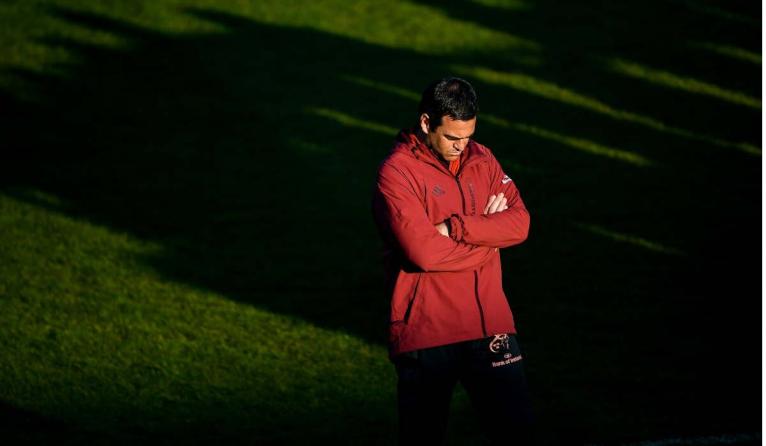
Four years on, he must be wondering what he has to do to fulfil that wish. To all intents and purposes, he has done a reasonable job, taking the club to two Champions Cup semi-finals, and now a quarter-final, as well as to three semi-finals and a final in the Pro14. But for many that hasn’t been enough.
In fact it was chilling to hear the criticism mount for van Graan in December and January, shortly after he had announced his intention to leave the club at the end of this season. There were references to a ‘turgid’ style of play; questions about whether ‘he still wanted to be there’; suggestions that he should leave immediately rather than at the end of his contract.
He was accused of playing unattractive rugby – fair comment; but also of failing to bring through talent from the club’s academy – which was plainly untrue. Josh Wycherley, Thomas Ahern, Craig Casey, Ben Healy, Alex Kendellen, John Hodnett, Diarmuid Barron and Jack O’Sullivan all made their debut under van Graan. All are aged 23 or under, each featuring in their two-legged win over Exeter in the last couple of weeks.
Criticism comes with the territory of being a head coach so if you can’t take it; well, it is best to do something else for a living
Criticism comes with the territory of being a head coach so if you can’t take it; well, it is best to do something else for a living. But a couple of things were particularly noticeable about the grief van Graan was getting just after New Year. Firstly, that it built in intensity in the aftermath of the coach’s decision to leave – the jilted lover syndrome and secondly, that a lot of it came from former Munster players who frequently referenced the club’s golden past.
But it’s the recent past that should be more relevant. That spring day in 2018, when Toulon were defeated 20-19, masked the cracks in the Munster structure. The outhalf who kicked his goals in the win was Ian Keatley, not Ronan O’Gara. Their lock forward was Billy Holland, not Paul O’Connell. Their wing was Alex Wootton, not Doug Howlett. Yes, they all played well on the day but when asked to step up a level at the semi-final stage, they couldn’t.
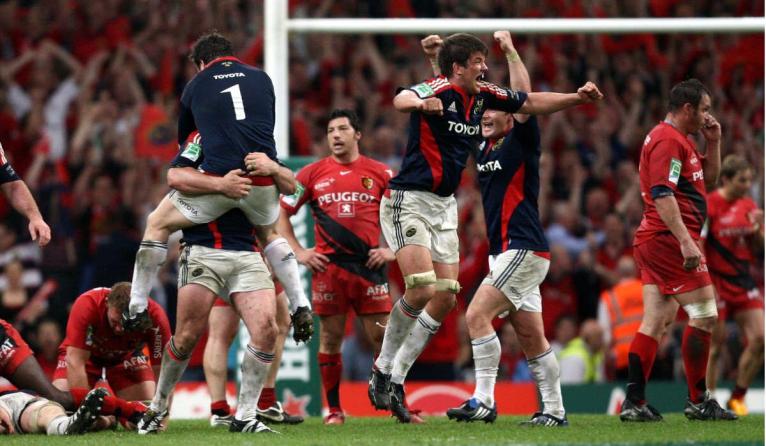
It was a painful lesson for van Graan to learn. After beating Toulon, he expressed the hope that ‘some of these players can become real legends in the Munster jersey’ but it was too much to ask, just seven of that squad involved in the match-day 23 against Exeter last weekend; some victims to injury, some to time. But for others, the painful truth is they just weren’t good enough to restore the club to its former status.
Often the hardest job for a head coach isn’t building a new team; it’s getting the time to deconstruct the one they inherit.
Brick by brick, van Graan has done just that to the degree that if there is one man in Limerick who has every reason to be grateful to him then it’s Graham Rowntree, not just because the incoming head coach owes his position to the fact van Graan created the vacancy; but also because of what he’s taking on.
The squad list van Graan is handing over to Rowntree is unrecognisable from the one he collected off Rassie Erasmus in November 2017. Journeymen have been replaced by ready-made signings
Ahern, Hodnett, Casey, Healy, Jack Crowley, Gavin Coombes – there’s boundless promise there. Plus they’re local, reared on the Munster legend, Casey schooled within a penalty kick of Thomond Park.
That’s before we get to the remainder of the squad. When Toulon were surprisingly beaten in 2018, Joey Carbery was a Leinster player, Tadhg Beirne a Scarlet, Springbok RG Snyman a Bull while Mike Haley was still on Sale’s payroll and the 59th minute replacement for Toulon, one Malakai Fekitoa, was not expected to return to Thomond Park as a new signing.
But that’s going to happen in the summer. The squad list van Graan is handing over to Rowntree is unrecognisable from the one he collected off Rassie Erasmus in November 2017. Journeymen have been replaced by ready-made signings, including two World Cup winners, and promising academy graduates. In terms of timing, Rowntree’s luck is in.
There’s an irony in that.
As a player, he was a winner, picking up six Premiership medals and two Heineken Cups with Leicester, 54 caps with England.
His first time in international camp, he landed in the team hotel on a Wednesday evening, checked in his luggage and nipped off to the Roebuck pub with Dean Richards for a cheeky pint.
That was 1993, the dying days of the amateur era, those old school values doing him no harm as professionalism arrived and England went through the tough transition under Sir Clive Woodward. A tour down under in 1998 turned into a trip to hell, noteworthy for the poor results and big-name withdrawals. Rowntree didn’t shirk the challenge, though.
Munster, twice European champions, one of club rugby’s best supported clubs; it’s a great gig to get, even if expectations are unreasonably high, even if it is 11 painful years since their last trophy
Five years later came a bigger challenge. England were in Auckland, down to 13 men, defending a five-metre scrum against the All Blacks with just six men in it. Rowntree was one of them. They held out. Later that year, the remaining five heroes would win a World Cup; Rowntree the one who missed out on the squad. “I still don’t like to think about it much,” Martin Johnson reflected four years later. “It’s upsetting Graham was a stalwart, the guy who always seemed to get the shitty jobs. He was heroic in Auckland and they told him he was going to the World Cup. He booked his wife and kids to go. Paid the deposit. He deserved to go. Full stop. He should have been there.”
He’s there now. Munster, twice European champions, one of club rugby’s best supported clubs; it’s a great gig to get, even if expectations are unreasonably high, even if it is 11 painful years since their last trophy, even if players and coaches are trapped in the shadow of their predecessors, constantly reminded about the good old days.

Now there’s a chance to make memories of their own, starting tomorrow (Friday) in Belfast against Ulster, the third last game of the regular URC season. Victory could go a long way to delivering a home passage through the knockout stages, the relevance being that all five of their semi-final defeats under van Graan came away from home.
“It is the manner of those semi-final and final losses that creates the storyline,” said Alan Quinlan, a hero of the 2006 and 2008 Heineken Cup wins, recently. “Munster have no divine right to win anything. But Munster Rugby people are so passionate. They want to see that in their team. If they are going to lose, go down with a fight. We lost semi-finals in 2001, 2003, 2004. We didn’t want a sob story. We just wanted to bloody well win.”
Munster, by and large, have been winning – 70 per cent of van Graan’s games ending in victory. That includes victories in Europe over Toulon, Saracens, Exeter, champions in all bar two of the last nine Champions Cup seasons
Munster, by and large, have been winning – 70 per cent of van Graan’s games ending in victory. That includes victories in Europe over Toulon, Saracens, Exeter, champions in all bar two of the last nine Champions Cup seasons.
Yet there’s something missing: a trophy, the thing that defines the head coach at Munster. Van Graan knows that by now; Rowntree will soon find out. The next eight weeks is the chance for them – and their players – to step out of history’s shadow.


Comments
Join free and tell us what you really think!
Sign up for free