
Siriol Hibbard would clamber astride her bicycle and set off like the Pied Piper of Port Talbot, a cacophonous phalanx of children pedalling in her wake. Sometimes, she would take her four sons and their pals fishing. Always, when she saddled up and went trundling down the Fairfield estate, adventure hung in the air.
NEW: Follow Your favourites in the App 📱
You can now follow their favourite teams, tournaments and players in the RugbyPass App!
Richard Hibbard was the youngest of the brood, the impish baby in a household of gallus young men ruled by their matriarch. Siriol’s eldest was Nicholas, then came two middle boys Matthew and Daniel and finally Richard, who had another father; a bloke who vanished shortly after his birth and has not been spotted in Neath since.
The visceral, unspoken bonds tethering mother to sons were stronger than any steel slabs churned out by the creaking old Port Talbot works, where all of the brothers bar Richard now make their living. Siriol was their doting guardian and their fearsome disciplinarian; part-bouncer, part-carer, part-mischief-maker.
“She never let you want for anything, even though she had nothing,” the Dragons hooker tells The XV. “It was fantastic. My Mam did three roles, never mind the two of being mum and dad – she was amazing.
“She didn’t drive, so she used to go everywhere on a bike. She would take me and all my mates fishing. We would go anywhere on the bikes; it would just be her and a trail of kids.
“Even when we grew up, and it was my nieces and nephews, she’d be doing exactly the same. She loved kids. She was class.”
She’d stand in the doorway and if you were in trouble you had to get past her without getting a whack.
Hibbard on his Mam, ‘a force of nature’
The memories tumble out of Hibbard now like cash from a fruit machine. The boys’ mates christened Siriol, ‘Sergeant Sibs’. You messed with her at your peril.
“I can still say now to this day she is the only person I’ve ever been super-scared of,” he says with a chuckle. “She was a force of nature.
“You can imagine, four boys, we liked a bit of trouble. She’d have been a hell of a good tight-end in American football – she’d stand in the doorway and if you were in trouble you had to get past her without getting a whack. No wonder I’m used to running into walls. We didn’t have money, but she did everything she possibly could for us.”
It is desperately sad that we must talk about Siriol in the past tense. When your phone trills at 3am, it seldom heralds good news. Hibbard remembers with chilling clarity the night the call woke him, the harbinger of devastation.
“It was August 15, 2009. It was just sudden, no warnings, nothing – bang, gone,” he says. “I can remember the time I got the call. I remember Jonathan Humphreys at the Ospreys being fantastic, the support they showed from the board down, they knew how much Mam meant.”
What of the man whose DNA Hibbard shares but whose only tangible contribution to his life was the act of conception itself? Hibbard has a father but has never had a dad. He knows virtually nothing of the bloke who fled before his son had so much as uttered his first words.
“I thought, possibly, when I played for Wales, someone might pop up but he never did. I’m not too bothered. It’s not a massive loss.
Hibbard on his absent father
He would feel a fleeting pang of sadness, a flash of anger, when he saw his team-mates hanging out with their dads in the local clubhouse but, mostly, Siriol filled the void and then some.
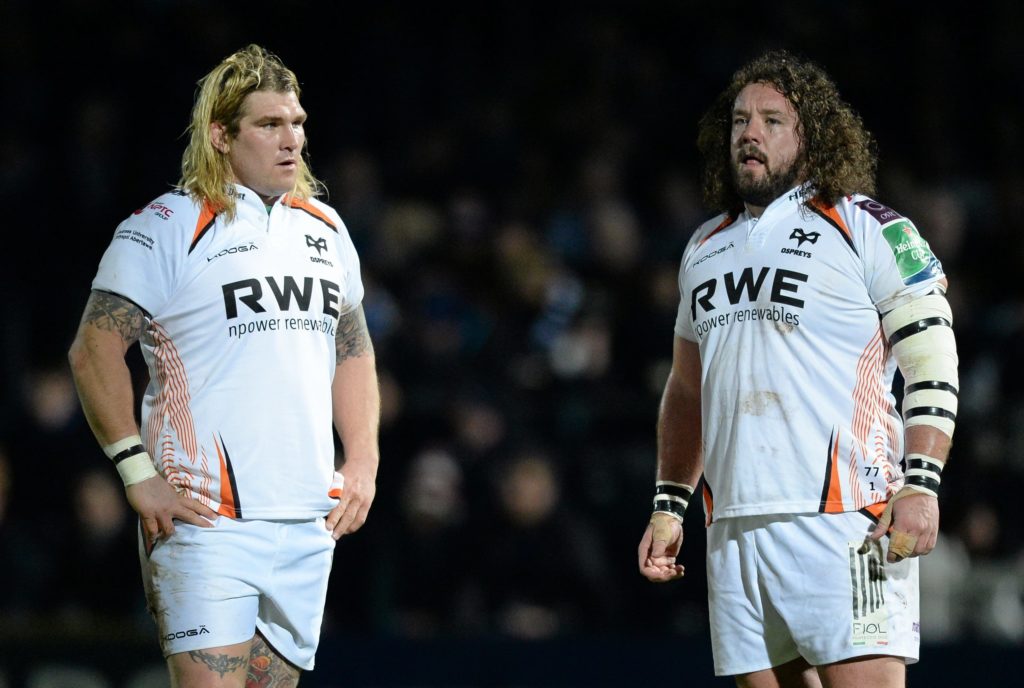
When Hibbard’s profile grew, first as a barnstorming hooker in Lyn Jones and Sean Holley’s great Ospreys sides, then a Six Nations champion with Wales and a British & Irish Lion, he half-expected word to reach him, for his phone to chirp one day or an email to slip into his inbox. It never came.
“The first time I really noticed not having a dad around was at the rugby club,” he says. “My mum didn’t like watching me play because she thought I’d get hurt in the early days.
“In a rugby club on a Sunday after a game all the other kids are there with their parents, and that was the first time. Not that it affected me much.
“I thought, possibly, when I played for Wales, someone might pop up but he never did. I’m not too bothered. He’d probably be a bit scared, to be fair. I don’t think the welcome would have been too great. It’s not a massive loss.”
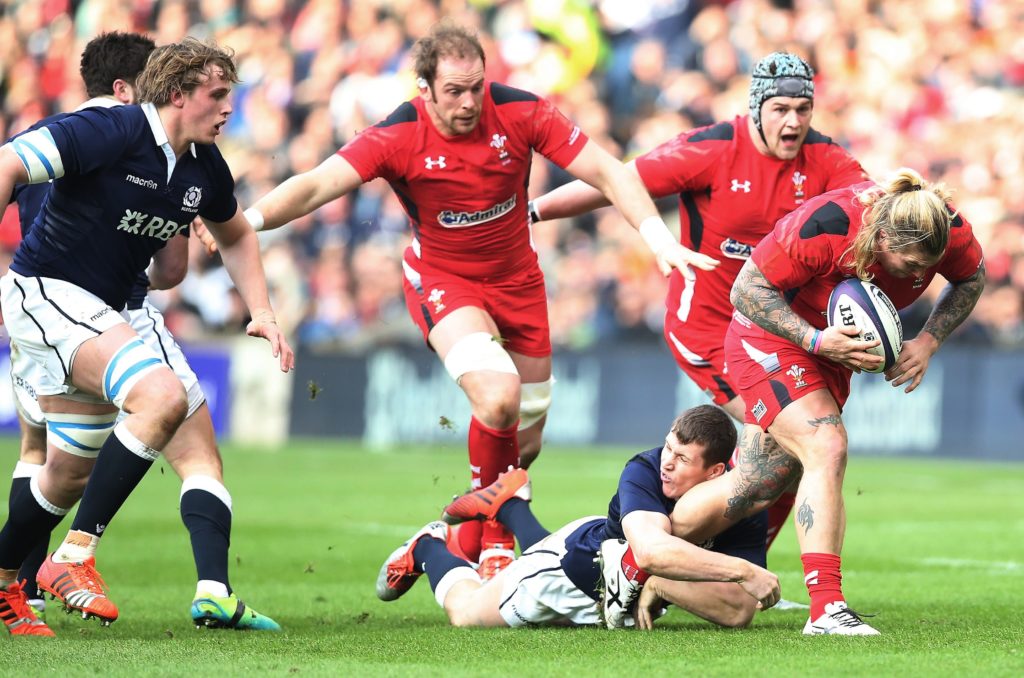
A man infused with Port Talbot steel, raised by the formidable Sergeant Sibs, Hibbard could never have been anything but a competitor. He grew up fast and hard – how could he not with three belligerent older brothers and their friends constantly up to no good? He made his name as a truculent carrier of ball and a thunderous dismantler of opponents.
Our team manager at the time had the terrible idea of giving me a fake name, so I played as Hubert Richards.
Hibbard on playing rugby league for the Aberavon Fighting Irish
In the summertime, he would surreptitiously switch codes and play league under a false name for the wonderfully monikered Aberavon Fighting Irish. This was a serious contravention of his Ospreys contract and required the utmost subterfuge.
“Our team manager at the time had the terrible idea of giving me a fake name, so I played as Hubert Richards,” says a laughing Hibbard. “And it worked well.
“It was a class game, good league with good players in it. I played against the Blue Bulls who had all the old Welsh internationals – John Devereux, Kevin Ellis, Allan Bateman, Nathan Strong – a really strong team.
“It was good craic, summer weather was nice, and to be far it was the two best parts of union – the tackling and carrying.
“I had the Man of Steel award that year, and it was all going swimmingly until Sean Holley turned up when I was playing. He came down to watch the game and saw me. I had it the next day, don’t worry. I knew I was in instant trouble when I saw him on the touchline.”
League was a haven, but union is his craving, and these are fraught times for the game he loves. A long-awaited reckoning is nigh, forced upon the administrators by the grimmest testimonies of Steve Thompson, Michael Lipman and Alix Popham, all of whom have been diagnosed with early-onset dementia after a spree of brain injuries and are among 70 former professionals taking legal action against the unions.
Very few elite players have the luxury of pain-free rugby, but Hibbard has, by his own admission, sometimes played to the detriment of his body.
Would he change anything, knowing what he does now about the potential for heinous damage? In his 37th year, would he still wallop carriers and clatter rucks with the same gusto after the arresting deterioration in Thompson, Lipman and Popham?
Rugby is a chaotic and brutal sport, and law-makers are constantly grappling with the problem of mitigating danger without compromising the game’s integrity. You cannot sanitise rugby to the point of absolute safety, but there are steps you can take. And if you could quantify the risk, at least players would have some indication of what may lurk ahead.
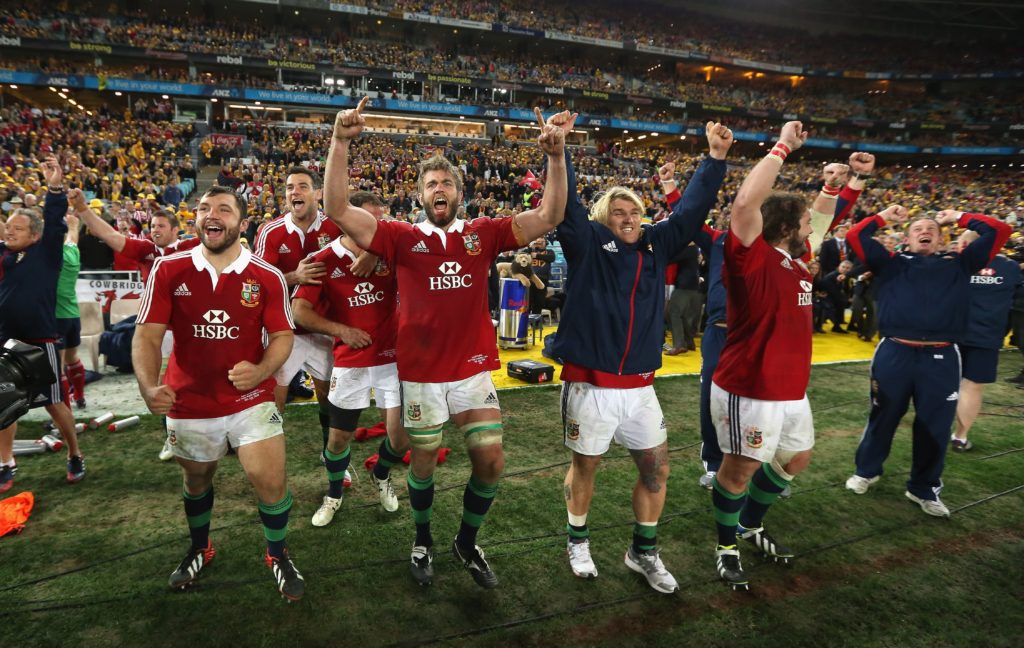
“Even if you present me with the risks now, I probably would have still signed up,” says Hibbard. “I was involved in that 2013 hit with George Smith [Smith was led staggering and stupefied from the field but returned to play on minutes later] on the Lions tour that was the massive turning point for protocols being brought in.
“It is scary, really scary, but I’ve never had any pressure put on me by coaches or doctors. I don’t see who is culpable in it. We take the risk, we play the game, and the doctors, physios and coaches all want to win, but I’ve never felt pressured to play. It’s hard… who do you blame? Who is responsible? Now, the protocols are a thousand times better.
“My biggest fear is that the more they try to speed it up or take elements away, the more it will detract from the inclusivity of rugby. It’s a fantastic sport where you can have an 85kg winger and a 160kg prop.
We go out and batter each other, but it’s not down to hatred or wanting to hurt your opponent. We are gladiators at the end of the day.”
“The boys know they are going on to the battlefield. If you look at every ruck, you are going to see a penalty or an accidental thing. I can tell you now, 99.9 per cent of players don’t go in there to hurt people. We go in there to clean the ball or get someone out the way.
“Nothing is malicious in rugby, and that is the best part of the sport. Yeah, we go out and batter each other, try to smoke each other all game, but it’s not down to hatred or wanting to hurt your opponent. We are gladiators at the end of the day.”
The exchange so far has been profoundly introspective, peering through the windows into Hibbard’s past and seeking out his ‘why’. So now, to the future, and what a future he still yearns to seize in the game.
Hibbard runs a cafe in Port Talbot’s Aberafan Shopping Centre. He has three children and a hectic home life, but he has no thoughts yet of packing rugby in.
He feels deeply enfranchised in what the Dragons are building, how they are producing more Welsh internationals and becoming a credible force in the PRO14 under Dean Ryan.
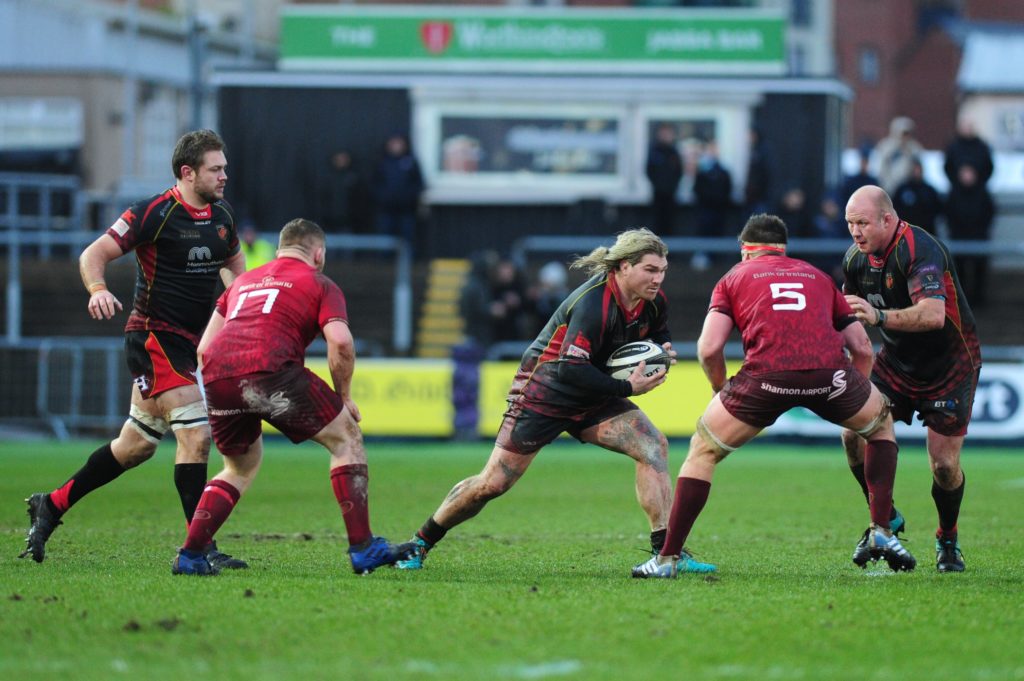
“In years gone by, the Dragons only had a couple going away with Wales. Now we’ve got serious contenders to play international rugby and even more who aren’t involved – Ash Hewitt, Rhodri Williams, Ollie Griffiths – who are putting serious heat on the boys in the Wales squad,” says Hibbard.
“It is also putting pressure on the internationals coming back. ‘Rossco’ [Ross Moriarty] is injured but with Aaron Wainwright coming back, who do you drop in that back row? It’s a great headache for the coaches to have.”
On Saturday, the Dragons play Champions Cup rugby for the first time in a decade when Wasps, the Gallagher Premiership runners-up, cross the border to Rodney Parade. Hibbard is one of only 14 among the 52 squad members to have dined at Europe’s top table before.
Your body will eventually tell you it’s time to go… but I still love learning new things.
On Sunday, he will wake up rigid and aching to celebrate his 37th birthday but, he hopes, satisfied with his toil. He has vowed in the past to keep going until he hits 40, and while he continues to perform dynamically and make a telling contribution to the Dragons resurgence, why would he stop?
“As long as I am enjoying it, and I am really enjoying it,” he says. “Your body will eventually tell you it’s time to go.
“I still love seeing the boys, I still love learning new things. You’re lucky, every so often you get a coach who you like, who reignites your love for it and especially now, with Dean Ryan coming in to the Dragons and the squad they’ve got, it’s a new dawn for them and it’s really good to be a part of that. Seeing some of these boys grow as much as they are is brilliant, in such a short period of time.
“We had a virtual end-of-season dinner when we were locked down again after the Covid-19 outbreak in the squad last month, and we all got smashed in our houses, which was one of the weirdest things and best end-of-season dinners I’ve had.
“One of the best things is how tight we are as a group. As long as they want me, I will keep going.”
More Wales stories
If you’ve enjoyed this article, please share it with friends or on social media. We rely solely on new subscribers to fund high-quality journalism and appreciate you sharing this so we can continue to grow, produce more quality content and support our writers.


Comments
Join free and tell us what you really think!
Sign up for free