
International coaches are forever fretting about injury tolls and the dramas they create, but in a strange way it is the All Blacks’ packed casualty ward that may end up being the making of them on their Grand Slam tour.
Certainly, it didn’t do them any harm in Chicago where one of the youngest and least experienced All Blacks sides of the last decade produced a stunning last quarter to start their tour with a 26-13 win.
It wasn’t supposed to be the baby blacks on show in the US. That was never the plan, but when senior locks Patrick Tuipulotu and Tupou Vaa’i were both ruled out before the All Blacks even left New Zealand, and captain Scott Barrett was forced off Soldier Field only a couple of minutes into the game because of a laceration to his leg, resources were tested.
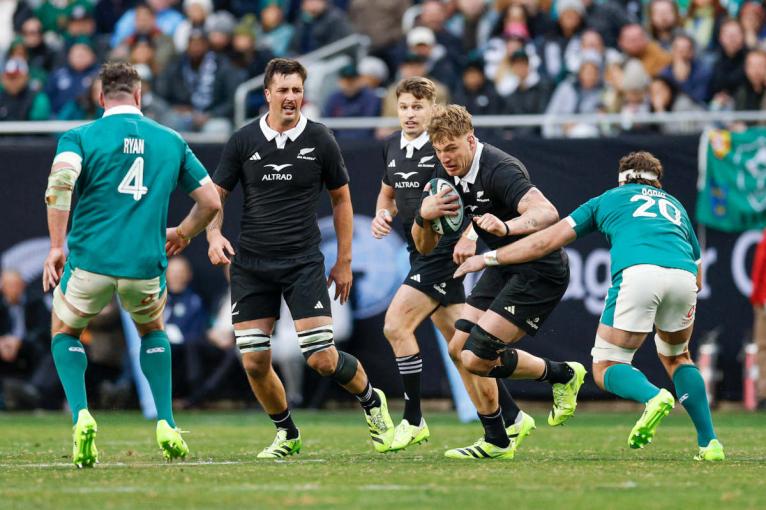
They were further tested when Jordie Barrett limped off after 20 minutes due to an ankle injury (which has forced him to return home), all of which meant the All Blacks played most of the game with a locking duo of Fabian Holland and Josh Lord – average age 23, and 19 caps between them – and an untried midfield of Quinn Tupaea and Leicester Fainga’anuku – the latter having never played a Test at centre before.
To put the All Blacks’ inexperience into context, the pack that played for most of the game had 213 caps between them, but 103 of those belonged to Ardie Savea.
The backline that played most of the game had a total of 278 caps, but 142 of those belonged to Beauden Barrett.
There was a flow and directness about the All Blacks that hasn’t been seen since their famous demolition jobs of Italy, Ireland and Argentina at the 2023 World Cup.
The team that played in the 2023 World Cup final had more them 1300 caps between them, whereas the side that finished in Chicago had 491 – with Barrett and Savea contributing almost exactly half of those.
But the unexpected thing was that these young, inexperienced All Blacks produced the most compelling rugby of the Scott Robertson era.
There was a flow and directness about the All Blacks that hasn’t been seen since their famous demolition jobs of Italy, Ireland and Argentina at the 2023 World Cup.
From being stilted, clunky and inaccurate in the first 55 minutes at Soldier Field, they hit a purple patch in the last 20 when they seemed to dispense with the rigid, overly prescribed attacking blueprint the coaches wanted them to follow, to effectively trust their instincts and natural athleticism and fling the ball about.
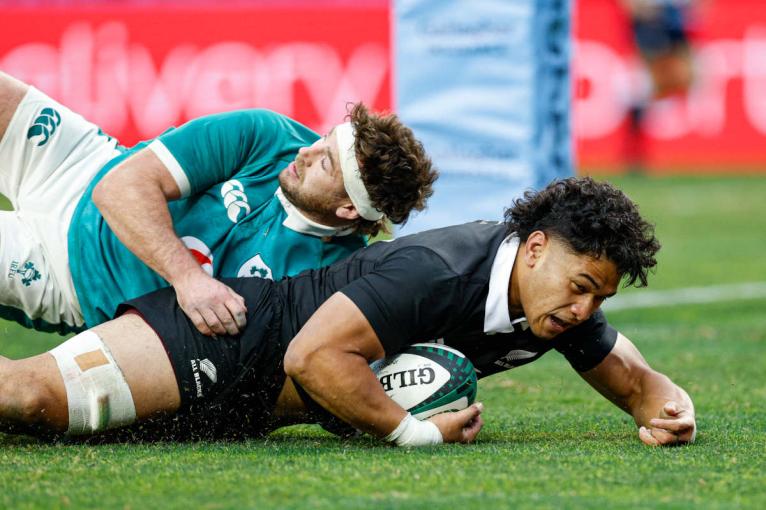
It was as if a switch was flicked and the team universally decided to play what was in front of them, keep the ball alive as much as they could and trust that if they retained possession for longer, the Irish defence would eventually break.
The uncertainty disappeared, and the likes of Peter Lakai, Wallace Sititi, Josh Lord, Caleb Clarke and Fainga’anuku were suddenly bumping defenders off, making deft passes and astute judgements and ad-libbing how and where to move the ball.
It was classic, freestyling All Blacks, with Barrett pulling the strings and Savea overseeing the whole business, and for the first time in a long time, there was genuine optimism about the potential of Robertson’s team.
Injuries have forced a surprisingly conservative Robertson to take some selection risks – which have had the impact of regenerating and redefining the team.
“There were some skill errors in that first half which stopped us playing,” All Blacks assistant coach Jason Holland said. “It wasn’t as if we played a different way from the first to the second half. We just got go-forward and we backed our skills and nailed them in the second half.
“Our pass-catch down the edge was pretty poor in the first half but we started to nail those things and had the confidence to hold onto the ball. That has been a big thing for us – we were prepared to go through an extra couple of phases. It is something we are striving for.”
And this is why injuries have proven such a blessing for the All Blacks. They have forced a surprisingly conservative Robertson to take some selection risks – which have had the impact of regenerating and redefining the team.
Last year, it was an injury to Ethan Blackadder that paved the way for Sititi to start against the Springboks. He was strong enough on debut to keep his place and ended the season as World Breakthrough Player of the Year.
But without that injury to Blackadder, he maybe would never have had his chance. Lakai, who is starting to look like a genuine long-term prospect at No 8, was also only given his chance when Samipeni Finau was knocked out one minute into the game against France last year.
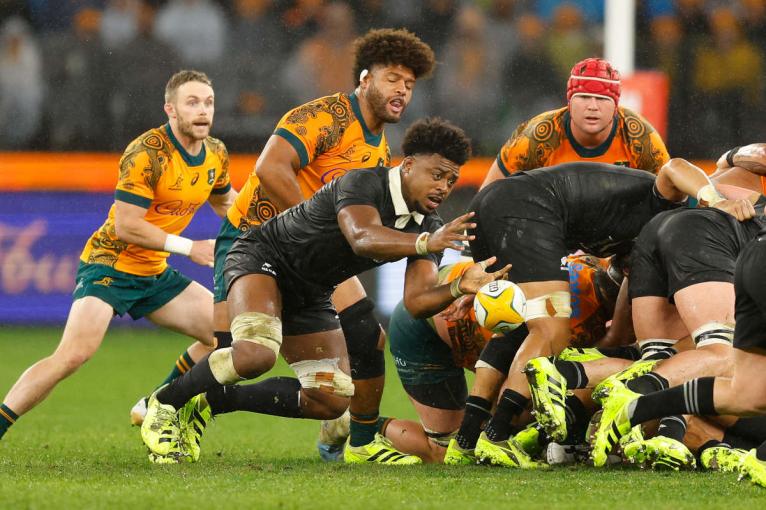
Tupaea and Fainga’anuku are effectively injury replacements and while there is no guarantee that the All Blacks will reproduce the quality of rugby they delivered late in the piece against Ireland, there is plenty of evidence to suggest that Robertson should be more willing to trust his youngsters, as it seems every time he’s either forced or occasionally brave enough to promote an emerging player over an established but struggling player, he’s massively rewarded for it.
Also evident in Chicago, was that having so many young, inexperienced players contributed to the less prescriptive nature of the attack.
Maybe it was the folly of youth – the natural fearlessness that often comes with players new to the Test scene – that led the All Blacks to play a less structured style.
Or maybe it was a conscious decision, as both Clarke and Fainga’anuku had been high impact with the few touches they had earlier in the game, and the plan was simplified to get the ball to them quickly.
Chicago delivered a much-needed win, but more importantly, it has shown the future path the All Blacks must take with selection and strategy.
“We were behind on the scoreboard early on when they were down to 14 men,” Barrett said. “They played good footy but we hung in there and our intention the whole time was to play and move the ball and I felt when we managed to do that, we managed to have some success.
“We turned things around midway through the second half by managing to stay composed. We had our structures, but the good thing was we were happy to play, and the good thing is we were able to play to the edges and give ourselves one-on-one opportunities. Some of the athletes we have on the edges, that is exactly why we are happy to do that.”
Deliberate or otherwise, the lessons from Chicago need to be absorbed by Robertson and his coaching crew.
The All Blacks don’t need to see selection as a binary equation where experience has to be sacrificed to promote youth and understand that they can have both elements in their team if the latter is strategically injected.
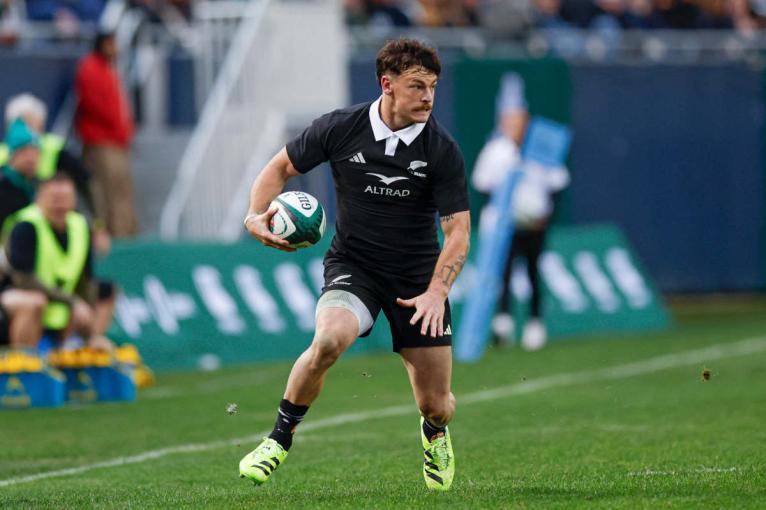
They also need to be willing to be less generous with the amount of time they afford under-performing senior players to find their form.
There were strong arguments that Sevu Reece should have been dropped earlier than he was this year – arguments that were strengthened in hindsight when the uncapped Leroy Carter replaced him and produced high quality performances.
Ditto, Rieko Ioane survived for a couple of Tests more than his form suggested he deserved, and it’s hard to understand why Robertson is so reticent to part company with senior strugglers when almost every time he has, the replacement has delivered a wow factor.
Chicago delivered a much-needed win, but more importantly, it has shown the future path the All Blacks must take with selection and strategy.


If injuries are what it takes…
Injury has been the only real selector through the foster era and incredibly disappointing to see razor even more wedded to veterans irrespective to poor form. Big surprise, selecting young players in form also means selecting players who are confident and whose skillsets are actually working. It's not brain science to drop players who aren't performing.
Holland is still (in his last three weeks of employment, fortunately), arguing that his offense is great if only the players could string the passes together :)
I hope that the whole backline ignores whatever Holland and Hansen tells them to do
That’s what I have trouble working out; was the second half of the Irish match the players ignoring the coach, or was it the first? Either way it was far from the polished performance we are still craving.
Nothing against Sevu, I see his value especially round the tackle and ruck and from Social looks a great squad member but with such emphasis on kick contest these days Fihaki for me is a no brainer should be in squad he is elite under high ball is fast big tall agile skilled and gotta cannon boot tbh I would probably have him starting at 14 even with Carter going so well
Fihaki also is sound at 15 and might offer more than Jordan under the high ball and returning kicks accurately. Also has a good pass and has worked on his defense.